


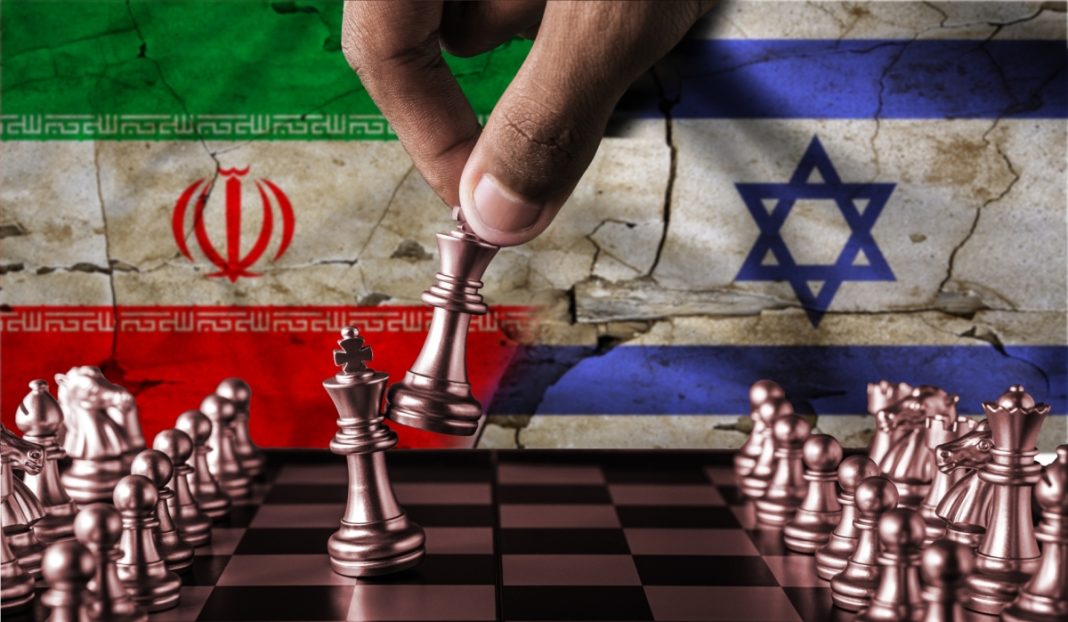
EDITOR’S NOTE (Nick Stamatakis): I warned you a few days ago (link here) that the Iranians are the inventors of chess and might take a different way than attacking Israel heavily. During the last seven days the developments in the Middle East made it absolutely clear that this was the case. Here is what happened:
- Right after the assassination of Ismail Haniyeh, Russia went on overdrive and immediately supplied Iran with advanced weaponry, namely the S-400 missiles (Iran already operates the S-300). More importantly, they supplied very advanced electronic countermeasures equivalent or superior to what Israel had. As we speak, both in Israel and Iran, electronic communications of all types are very limited, as both countries are afraid – and preparing – for missile attacks. The difference is that for the first time, Iran is completely covered, and any Israeli attempt to penetrate its airspace will likely fail. Russian experts operate these advanced systems, which Iranians likely help.
- The Biden Administration is using every means possible to achieve a ceasefire by asking all its allies (including Turkey, of course) to mediate with Iran to back off and open the road for renewed negotiations for the release of the hostages. In no way do the Democrats need an open war in the Middle East in the middle of the elections.
- A few days ago, Israeli Defense Minister Yoav Gallant called Netanyahu’s plans for victory in Gaza “nonsense.” Earlier, other Israeli military officials had made it clear repeatedly that “We cannot defeat Hamas because Hamas is an idea!”. The huge rifts inside Israel have become more evident than ever and Iran had to consider them.
- Having secured its air space (and, therefore, its important military, industrial, and nuclear installations) with Russian assistance, Iran had no reason to start a wider war. Russia and China, in particular, had asked Tehran to keep their eyes on the ball. Where is the ball? The next BRICS summit will be held on October 22-24 in Kazan, Russia. Just imagining Russia, China, India, Brazil, and South Africa sitting at the same table as Iran, Saudi Arabia, Egypt, UAE, and Ethiopia, along with numerous other countries as observers, including Turkey and even possibly Serbia, makes Israel and the entire West, and especially the Globalist Elites, seeth with rage. At that point, they would have lost the entire Middle East, and they could kiss goodbye to their remaining “global dominance” wet dreams. The Iranian leadership can clearly see that a successful BRICS summit will be their true victory (which will also eliminate the West’s power in the Middle East) and not hit Israel with a few missiles to let some steam off.
- Did I mention that the Iraqi FM will visit the Pentagon in the next month or so to discuss the withdrawal of US troops from Iraq (except for the northern Kurdish region)? We have in front of our eyes the withdrawal of the US from most of the American strongholds in the Middle East.
Therefore, Iran had to take a different route. Offering to “delay retaliation” with a Gaza ceasefire will force Israel, divided as it is internally, to sit on the negotiating table. This, if it happens, and we can see no way out as the Biden Administration and all other governments are loudly supportive, will be a final defeat for Netanyahu and the Zionists. They already lost the game the moment that Russia made Iran “unreachable” with Israeli fighter jets and missiles.
August 13, 2024, n.stamatakis@aol.com www.helleniscope.com
YOU CAN USE OUR GOOGLE TRANSLATE FUNCTION (CLICK ON THE FLAG)
DISCLAIMER: The views and statements expressed in this article constitute constitutionally protected opinions of this author.
TO SUPPORT HELLENISCOPE OR BECOME A SUBSCRIBER, LINK HERE!!
=====================
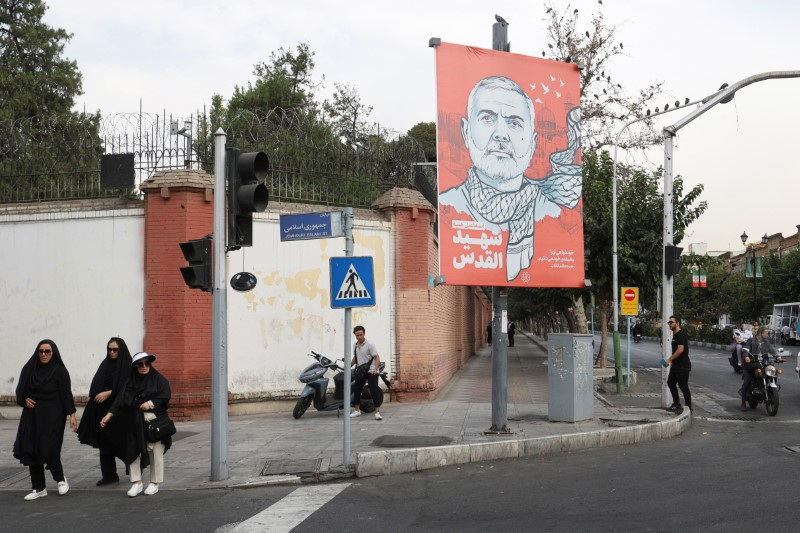
Exclusive: Only Gaza ceasefire will delay retaliation, say Iranian officials
Advertisement · Scroll to continue
















Nick
The BRICKS are a non entity. I don’t know why you keep bringing them up as the West’s boogey man.
As for Iran’s response, time will tell. The April response was an indication that they are a paper tiger. When Israel is able to penetrate Iran’s “secure” zone that houses important visitors and kill at will, they are worse than the keystone cops.
As of this week this is no longer tge case: Israel cannot penetrate Iran’s airspace. Also in April a few advanced hypersonic missiles naturally penetrated Israel’s Iron Dome, which is also vulnerable to saturation. Why do you forget that Hezbollah has hundreds of thousands of missiles hidden a few miles to the north of the border in Lebanon? Israel has lost the war. Netanyahu’s only game is to make the US fight his war. It looks like it will not happen for many reasons.
Nick
Never bet against Israel. Israel will never lose a war. If they lost a war against Hezbolah or Hamas, it means the end of the country. That is their stated goal. If all the other Arab nations that surround it couldn’t do it, those terrorists sure won’t.
Israel has lost against Hezbollah in 2006 and that’s why they want to destroy it now. But they can’t, unless the US and Britain put boots on the ground. I doubt they would and so Israel (meaning Netanyahu) will have to retreat. If they do not, Israel will not exist in a couple of years. They will fight tooth and nail but they will lose. Read again the Defense minister’s statements. Zionism’s biggest vice is arrogance about supremacy – the same with the neocon’s “exceptionalism”.
Mr Karp, surely you can’t be serious. Given the fact that we increase our national debt by $1 trillion every 100 days, I have to ask you how you can say “Brics are a non-entity.”
Nick, I agree with your assessment, that BRICS is holding back Iran. I too believe it’s in Iran’s interest to not widen the conflict. My only concern is that Netanyahu is not constrained by rationality. The man is truly a loon.
A couple of weeks ago, Israel was getting ready to strike Iran’s nuclear facilities – several analysts suggested this and there was serious rumors in higher Israeli power circles (it was not not only Senator Lindsey Graham, aka “the perfumed ass” who suggested it). This is not the case any longer. what changed? Russia has already installed the weaponry I mentioned in Iran. If anything Iran will keep striking through Hezbollah – who is already hitting Israel daily – and the Houthis. If Israel has no response against the Hamas and the Houthis (who two weeks ago hit Tel Aviv), how can they attack Hezbollah? Only with US help – meaning US boots on the ground. This will not happen.
George.
BRICS are a non entity as far as being a threat to the West. They are not a “block” as NATO is. And they are not a “UNION” as the EU is. When you compare the BRICS to the West, and America is not the only nation of the West, which you failed to comprehend, the BRICS are a loose federation, with no ties that bind, such as cultural, civilizational, language, or historical. Nothing like what unites the US with Europe, and Japan, Australia and New Zealand.
And remember, no matter how much they’ve tried, they can’t break away from the dollar and from the financial controls that are set by America and the West. The world is and will remain at least for the next 100 years a Western oriented world.
All these statements prove to be wrong daily, weekly and monthly. By October 22-24 when the next BRICS meeting will take place in Russia, they will belong to the trash can of history.
Nick
Exactly what do you anticipate will happen at the next BRICS meeting in October? An announcement that the hegemony of the West is at an end?
Be a little more specific
There is some news out there that you choose to ignore. But they will not betray the specifics so that the hegemonic West start undermining. Also, creating a new reserve currency is groundbreaking. It has started already with Saudi Arabia abolishing petro-dollar.
Nick
The ending of the agreement to use the dollar as the main currency by Saudi Arabia will have very little, if any impact. Ans that’s not my opinion. Here’s the reasons why: Oil is losing its pre-eminence as the only energy source. America produces enough oil to meet its own needs and even export huge quantities. Saudi Arabia will not drop the dollar, even when the agreement with the US expires. What nation in their right minds would keep the Rial for instance as a foreign currency reserves? They will exchange it for dollars immediately. China, Saudi Arabia’s BRICS partner wants to pay with yen. Even if that happens, the Saudis will not keep it as yen, but change it for dollars.
You have to keep up with the news: China is already paying with renminbi for the past two years at least.