



ΕΑΝ ΠΡΟΤΙΜΑΤΕ ΕΛΛΗΝΙΚΑ ΠΑΤΗΣΤΕ ΤΗ ΣΗΜΑΙΑ ΣΤΟ ΚΑΤΩ ΜΕΡΟΣ ΤΗΣ ΟΘΟΝΗΣ
By Helleniscope’s Editorial Team
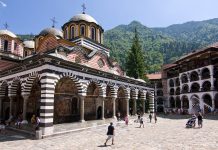
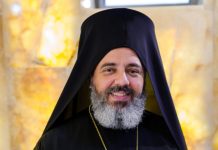
At the age of 90, Archbishop Damianos of Sinai has finally stepped down as head of the world-renowned Monastery of St. Catherine. His departure, long expected, is greeted with relief across the Orthodox world. For months, the monastery had been shaken by internal strife, legal battles in Egypt, and mounting international pressure.
Damianos’s tenure ended not with a peaceful handover, but amid controversy and division. Once admired as a man of broad spirit and dialogue with Bedouins, other Christian communities, and the wider world, he had in recent years become increasingly isolated. Rarely present at the monastery, he left key decisions to advisers in Athens and Cairo, and ultimately lost the support of both the Greek state and his brother hierarchs. Even within the Brotherhood, monks openly challenged his leadership, forming a group of “rebels” who accused him of mishandling the monastery’s affairs.
The breaking point came after a ruling by the Egyptian Court of Appeals in late May, which transferred ownership of the monastery’s properties—including priceless relics and manuscripts—to the Egyptian state, reducing the monks to mere custodians under government supervision. The shock of this decision was compounded by Damianos’s inability to rally a coherent response. Instead, tensions escalated: a group of monks moved to depose him, while Greece pushed legislation to give Sinai a public-law representation in Athens, itself a source of controversy.
Into this turmoil stepped the Patriarchate of Jerusalem, which publicly summoned Damianos to appear in Jerusalem and “open the gates” of the monastery to his opponents. Damianos refused, and in his final statement he unleashed a series of harsh accusations. He condemned the Patriarchate of Jerusalem for pursuing what he called an “imperial policy” aimed at subordinating Sinai, and he blamed the Moscow Patriarchate for sowing division across Orthodoxy.
Yet Damianos also sought to present a final act of unity. He claimed that all Sinai monks—including the rebels—now share six common positions: united rejection of the Egyptian court ruling, pursuit of a tripartite agreement with Egypt and Greece, recognition of Sinai’s unique status in Egyptian and Greek law, renewal of the Brotherhood with new monks, protection of relics and manuscripts, and reaffirmation of Sinai’s canonical autonomy as defined by the 1782 Sigillion of Patriarch Gabriel IV.
In his own words, “It is time to assume my responsibilities and guarantee the succession process, which must be completed quickly but properly.” He confirmed that both the Greek government and the Ecumenical Patriarchate had been informed, and that Egyptian authorities would oversee the transition.
The deeper meaning of his resignation, however, lies beyond the monastery walls. For many, his exit prevents yet another uncanonical intervention from Patriarch Bartholomew of Constantinople, whose heavy-handed meddling has already caused scandal in Crete. At Sinai, the delicate balance between Cairo and Athens now takes center stage. Egypt insists on safeguarding the monastery as part of its national heritage and security interests, while Greece defends it as a cornerstone of Hellenic Orthodoxy. Together, they are expected to steer the succession process in a way that preserves both stability and tradition.
The end of Damianos’s long reign thus closes a turbulent chapter. His departure spares the monastery further paralysis and opens the way for new leadership—one that must restore trust, navigate the competing pressures of church politics and international diplomacy, and above all protect the sacred legacy of St. Catherine’s.














Επιτέλους το Άγιο Πνεύμα έφερε μια Σολομώντεια Λύση στο πρόβλημα της Μονής Σινα ώστε να υπάρχει αυτονομία και διατήρηση της περιουσίας της Μονής με συνέχεια της Παράδοσης της Ορθοδοξίας!
While indeed we can say this is finally long-overdue, and while we welcome some good news, the following is a disturbing statement by Damianos:
“…He confirmed that both the Greek government and the Ecumenical Patriarchate had been informed, and that Egyptian authorities would oversee the transition….”
The best possible solution in this situation is for the monks to elect their own abbot to restore spiritual order, as well as some viable level of trust and collaboration within the walls of the monastery. If the newly elected abbot happens to be a ranking clergy member (hieromonk), then Jerusalem should arrange for his ordination to the episcopate, to continue the tradition of Sinai having its own bishop. The last thing the Sinai monks need is an outsider “bishop” being appointed and assigned to “lead” them by external “agents” that don’t seem to care about the monastery’s fate (but only for its wealth and touristic income potential)…
If Damianos really believes his other statement about “autonomy”, the succession process should have nothing to do with the Greek government, the E.P. or the Egyptian authorities. He has contradicted himself with his own words at this point.