

By Nikos Iglessis source: ellinikiantistasi.gr
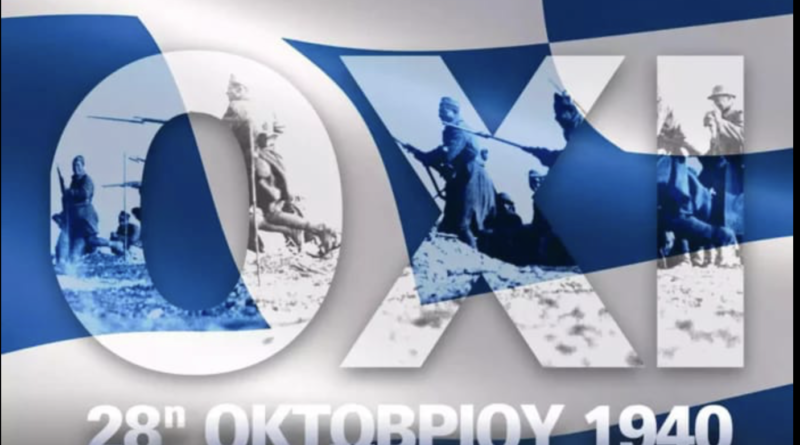
This year’s anniversary of the Greek epic of 1940, fought in the mountains of Northern Epirus, brought back to the author’s mind the questions of our youth — the ones that fueled discussions and reflection in those days.
These questions were:
Why did the dictatorial regime of Ioannis Metaxas (which most called fascist) not side with his ideological counterparts in the Axis, Hitler and Mussolini?
Why did the Metaxas regime choose to align with Great Britain, which at that time was in a militarily dire position, without allies apart from those in the Commonwealth?
Why didn’t Greece choose neutrality, like neighboring Turkey?
Was it Metaxas or the people who actually said “NO,” as the Left claimed?
A brief attempt will be made to answer these, not to add to the history of World War II, but to draw essential lessons for today.
The Geopolitical Map
In October 1940, the Axis dominated almost all of continental Europe. Germany had absorbed Austria, occupied Czechoslovakia, most of Poland (the rest taken by the Soviet Union under the Ribbentrop–Molotov Pact of 1939), the Netherlands, Belgium, Denmark, and Norway, while defeated France had surrendered. The German army had reached the English Channel and the Atlantic.
Italy, the Axis partner, having taken advantage of the First Balkan War against the Ottoman Empire, had seized Libya and the Dodecanese in 1912, and invaded and occupied Albania in 1939. It was evident that fascist Italy, aiming to revive the Roman Empire, was the main threat to Greece. Rome sought the annexation of the Ionian Islands and Epirus and the transformation of the rest of Greece into an Italian protectorate.
After the occupation of Greece in 1941, Germany took control of Athens, Thessaloniki, Evros, the islands of the eastern Aegean, and Crete (except Lasithi). The rest of Greece was given to the Italians, while Eastern Macedonia and Thrace were handed to the Bulgarians. Only after Italy’s surrender in 1943 did Germany extend control over all of Greece.
This Italian geopolitical ambition made a Greek alliance with the Axis impossible, even if the regimes shared ideological similarities. It also made neutrality infeasible. Mussolini’s Italy sought nothing less than Greece’s submission. Other factors behind the “NO” included the Greek monarchy’s ties with the British crown and the fact that most of Greece’s external debt was held by London banks.
Germany’s strategic plans did not initially include conquering Greece. Hitler intervened only to support his ally Mussolini and prevent a new front with the British, who began landing in Greece after October 28, not before.
Metaxas understood Germany’s intentions. He demanded from the British either substantial military aid capable of deterring a German attack, or none at all—so as not to provoke Germany unnecessarily. Britain, bombed daily and fearing invasion, could not comply. After October 28, however, “the die was cast”: Greece would fight the Axis.
The country paid a terrible price—hundreds of thousands dead, enormous destruction, and a civil war that followed as a direct consequence of occupation. Greece had no real choice on October 28. Metaxas said “NO,” and the Greek people, driven by patriotism, wrote the epic of Northern Epirus. The only lasting gain, though not negligible, was the unification of the Dodecanese with Greece in 1947.
Parallels with Today
Fifty-one years after Turkey’s 1974 invasion of Cyprus, Hellenism faces threats not from the West but from the East. It faces Turkey, which seeks to resurrect a modern Ottoman Empire—much as Italy once sought to restore Rome.
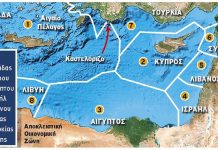
The doctrine of the “Blue Homeland,” the casus belli, demands for demilitarization of Aegean islands, challenges to Greek sovereignty over dozens of islets, denial of exclusive economic zone (EEZ) rights for islands, interventions in Western Thrace under the pretext of protecting the Muslim minority, and the push for international recognition of occupied northern Cyprus—all are long-term preparatory moves. Meanwhile, Turkey strengthens its military and defense industry.
Greece and Cyprus are already in a hybrid war with Islamist Turkey. Sooner or later, they may face an ultimatum like the one Metaxas faced on October 28, 1940. Turkey will demand nothing less than the submission of Hellenism. Then, the choice will again be between “NO” and subjugation.
To be able to say “NO,” however, requires:
A productive, independent economy
Energy security
Strong armed forces
A developed defense industry
Social cohesion
Patriotism
Decisive leadership
Reliable allies with both strength and the will to act
Do the Greek and Cypriot political systems today truly perceive these dangers—and prepare adequately to confront them?
Source: www.ellinikiantistasi.gr














I’m afraid the answer to your last question in this article is ΟΧΙ! No! As things stand, and especially with a man like Mitsotakis in charge of tne country, who seems hell bent to destroy everything Greek from within, because he is being puppeteered from without, Greece’s only hope is God. As St. Constantine conquered his opponents, unified the then Roman Empire and freed Christianity from persecution with the symbol of tne Cross, as he saw it in heaven, may this same Cross save Greece from her perennial eastern threat and the external puppeteers. God is easily capable of doing this, but the only way He can intervene is if the people of Greece understand that they have to stop saying ΟΧΙ το God. The diaspora sees this clearly and is praying for Greece. The question is, are they repenting and praying for themselves? I hope tne answer to that question isn’t ΟΧΙ
Very well written article. It touches all the major points. I would like to add the demographic problem of Greece. If you keep losing people and not having births, the country will shrink. As it already has. While armies today don’t depend as much as they used on how many soldiers you cazn send to be cannon fodder, you still need brains to run all those modern weapons. And of course, to support the economy.
The best solution for that would be for Greeks of the diaspora to come back to Greece. In the previous 110 years, Greece has sent more than 8 million people to every part of the world. While all of Europe sent its people to populate the new world, including Australia and South America, Greece could not afford such loss of people.
Greece can not intergrate Moslems. Africans or Asians. Yianni Antetokoumbo is a bright exception to the rule, but not too many turn out to be as great a person as he is.