
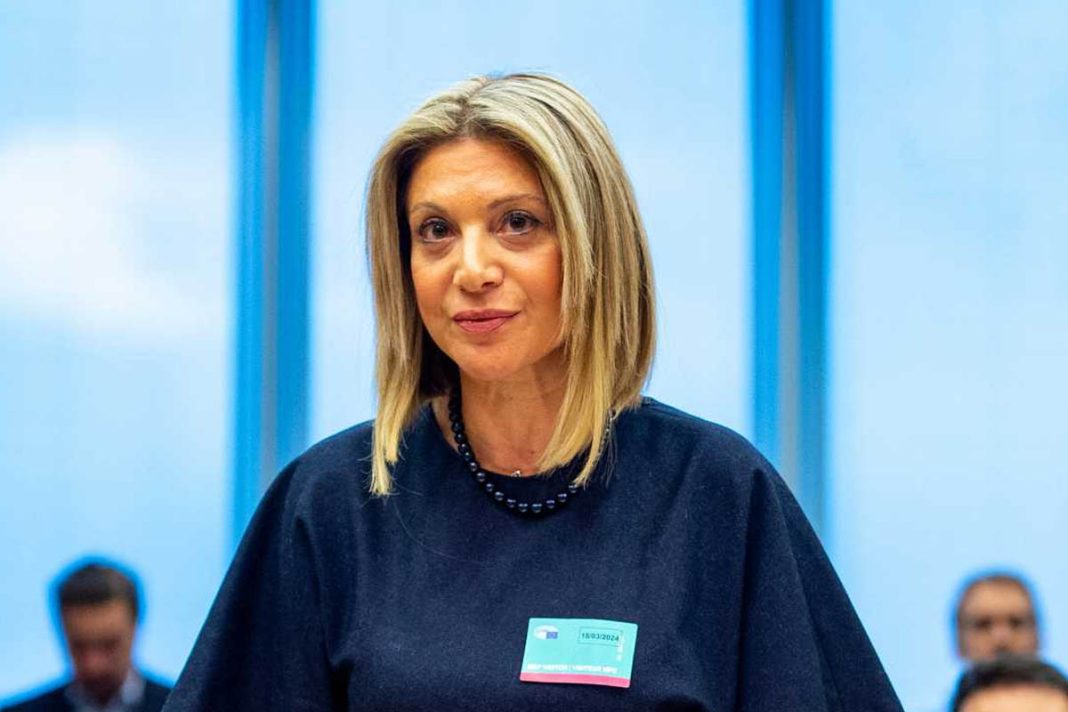
EDITOR’S NOTE (Nick Stamatakis). I see Maria Karystianou as a figure who has already entered the political sphere through moral authority rather than ambition. Her voice resonates because it was forged in truth and necessity, not strategy, and in a public landscape marked by exhaustion and mistrust, that difference matters. The attention she commands reflects a deep social need for authenticity, justice, and clarity—qualities that many feel have long been absent from public life.
If she moves forward with forming a new political party, it would feel less like a personal project and more like a response to a collective call. Her credibility lies in independence and ethical consistency, offering the possibility of re-engaging citizens who have disengaged from conventional politics. A political initiative shaped around these values would signal not a reshuffling of the old order, but a genuine attempt at renewal—one rooted in conscience, accountability, and human dignity.
In the end, it seems that Greece, betrayed by generations of men belonging to corrupt mafia-families, is finally ready for a woman leader…
=================
“You will find me on the front line when it reaches its final form.”
Ms. Karystianou admits that there is probably no political body she truly trusts.
Maria Karystianou left open the possibility of becoming actively involved in politics, within the framework of a new political party, speaking on SKAI TV.
“I believe that I am already at the forefront, in the sense that I will speak out immediately and do whatever is within my power, and I will continue for as long as I see things happening that do not suit us,” she said, adding: “Yes, it is something that will find me on the front line when a party becomes the final form that a movement can take, provided it is properly organized. So I do not rule out that this social reaction, this movement, could end up there. I do hope so.”
The mother of Martha, who lost her life in the Tempi railway tragedy, also referred—among other things—to Nikos Karahalios and the accusations he has made against her, as well as to what took place during her recent visit to Brussels, including the “full-scale attack” on the European Commission and the European Public Prosecutor’s Office, in which she had until recently placed all her hopes.
Regarding the start of the trial, for her it is now, unfortunately, merely a procedural formality that must take place.
“The charge concerning the fireball is missing. So tell me how much interest this trial can possibly have,” she wondered.
Having made it clear that she does not trust the Greek justice system, Maria Karystianou had placed her hopes in the European Public Prosecutor’s Office. However, she now feels disappointed by it as well, perceiving manipulation.
“It is not possible for the European Prosecutor not to support the supremacy of EU law over national law. And so we come to Greece, where Article 86 is clearly used to protect politicians from criminal liability,” she stresses, summarizing that it is unacceptable for the European Prosecutor to hide behind Article 86 and claim that it is the obstacle preventing her from exercising her duties.
“When we see that something has not been done properly and essentially constitutes a cover-up, of course we will speak about it,” she concludes.
Ms. Karystianou admits that there is probably no institution she trusts, noting indicatively that very few media outlets reported what happened in Brussels, which, as she described, are among the most important events that have ever taken place in Greece.
As for Nikos Karahalios and his claims that Ms. Karystianou intends to join a political party with the prospect of eventually assuming its leadership, as well as his references to alleged advice from a hermit nun and a young astrologer, she categorically clarified that she has no intention of engaging in any discussion related to him.
Regarding the same issue, she stated:
“I will say that the way I try to manage my grief, and the fact that I truly believe the Archangel stands beside me and that my daughter is beside the Archangel, is something personal to me. It has helped me enormously. When you cannot understand certain things, it is better not to comment on them. The nun—who is an abbess—or the fact that I believe in the Archangel are things that help me get through the situation and the grief I am in. I do not feel shame, if you will, about this. After all, my daughter is in heaven. How could I not love that part of it?”
She also mentioned that the holiday period is particularly difficult for her, as loss creates conflicting emotions in people who have experienced something similar.