

ΕΑΝ ΠΡΟΤΙΜΑΤΕ ΕΛΛΗΝΙΚΑ ΠΑΤΗΣΤΕ ΤΗ ΣΗΜΑΙΑ ΣΤΟ ΚΑΤΩ ΜΕΡΟΣ ΤΗΣ ΟΘΟΝΗΣ
By Helleniscope’s Editorial Team
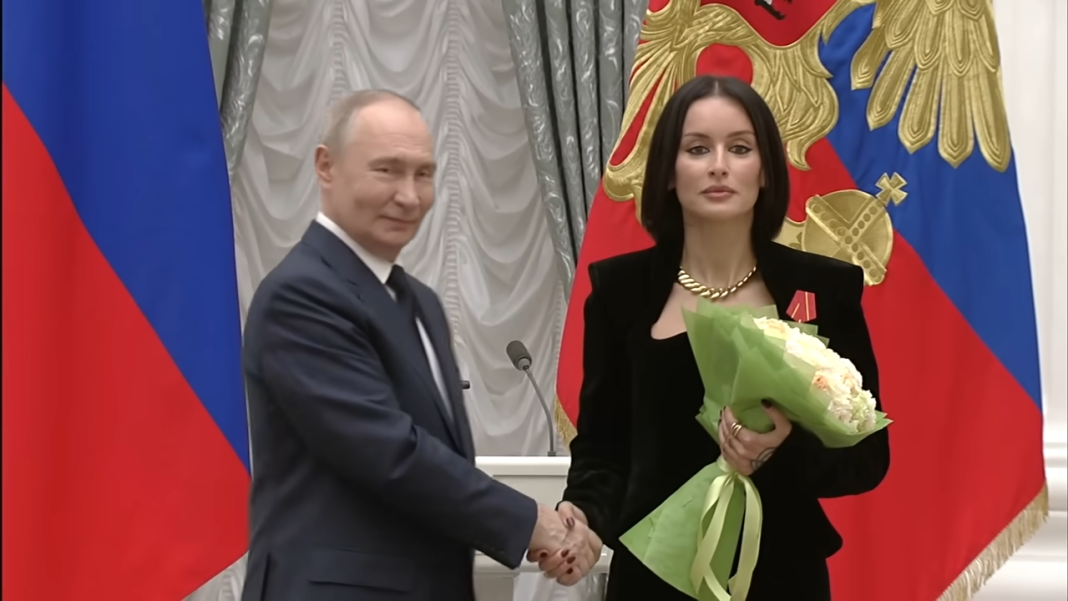
Tina Kandelaki entered the spotlight once again in late 2025, when Vladimir Putin personally awarded her the Order of Alexander Nevsky in the Kremlin. The decoration, officially granted for contributions to media and public life, functioned as a clear political signal: Kandelaki has moved beyond celebrity journalism into the inner symbolic circle of the Russian state. Her acceptance speech, praising Putin as a guarantor of peace and national purpose, confirmed her status as not merely a commentator, but a loyal voice of the system.
Interest in Kandelaki often begins with her name. The surname Kandelaki is common among Georgian Greeks (Pontic Greeks), which has fueled assumptions of Greek origin and made her a figure of occasional curiosity in Hellenic-focused media. In reality, she was born in Tbilisi to a Georgian father and an Armenian mother, though the Greek association reflects the multicultural Caucasus milieu from which she emerged. This layered background—Caucasian, Orthodox, post-Soviet—has allowed her to navigate multiple identities while ultimately anchoring herself in Russia’s political center.
Kandelaki’s early career was defined by speed, wit, and intellectual showmanship on Russian television in the 1990s and 2000s. She cultivated an image of a modern, ambitious broadcaster, largely detached from ideology. Over time, however, she transitioned from screen presence to executive power, becoming a senior manager at Gazprom-Media. This shift marked her full integration into Russia’s state-aligned media structure, where editorial influence, political loyalty, and managerial authority converge.
=============
THE VIDEO BELOW EXPLAINS WHY TINA NAMED HER DAUGHTER AFTER MELANIA TRUMP!!
==================
Today, Tina Kandelaki stands as a symbol of Russia’s contemporary media elite: cosmopolitan in origin, centralized in loyalty, and unapologetically political. Admired at home as a successful executive and patriot, and criticized abroad as a propagandistic enabler of state power, she embodies the transformation of post-Soviet media figures into instruments of governance. For observers at Helleniscope, her trajectory illustrates how identities with Greek, Caucasian, and Soviet roots can ultimately be subsumed into the narrative machinery of modern Russian power.
December 29, 2025, n.stamatakis@aol.com www.helleniscope.com
DISCLAIMER: The views and statements expressed in this article constitute constitutionally protected opinions of this author.














Yuck that Russian accent & cold mug? I’ll take Frenchy Bridgett Bardot anytime