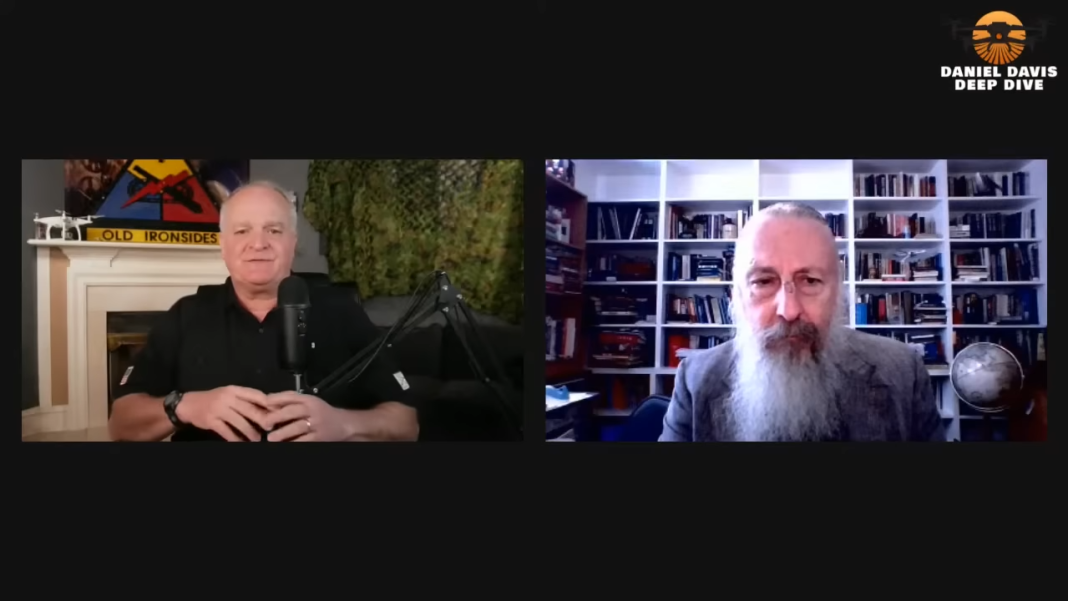
(EDITOR’S NOTE). This video discussion frames a rapidly escalating U.S.–Iran standoff as potentially approaching a “countdown to war,” timed around Israeli Prime Minister Benjamin Netanyahu’s Washington visit and meetings with the White House. Host Daniel Davis and former U.S. diplomat Jim Jatras argue that the continued U.S. military buildup in and around the Persian Gulf suggests Washington must soon either act or retreat in a politically costly way. They describe President Trump as wanting a quick, claimable “win,” but facing a narrowing set of options: Iran signals it could reduce (not eliminate) enrichment only in exchange for full sanctions relief, while U.S. demands—as summarized in the conversation—include zero enrichment plus limits on missiles and regional proxies. Jatras doubts sanctions relief is politically deliverable in Washington and suggests Netanyahu’s purpose is to pressure Trump toward military action despite the risks of a wider, uncontrollable conflict.
As the discussion turns to deterrence and escalation dynamics, the speakers emphasize Iran’s warnings that any strike would trigger immediate retaliation against U.S. bases and Israel, not symbolic responses. Jatras argues that if war begins, the opening blows would likely be massive because the U.S. would feel compelled to quickly disable Iran’s leadership and missile capacity—yet he worries that severe Iranian retaliation could raise the risk of Israeli nuclear escalation. The conversation also situates the crisis within broader regional and political pressures: Gulf states may try to avoid being dragged in; Muslim-majority countries condemn Israeli West Bank moves; and Netanyahu’s domestic legal troubles could increase his incentive to push forward. In the final stretch, they connect the Iran brinkmanship to the Ukraine war, criticizing what they portray as ad-hoc Trump-era diplomacy (including reliance on close confidants rather than expert teams) and warning that U.S. policy is trapped between “humiliating retreat” and open-ended escalation—conditions they fear could spill into a larger global confrontation.
=======