


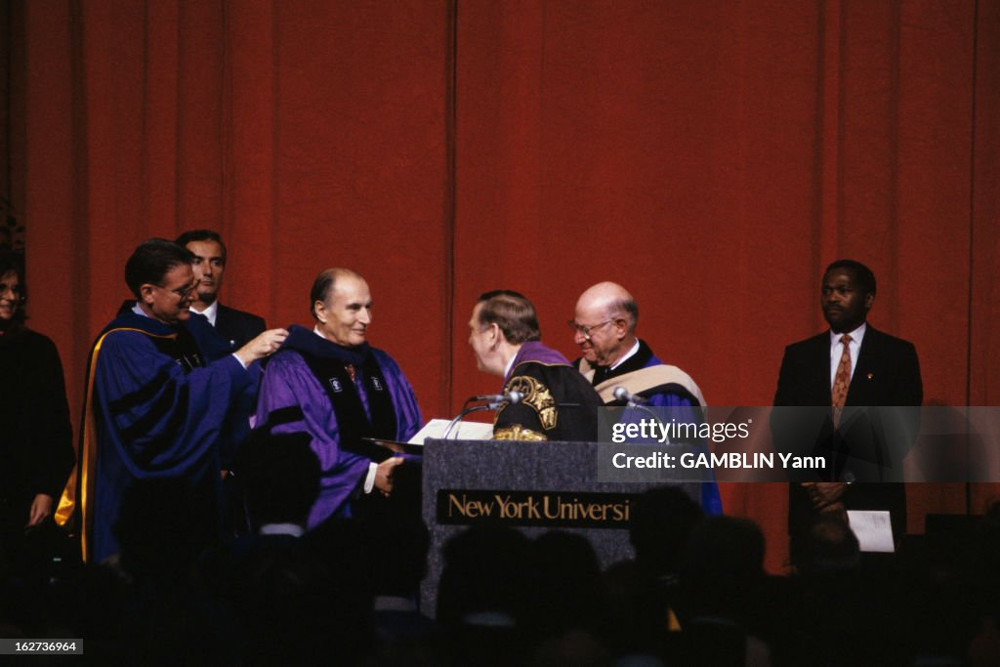
PHOTO: September 28, 1988, at NYU: The President of France receives an honorary Doctorate of Laws by John Brademas… Accompanying him (not shown in this photo). the first woman Chancellor of the Sorbonne and President of all Universities of France, Eleni Glykatzi Arweiler…
ΕΑΝ ΠΡΟΤΙΜΑΤΕ ΕΛΛΗΝΙΚΑ ΠΑΤΗΣΤΕ ΤΗ ΣΗΜΑΙΑ ΣΤΟ ΚΑΤΩ ΜΕΡΟΣ ΤΗΣ ΟΘΟΝΗΣ
In September 1988, during President François Mitterrand’s official visit to the United States, an honorary degree ceremony at New York University became the setting for an unexpected cultural moment. As NYU President John Brademas and Paris University chancellor Hélène (Eleni) Glykatzi-Ahrweiler, the first woman president of all French Universities, conversed in Greek, Mitterrand observed that the language linking them was neither French nor English, but Greek — and called it, with quiet admiration, “Empire.”
By Nick Stamatakis
On 28 September 1988, Manhattan carried on as it always does — impatient, vertical, electric. Yet inside New York University, time bent slightly toward history.
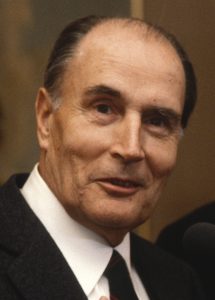
President François Mitterrand was in New York on an official visit to the United States. Between diplomatic meetings and his address at the United Nations, he crossed Washington Square to receive an honorary Doctor of Laws degree. The ceremony was formal, dignified, and properly transatlantic.
Conferring the degree was John Brademas, President of NYU, former U.S. Congressman, son of Greek immigrants from Indiana, a man equally at home in American politics and Mediterranean memory.
At Mitterrand’s side stood a figure whose presence was less visible to cameras but no less historic: Hélène (Eleni) Glykatzi-Ahrweiler, Rector of the Academy of Paris and Chancellor of the Universities of Paris. A Byzantine scholar of global stature, she had risen through the French academic world to become one of its most powerful intellectual leaders — a Greek, the first woman at the helm of the Sorbonne’s vast constellation of institutions.
Three leaders, three official statuses, one university stage.

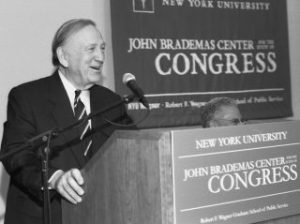
The official record notes the speeches, the academic hood, and the applause. It records that Brademas presented the degree and that Mitterrand spoke of cultural ties between France and the United States. It does not record what happened later.
A Dinner, A Language
That evening, at a formal dinner in the president’s honor, introductions were made more informally. Glykatzi-Ahrweiler would later recount the moment with characteristic clarity.
Brademas greeted her warmly — not in French, not in English — but with a disarming question: “Do you dance Kalamatiano?”
It was an opening not merely of conversation, but of memory. The two shifted effortlessly into Greek. Across the table, Mitterrand listened.
And then, according to Glykatzi’s own recollection, the French president intervened — in Greek.
“The President of New York University and the President of all the Universities of Paris did not speak French or English, but Greek. Eh! That is an Empire.”
The remark was light in tone, but precise in meaning. Mitterrand was a man steeped in history. He understood symbols. What he witnessed that evening was not a private linguistic indulgence. It was a civilizational echo.
Beyond Diplomacy
The scene is striking when viewed in retrospect. The head of one of America’s great universities. The chancellor of the French university system. The President of the French Republic.
And the language uniting them was Greek.
No empire stood behind it. No navy, no treasury, no territorial claim. Yet Greek — the language of Homer, of Plato, of Byzantium — surfaced naturally at the summit of Western institutional life.
Brademas carried it through diaspora memory.
Glykatzi carried it through scholarship and identity.
Mitterrand, educated in the classical tradition, recognized its resonance immediately.
“That is Empire.”
Not domination — endurance.
Not conquest — continuity.
The Ecumenical Thread
For Glykatzi-Ahrweiler, the moment must have felt quietly emblematic. Her life’s work had traced the Byzantine inheritance of Europe — the transmission of Greek thought into the fabric of Western civilization. In New York, in 1988, that transmission was no abstraction. It was audible.
Hellenism did not appear as nostalgia. It appeared as fluency. It did not assert itself. It was simply there.
Greek moved from Constantinople to Paris, from the Aegean to Indiana, from the Sorbonne to Washington Square — not as an artifact, but as a living medium between power and intellect.
The anecdote survives not in official transcripts but in memory, in later retellings — and perhaps that is fitting. Some historical moments are too subtle for protocol. They belong to cultural history rather than diplomatic archives.
In Memory
A few days ago, Hélène (Eleni) Glykatzi-Ahrweiler left this world. Tributes rightly speak of her scholarship, her authority, and her pioneering role as a woman in the upper ranks of French academia.
But the New York evening of 1988 reveals something deeper.
In that exchange of Greek words across a dinner table, she embodied what she had spent a lifetime studying: the ecumenical dimension of Hellenism — its ability to cross borders, inhabit institutions, and surface unexpectedly at the center of global affairs.
Manhattan returned to its usual rhythm the next morning. The visit moved on. The speeches were archived.
Yet somewhere in that hall, for a brief moment, the ancient language of the Aegean became the quiet language of presidents.
And Mitterrand, attentive witness to history, named it correctly.
Empire.
February 19, 2026, n.stamatakis@aol.com www.helleniscope.com
DISCLAIMER: The views and statements expressed in this article constitute constitutionally protected opinions of this author.














Wow. That is heartfelt and wonderful story.
Νίκο σ’ευχαριστώ
Thank you
Παναγιωτης