
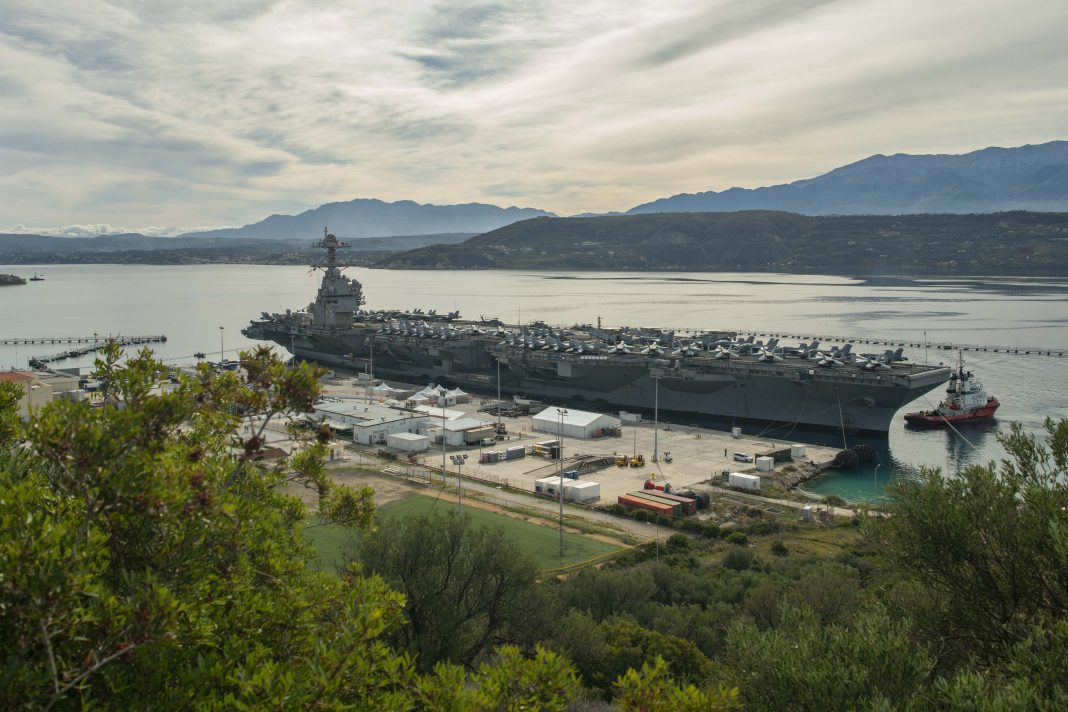
OUR MAIN PHOTO: USS Gerald Ford docked at Souda Bay
ΕΑΝ ΠΡΟΤΙΜΑΤΕ ΕΛΛΗΝΙΚΑ ΠΑΤΗΣΤΕ ΤΗ ΣΗΜΑΙΑ ΣΤΟ ΚΑΤΩ ΜΕΡΟΣ ΤΗΣ ΟΘΟΝΗΣ
The U.S. Navy confirms ongoing sewage system problems aboard its newest supercarrier during an extended Mediterranean deployment. While official statements cite mechanical and usage issues, knowledgeable analysts have raised unverified claims that crew frustration may have played a role. As the Ford docks at Souda Bay, the episode highlights both operational strain and the strategic importance of Crete in regional security.
The arrival of the USS Gerald R. Ford at Souda Bay has drawn significant attention — not only because of the strategic symbolism of a U.S. carrier strike group in the Eastern Mediterranean, but also because of persistent reports about serious onboard sewage system failures.
What Is Confirmed
Multiple U.S. media outlets over the past two years have documented recurring problems with USS Gerald Ford’s advanced vacuum-based sewage system. The system, designed for efficiency on the Navy’s newest class of supercarriers, has experienced repeated clogs and mechanical failures. Internal maintenance reports previously revealed that inappropriate materials — including clothing and hygiene products — have been found in the pipes, requiring chemical flushes and costly repairs.
The carrier has also been operating under an extended deployment cycle, reportedly longer than the traditional six-month window. Such prolonged deployments are known to stress both crew morale and onboard systems.
The stop at Souda Bay has officially been described as routine: rest, resupply, and maintenance. U.S. Navy statements maintain that operational readiness has not been compromised. It is known that Suda Bay is the only naval base between Norfolk, Virginia, and the Middle East, offering facilities not simply for resupply but for serious repairs on any aircraft carrier.
The Controversial Claims
Where the story becomes more controversial is in commentary from several well-known U.S. national security analysts, including Lawrence Wilkerson, Larry C. Johnson, and Max Blumenthal.
These analysts — citing what they describe as knowledgeable sources within the Pentagon and intelligence community — have suggested that the sewage problems may not be purely accidental. According to their accounts, there are unverified reports that sailors deliberately clogged parts of the system by stuffing T-shirts into the plumbing. The implication in such commentary is that this may have been an act of protest or frustration during a prolonged and stressful deployment.
There is no official confirmation from the U.S. Navy, the Pentagon, or major mainstream news organizations of deliberate sabotage. The “stuffed T-shirts” narrative remains unverified.
Context and Interpretation
That said, the analysts raising these claims are not fringe bloggers but individuals with long-standing backgrounds in journalism and in U.S. national security institutions. Their assertions, while unproven, are being discussed within certain policy and alternative media circles.
The broader context includes:
Extended deployments are placing unusual strain on crews
Documented morale challenges aboard long-serving carrier groups
Technical teething problems associated with the Ford-class systems
Whether the sewage failures stem solely from design and usage issues — as official statements suggest — or whether isolated acts of misconduct contributed remains unknown.
Why Souda Bay Matters: For Greece, and particularly Crete, the presence of the USS Gerald R. Ford underscores the continuing strategic role of Souda Bay as a pivotal NATO and U.S. naval hub in the Mediterranean. The timing of the stop, amid heightened regional tensions, adds geopolitical weight to what may otherwise be seen as a technical maintenance issue.
As with many defense-related stories, the full picture may emerge only gradually. For now, the evidence supports confirmed technical problems — while allegations of intentional sabotage remain claims, not established fact.
Let us close this article by noting that, beyond the extended deployment, the idea of a war against Iran is extremely unpopular among the American public, with approval barely rising past 20%. AIPAC and the Zionists are seething as they are faced for the first time ever with an extremely anti-Israel public opinion both in America and in Europe. Sailors on deployment are not isolated from America, but they share the same news as every other citizen. And finally, army rebellions against the leadership are quite common throughout history and should not be underestimated.
February 26, 2026, n.stamatakis@aol.com www.helleniscope.com
DISCLAIMER: The views and statements expressed in this article constitute constitutionally protected opinions of this author.