


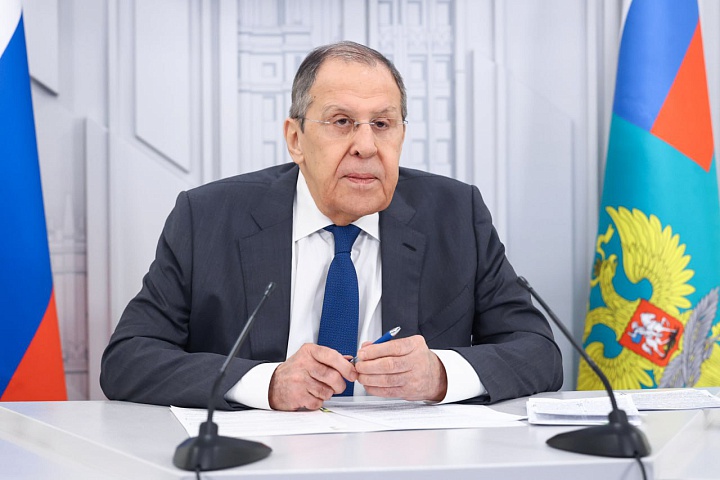
EDITOR’S NOTE (Nick Stamatakis). Before we begin, it’s worth remembering that in today’s turbulent world of diplomacy, few figures command as much respect—or as much strategic patience—as Russia’s long-serving Foreign Minister, Sergey Lavrov. For more than two decades, Lavrov has been at the center of global diplomacy, navigating crises, wars, and shifting alliances. Even critics acknowledge his reputation as one of the most experienced and formidable foreign ministers worldwide. That experience is now on full display as tensions explode around Iran.
As conflict erupts and the Straits of Hormuz face disruption, global energy markets have been thrown into panic. Nearly twenty percent of the world’s oil normally passes through that narrow waterway. When war threatens that supply, the ripple effects are immediate—and enormous. And this is where Russia enters the picture.
Iranian missiles hit all major US bases in the Persian Gulf, totally destroying them. Only the five radar systems of these bases are estimated to cost close to five billion dollars!! But they also destroyed infrastructure in the Arab Gulf states, which are US “vassals” (Kuwait, Bahrain, Qatar, UAE, Saudi Arabia, etc.) The foreign ministers of these states, after a phone call with Putin, rushed to Moscow for help, as their economies are already damaged beyond repair… Who is going to go for tourism and investment to them, before the war issues are solved? Nobody!! So they decided to go to Moscow to talk to Lavrov…
Understandably, Moscow suddenly finds itself in an extraordinarily advantageous position. With Gulf exports uncertain, buyers across Asia and beyond are turning to Russian oil and gas. In just days, soaring prices could generate billions in additional revenue for the Russian state.
Kremlin spokesman Dmitry Peskov noted that Russia will sell energy wherever there is demand. But the market reality has already changed dramatically. For the first time since sanctions began, Russian Urals crude is now being sold to Indian buyers not at a discount—but at a premium above Brent, a striking reversal that underscores how the war has shifted leverage back toward Moscow… Last week, PM Modi, asking stupidly, went to Israel, spoke to the Knesset, and signed 16 agreements… Now, a few days later, his foreign minister came out and declared that “nobody can tell India not to buy Russian oil”…
For Moscow, that windfall matters. Russia’s budget—often running a surplus and supported by relatively low national debt—relies heavily on energy exports. Every spike in global prices strengthens its financial position and provides additional resources to fund its military and strategic ambitions. But the diplomatic drama goes even further.
The response from Moscow was icy.
Lavrov and Kremlin spokesman Dmitry Peskov made it clear that Russia was not about to pressure an ally that was under attack. “Why did you not condemn Israel’s and America’s attack? asks Lavrov!! And you only condemn Iran!!
This video – which we owe to the experience of Larry Johnson (link here to his website) could be the stuff of comedy if it were not so serious!! ENJOY!!
=================













Iran is in an existential crisis. Iran is fighting to stop its extermination by US and Israel stated Paul Craig Roberts today. He said the Greater Israel Project is to take over the Middle East and the agenda is to exterminate Iran with the help of the USA.
https://www.youtube.com/live/OEplHZWNG-E?si=wyj3Hc51feXZ9eX4
Apparently the rich gulf states are little different than the self-righteous EU “powers”. rotl
Let us pray that Putin and Trump will cooperate enough at the highest levels, to allow mankind to survive on this planet.