
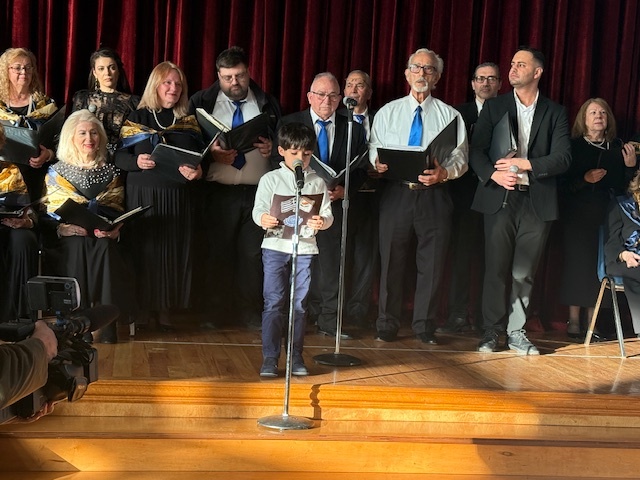
OUR MAIN PHOTO: Youngster Petros Ioannou steals the spotlight with his powerful recitation…
ΕΑΝ ΠΡΟΤΙΜΑΤΕ ΕΛΛΗΝΙΚΑ ΠΑΤΗΣΤΕ ΤΗ ΣΗΜΑΙΑ ΣΤΟ ΚΑΤΩ ΜΕΡΟΣ ΤΗΣ ΟΘΟΝΗΣ
A commemorative event bridging generations, inspiring youth, and sustaining the enduring legacy of Cyprus’ liberation struggle.
By Nick Stamatakis
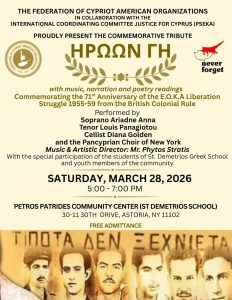
Last Saturday evening, at St. Demetrios School in Astoria, a memorial event for the EOKA Struggle of 1955–59 for Enosis with Greece was organized by the Cypriot organizations of New York. Fr. Anargyros Stavropoulos officiated the memorial service. Among those in attendance were the Special Envoy of the Republic of Cyprus, Ambassador Andreas Kakouris, who has submitted his candidacy for the Presidency of the 81st Session of the UN General Assembly; the military attaché Andreas Tryfonos; the President of PSEKA and of the Pancyprian Association of America, Philip Christopher; the President of the Federation of Cypriot Organizations of America, Kyriakos Papastyliannou; the Permanent Representative of the Republic of Cyprus to the UN, Ambassador Maria Michael; the Consul General of the Republic of Cyprus, Kyriakos Pogiatzis; Fr. Evagoras Constantinides, representing the Archbishop of America; the former Supreme President of AHEPA, Savvas Tsivikos; and other representatives of organized diaspora organizations. Mistress of ceremonies was Margarita Iracleous-Likas.
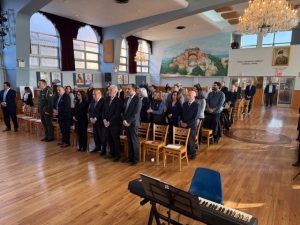
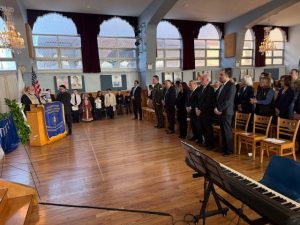
The event was exceptionally well organized, and the musical performances—especially those by the children—were deeply moving. The St. Demetrios Choir and a group of young Cypriots, Anastasis Stathakis, Marios Stathakis, Petros Ioannou, Christoforos Constantinidis, and Maria-Andriana Kadi, delivered heartfelt presentations. The main performance featured soprano Ariadne-Anna and tenor Louis Panayiotou, accompanied by Fytos Stratis on keyboards and Daiana Golden on cello.
From Memory Into Lived Experience: The Events of 1989–90
From a personal standpoint, the event transported me back 36 years, to 1989–90, when I spent an academic year in Cyprus conducting doctoral field research on the construction of Greek Cypriot identity. Commemorative events dedicated to national struggles play a decisive role in cultivating historical consciousness and national identity among younger generations. They transform memory into lived experience, allowing youth to connect emotionally and intellectually with the sacrifices of the past. During that year, after attending history and language classes at the Acropolis Lyceum in Nicosia, I joined students on March 3rd, 1990—Afxentiou’s Memorial Day—in a protest at Pyli Paphou along the Green Line. The symbolic weight of the day culminated in the daring act of student Petros Papaleontiou, whose attempt to remove the Turkish flag led to his arrest. At the same time, another student, Nicos Nicolaou, crossed the Green Line, was arrested, and remained imprisoned for months. These experiences demonstrated vividly that remembrance is not passive; it can inspire action and shape identity in profound and lasting ways.
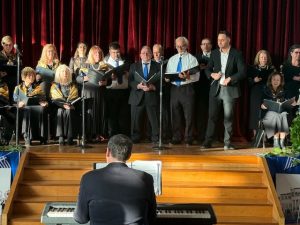
Watching the young Cypriot Petros Ioannou receive enthusiastic applause for his recitation in Astoria, I could not help but feel a deep sense of continuity and hope. It was a powerful reminder that the transmission of historical memory and identity is alive and enduring. In these young voices and performances, one could discern not only respect for the past, but also the quiet determination of a new generation coming of age—one that will carry forward the enduring aspiration for justice, dignity, and, ultimately, the liberation of Cyprus.
March 31, 2026, n.stamatakis@aol.com www.helleniscope.com
DISCLAIMER: The views and statements expressed in this article constitute constitutionally protected opinions of this author.
TO SUPPORT HELLENISCOPE OR BECOME A SUBSCRIBER, LINK HERE!!