


ΕΑΝ ΠΡΟΤΙΜΑΤΕ ΕΛΛΗΝΙΚΑ ΠΑΤΗΣΤΕ ΤΗ ΣΗΜΑΙΑ ΣΤΟ ΚΑΤΩ ΜΕΡΟΣ ΤΗΣ ΟΘΟΝΗΣ
The accomplished multimedia journalist, researcher, and community leader continues to elevate the Greek-American voice through her work exploring the impact of artificial intelligence on education and society. A proud member of our community, Avgi Maria Atmatzidou is earning national recognition for her work at the intersection of journalism, technology, and education.
By Nick Stamatakis
Our friend and dedicated community activist Avgi Maria Atmatzidou continues to make the Greek-American community proud through her outstanding work at the intersection of journalism, education, technology, and culture. A respected multimedia journalist, researcher, communications strategist, and founder of the internationally recognized Mykonos Multimedia Festival, Avgi has devoted her career to exploring how emerging technologies shape society while championing responsible innovation and human-centered storytelling.
Her latest contribution comes through the New York Post‘s widely discussed feature examining the growing impact of artificial intelligence in schools. The article explores the concerns of teachers, parents, and students over AI’s rapid integration into classrooms, raising important questions about academic integrity, critical thinking, privacy, and the future of education. The story became part of a broader national conversation surrounding the responsible use of artificial intelligence in America’s schools.
With her unique blend of academic expertise and practical media experience, Avgi helped bring attention to one of the defining educational issues of our time. Her background in digital media, interactive storytelling, and artificial intelligence has made her a respected voice on how technology can be harnessed responsibly while preserving the essential human values at the heart of learning. Through projects such as this, she continues to demonstrate her commitment to informing the public, fostering meaningful dialogue, and ensuring that innovation serves people—not the other way around.
We congratulate Avgi Maria Atmatzidou on yet another significant achievement and celebrate her continued dedication to journalism, education, and our community. Her work exemplifies the professionalism, integrity, and vision that inspire us all.
BELOW IS THE RECENT REPORT BY NY POST….
========================
Teachers, parents and even students trash disastrous impact of AI in schools: ‘My heart breaks for this generation’
The video player is currently playing an ad. You can skip the ad in 5 sec with a mouse or keyboard
See more of our coverage in your search results.
A few months ago, a third-grade student in Brooklyn was assigned — like the rest of his classmates — an AI-powered reading program called Amira.
He was already reading at a sixth-grade level, but he also suffered from hearing loss.
Amira repeatedly flagged his pronunciation — which was sometimes slightly off due to his hearing impairment — directing him to practice simple words again and again.

“It was having him reread words like ‘cat’ and ‘bat’ and ‘dog,’” his mother, who wanted to remain anonymous, told The Post.
When she tried to opt her son out of the program, she said, both the school and district officials initially told her no, and his feedback improved the technology for future students.
“I never consented to allow my child to train an AI chatbot,” she continued. “I never consented to allow my child to be used in this manner at all.”
The question of technology in school classrooms is a thorny one.
There is no doubt that staying abreast of the latest technology is key — it is already shaping jobs and industries, and today’s young students will need to be fully literate in it.

But swaths of teachers, parents, and even students are raising concerns that technology and AI in the classroom are hindering learning, normalizing cheating — all while the DOE sinks over $1 billion into tech firms.
One parent told The Post that her child used a school-issued device to screenshot math problems and run them through programs like Google Lens to receive answers in seconds.
Similarly, essays can be drafted by chatbots before a child writes a single sentence by hand.
One teacher revealed that their school has begun removing laptops from classrooms altogether because they are disruptive and distract students from learning.
“These kids are not going to be self-reliant,” Aixa Rodriguez, an English teacher at Motion Picture Technical High School, told The Post.
Locked into colossal contracts

New York City’s Department of Education has over $1 billion in technology contracts.
The Chromebook initiative alone — which involved issuing a device to almost every New York City student — has become one of the Department of Education’s largest technology investments.
When they were first adopted, the devices were a vital classroom aid — children could complete their homework on them, attend school remotely, and use them for research.
But as search engines evolved, and AI technology became ubiquitous, some DOE teachers told The Post they questioned the enormous investment versus the impact on learning.
City records reviewed by The Post show New York City has committed roughly $530 million across two Chromebook contracts with CDW Government since 2014.
The second contract, originally awarded at $13.8 million in 2017, was repeatedly renewed and amended until its authorized value reached nearly $497 million by 2025 — a roughly 36-fold increase.
CDW, which holds the city’s only contracts specifically designated for Chromebooks, was renewed without competitive bidding.
City records show about $310 million has been spent against under that contract so far.
The spending has only continued to grow. Last year, the city announced a separate $327 million initiative to distribute 350,000 LTE-connected Chromebooks, including roughly $200 million for T-Mobile cellular service to ensure students could connect even without home internet.
According to data, only a fraction of the LTE-enabled devices purchased reached students.

And the city also has a $626 million contract with Apple to provide students with iPads, which was revealed in 2020 — and slammed as a waste of time and money.
This enormous spending comes as English language arts and math proficiency are falling across the board in NYC.
In fact, in 2025, the city lowered the proficiency bar in state tests — meaning that while the results technically showed improvement, the standards they were using did not.
And even then, more than 40% of city kids failed the math and reading exams.
Promise versus productivity

For principal Melessa Avery, a veteran educator who heads up the Brooklyn-based PS 273 elementary school serving approximately 300 children, many of whom are financially insecure, the school-issued devices are a “second teacher.”
“Kids are riding trains and buses, and they can learn,” the Brooklyn principal told The Post.
“Anything that they misunderstood during actual live teachings, they can go on these devices and learn,” she added.
But even with the benefits, PS 273’s principal told The Post that access to technology doesn’t mean accelerated learning.
“I wrote to the provost of the state aid department, and I explained to him my concerns about the devices and the technology,” Avery said.
“These babies are 8 years old, and you have them writing essays, thinking on a computer. That is a no-no.”
She worries that not being taught handwriting or how to organize their thoughts on paper is setting students back.

She tries to use devices only in short intervals to avoid “flooding” young students with technology.
“AI for an elementary school student would be kind of like saying, ‘Here’s a cup of alcohol,’” she said.
When thinking stops
Many teachers told The Post that even though the school devices are supposedly blocked against apps like Google Gemini, AI programs are baked into search engines.
Google Lens is still available, and other programs are automatically loaded despite security preferences, making it much harder to police the classroom in everything from behavior to learning.
Rodriguez, who teaches many students for whom English is a second language, sees students defaulting to AI apps like ChatGPT and Gemini — on personal or school-issued devices — to quickly complete work, often bypassing critical thinking.
“You’re supposed to generate your own idea. You’re not supposed to put it in Gemini and get everything out,” she said.
“I have kids who write with words that I know are not theirs.”
Both anecdotal and reported data have shown increased use of digital learning tools, and AI has contributed to regressions in students’ development and learning.

Janice Torres, a parent coordinator and PTA board member at PS 273, noted an increase in children entering school with dexterity and literacy issues coinciding with AI use.
“We’re seeing a spike in speech development delays because of the iPads,” Torres told The Post.
A middle school math teacher in Brooklyn, who wanted to remain anonymous, told The Post that she has started to remove Chromebooks and devices during class, as children were falling behind and not paying attention.
“It breaks my heart for this generation,” she said of the proliferation of computer-based learning.
In her classroom, she shifted the focus back to handwritten problem solving and saw immediate improvement.
Longtime education advocate Leonie Haimson says the lack of transparency around AI is as concerning as the technology itself, with parents reporting that Gemini has interrupted students during reading and math assignments by offering assistance.
“What people have told me is that Gemini pops in and says, ‘Can I help you?’” Haimson said. “That is totally destructive of kids’ ability to learn the skills they need to succeed in life.”
“There are no peer-reviewed studies showing AI has a positive impact on learning,” she adds. “Many studies show the opposite.”
Students against AI
When it comes to older students, AI is sometimes flat-out rejected.
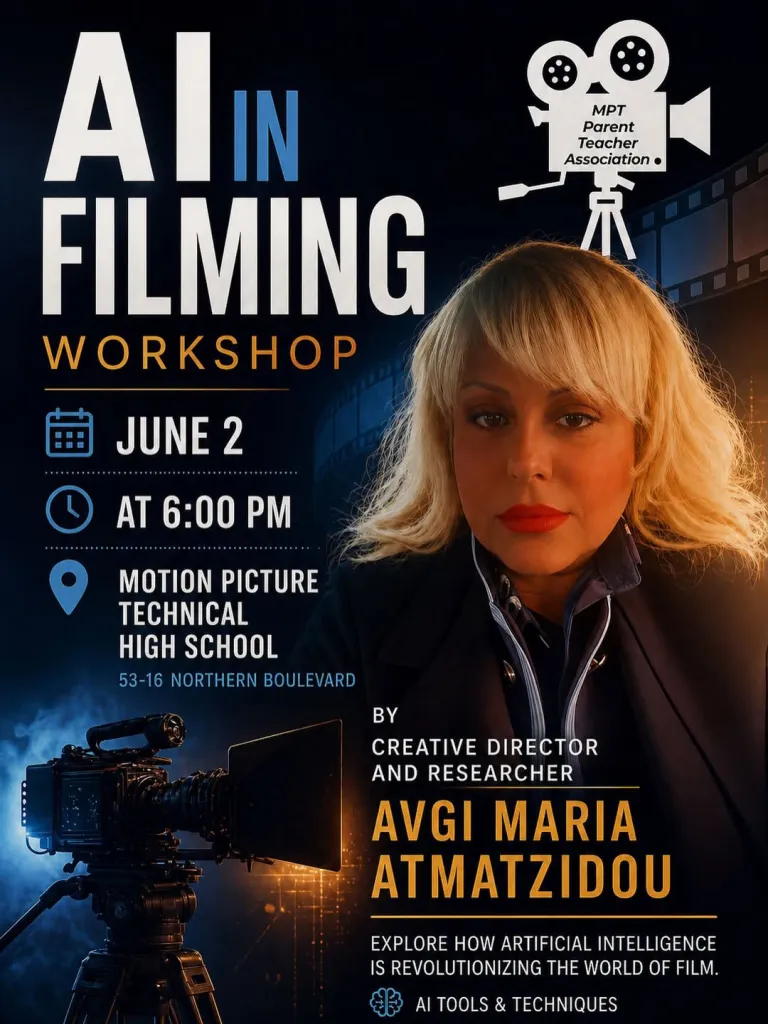
When Motion Picture Technical High School hosted an after-school workshop this spring on how artificial intelligence could transform filmmaking, it sparked online outrage.
Then, teachers were subjected to a separate meeting led by a paid AI consultant hired by the school’s principal.

Students quickly took to Instagram, blasting what they saw as the hypocrisy of a film school encouraging technology that they feared could replace the very jobs and creative skills they were being trained for.
“Wdym youre gonna promote something that is gonna kill the industry you’re teaching children to work in,” one student commented on Instagram.
“What is the point of a film school then if you’re just gonna push out the idea of a computer?”
During the presentation, the consultant showed AI-generated deepfake videos of the principal.
“It creeped everybody out,” Rodriguez told The Post.
Rodriguez noted the hypocrisy of schools — that often lack the basic resources to teach students to think independently — spending big on AI consultants.
“You don’t have a librarian in the building,” she said. “We need librarians who can help kids research properly.”


Holding the DOE to account
Haimson also believes the city has far more control over AI than officials acknowledge.
“The DOE has incredible influence and power over the school system,” she said. “They can reject the use of AI if they want to.”
She also notes they have dodged questions about exactly how many devices have AI installed — and at a city council hearing this week, delayed releasing comprehensive AI guidelines for schools.
“At the hearing, DOE officials offered no timeline when the revised AI guidelines would be ready, and no proposals as to how their privacy vetting would be improved despite the findings of the scathing Comptroller audit,” Haimson told The Post.
At the same time, tracking exactly how much the city spends on Chromebooks — and for what technology — has also become increasingly difficult.
According to a recent report by the City Comptroller, the newest Chromebook purchases are made through broader IT master agreements that don’t identify specific products or the breakdown of vendors on individual delivery orders.
The Department of Education defended its approach, saying student access to AI tools is tightly controlled.
“Earlier this year, New York City Public Schools took initial steps to put guardrails in place while developing student AI guidance in partnership with families, educators, and communities,” a DOE spokesperson told The Post.
According to the department, Google’s Gemini platform is disabled by default for students and is currently available to high schools participating in a pilot program at the request of individual principals.
Officials said Google Lens and Google’s separate AI Mode have also been disabled for students.
The DOE acknowledged reports that Gemini could automatically reinstall after being removed and said this concern contributed to the decision to block AI Mode for students.
Officials said the pilot is intended to help evaluate the technology before broader guidance is finalized and argued that AI can serve as “a thought partner for students and staff” when used responsibly.
“There’s no tool that can replace the role of a teacher,” the spokesperson said.
Avery doesn’t believe technology is going away, nor does she think it should.
But as schools race to adopt artificial intelligence, she believes educators still have a responsibility to protect the fundamentals.
“It’s a Catch-22,” she said. “In moderation, especially for my babies.”
















The NYC DOE is notorious for throwing money into nonsensical curriculums, technology, books and supplies. They also throw millions of dollars away into cutting edge initiatives, programs and professional development that is totally useless. They also attach themselves to reputable universities selling their reading/writing programs that are also useless and harmful to children. For the past 25 years, the DOE has wasted millions of dollars setting up children and exhausted teachers for failure. The new AI paradigm is no exception. The reading and math scores are also a farce, as they give an unfair, overall picture of student mastery. Standardized tests should not be the only assessments utilized to measure a child’s progress.
The fish smells from the head. What big pharma and pharmaceutical drug pushers are to the medical field, publishing companies and innovative technologies are to education. All are meant to destroy a nation especially the later, concerning the advancement of our children.
Leave the teachers and students alone. Get rid of all computers and tech from the classrooms including th smart boards and teach the basics along with the Socratic Methodology of Teaching. Now that’s authentic thinking!
I wonder why Elon Musk over there in Texas built schools for his own kids and employees’ kids. Only paper, real books, pencils, crayons, markers, clay, pens, building blocks and old fashioned teaching going on. No mobiles, ipads, nor PCs. I wonder why……wake up parents and demand change for your children and fast. AI is a disaster on the university level as well. From what I hear, 90% of the papers submitted are all written exactly the same way on a given topic. Now they are adding oral exams to prove mastery after each class taken. I expect a rise in professors retiring very soon across the nation.