
source – estianews.gr – ORIGINAL GREEK TEXT FOLLOWS
Main Editorial from Estia Newspaper — August 11, 2026
As soon as Stelios Ramfos expressed his disagreement with same-sex marriage, they made him disappear from the media.
When he spoke about populism, they gave him a platform — The vindication of one man’s deeply felt concern.
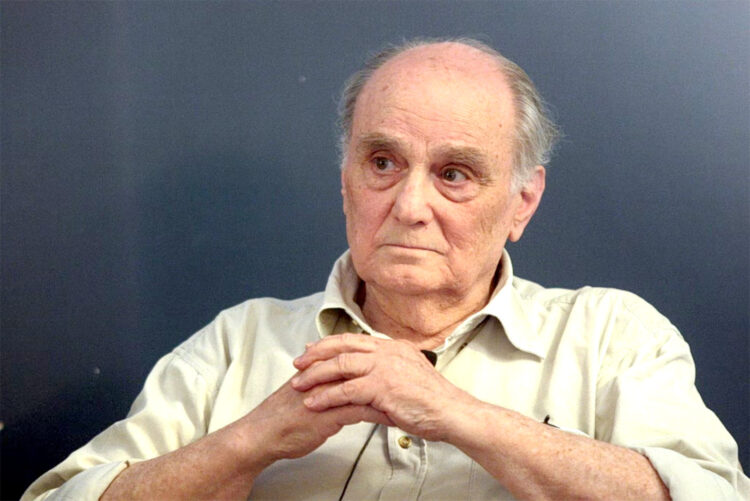
An intellectual is, by nature, unconventional. Such was Stelios Ramfos, who died yesterday. That is precisely why he was never “convenient.” And it is revealing how those who once praised him suddenly made him disappear from the media. They did not forgive him for having his own views—on Greece, on Orthodoxy, and on the connection with Byzantium.
What proved decisive, however, was his position against same-sex marriage and the adoption of children by same-sex couples. That was when the media sidelined him. Just a few years earlier, it had suited them to discuss populism with him. And now all those who helped push him aside are rushing to praise him after his death—to draw something from his intellectual stature now that he is dead, now that he can no longer trouble them.
Yet the worth of an intellectual is not determined either by appearances on television or by acceptance from a political establishment. It is the worth recognized by the public consciousness—the collective unconscious, the judgment of ordinary readers of his works. And they bestowed upon him the title of philosopher, a title he himself declined, saying that he was a philophilosopher—a lover and student of philosophy. A scholar, in other words. A perpetual student. But an intellectual is ultimately what others recognize in his life and thought. And in that sense, Stelios Ramfos was both a thinker and a philosopher.
The superficial way most of those praising him today approached his work led them to applaud the rationalism he advocated, but not his study of Patristic theology, in which he immersed himself, nor his devotion to the Byzantine tradition.
Characteristic was his position on same-sex marriage, about which he had said:
“There is no problem requiring the new law in order to be solved, given that the genuinely liberal measure of the flexible and alternative solution of the civil partnership already exists. And if there is some gap or omission, let it be corrected specifically. Therefore, the bill on same-sex marriage creates more problems than it solves.”
Ramfos aspired to explain to Greeks who they are, why they repeat the same mistakes, where their collective fixations come from, and why they continually return to the past instead of taking responsibility for the present and creating their future. And it was precisely this ambition—his conviction that he could interpret the ties connecting Byzantium, the family, the Church, the state, politics, and our everyday ethos—that became the source both of his enormous influence and of the criticism directed at him.
Stelios Ramfos died at age 87, after being hospitalized in an Athens clinic during the final period of his life. He was born in Athens in 1939. In the early years of his life, he was involved with Marxist ideology. In 1960 he participated in the youth organization of EDA [United Democratic Left] and in its magazine, Panspoudastiki, while in 1963 he broke his ties with the Left.
In 1965, before completing his studies at the Athens Law School, he began studying philosophy in Paris, at Vincennes—today Paris 8 University—where, between 1969 and 1974, he taught philosophy.
While a student in Paris, he met Cornelius Castoriadis, who influenced him. In 1975 he returned to Greece, where he continued his work as a writer. After his return, his name became associated with the universal dimension of Greek culture and with Orthodoxy.
His extensive bibliography reflects his intellectual inquiries, positions, and proposals on the universal character of Greek culture and the relationship between contemporary intellectual creativity and the Greek Orthodox tradition.
===============
Οι «βολικοί» φιλόσοφοι και η φωτεινή εξαίρεσίς τους
Μόλις ὁ Στέλιος Ράμφος ἐξέφρασε τήν διαφωνία του γιά τόν γάμο τῶν ὁμοφύλων ζευγαριῶν τόν ἐξαφάνισαν ἀπό τά μέσα ἐνημερώσεως
Ὅταν μιλοῦσε γιά τόν λαϊκισμό τοῦ ἔδιναν βῆμα – Ἡ δικαίωση τοῦ καημοῦ τοῦ ἑνός
Ὁ πνευματικός ἄνθρωπος εἶναι ἀντισυμβατικός. Τέτοιος ἦταν ὁ Στέλιος Ράμφος, ὁ ὁποῖος χθές ἀπεβίωσε. Γι’ αὐτό καί δέν ἦταν «βολικός». Καί εἶναι χαρακτηριστικό τό πῶς αὐτοί πού κάποτε τόν ἐξεθείαζαν ξαφνικά τόν ἐξαφάνισαν ἀπό τά μέσα ἐνημερώσεως. Δέν τοῦ συγχώρησαν τό ὅτι εἶχε ἰδίαν ἄποψιν καί γιά τήν Ἑλλάδα καί γιά τήν Ὀρθοδοξία καί γιά τήν σύνδεση μέ τό Βυζάντιο.
Αὐτό ὅμως πού ὑπῆρξε καθοριστικό ἦταν ἡ θέσις του κατά τοῦ γάμου τῶν ὁμοφύλων ζευγαριῶν καί τῆς υἱοθεσίας παιδιῶν ἀπό αὐτά. Τότε ἦταν πού τά ΜΜΕ τόν παραγκώνισαν. Ἐνῷ λίγα χρόνια πρίν τούς «βόλευε» νά συζητοῦν μαζί τοῦ περί λαϊκισμοῦ. Καί ὅλοι αὐτοί οἱ ὁποῖοι συνέβαλαν στό νά παραγκωνισθεῖ σπεύδουν σήμερα νά τόν ἐκθειάσουν, μετά θάνατον. Νά ἀρυσθοῦν κάτι ἀπό τήν πνευματικότητά του, μετά θάνατον. Τώρα πού δέν τούς εἶναι πλέον ἐνοχλητικός.
Ἡ ἀξία τοῦ πνευματικοῦ ἀνθρώπου ὅμως δέν συναρτᾶται οὔτε μέ τήν παρουσία στίς τηλεοράσεις οὔτε μέ τήν ἀποδοχή του ἀπό ἕνα πολιτικό κατεστημένο. Εἶναι ἡ ἀξία τήν ὁποία ἀναγνωρίζει τό κοινό αἴσθημα. Τό κοινό ἀσυνείδητο. Ἡ ἄποψις τῶν ἁπλῶν ἀναγνωστῶν τῶν ἔργων του. Καί αὐτοί τοῦ ἀπέδωσαν τόν τίτλο τοῦ φιλοσόφου. Τίτλο τόν ὁποῖο ὁ ἴδιος δέν ἀποδεχόταν, λέγοντας πώς εἶναι «φιλοφιλόσοφος». Μελετητής δηλαδή. Ἀέναος μελετητής. Ἀλλά ὁ πνευματικός ἄνθρωπος εἶναι αὐτό πού οἱ ἄλλοι ἀναγνωρίζουν στήν ζωή καί τήν σκέψη του. Καί ὡς ἐκ τούτου ὁ Στέλιος Ράμφος ἦταν διανοητής καί φιλόσοφος.
Ἡ ἐπιφανειακή προσέγγισις τοῦ ἔργου του ἀπό τούς πλείστους ἐξ ὅσων σήμερα τόν ἐκθειάζουν τούς εἶχε ὁδηγήσει νά ἐπικροτοῦν τόν ὀρθολογισμό τόν ὁποῖο ἐπρέσβευε, ἀλλά ὄχι καί τήν μελέτη τῆς πατερικῆς θεολογίας στήν ὁποία ἐντρυφοῦσε καί τήν ἀφιέρωσή του στήν βυζαντινή παράδοση.
Χαρακτηριστική ἦταν ἡ τοποθέτησίς του γιά τόν γάμο τῶν ὁμοφύλων ζευγαριῶν, γιά τόν ὁποῖο εἶχε πεῖ: «Δέν ὑπάρχει κανένα πρόβλημα πού χρειάζεται τόν καινούργιο νόμο γιά νά λυθεῖ ἀπό τήν στιγμή πού ὑπάρχει τό πραγματικά φιλελεύθερο μέτρο τῆς εὐέλικτης καί ἐναλλακτικῆς λύσης τοῦ συμφώνου ἐλευθέρας συμβιώσεως. Καί ἄν ὑπάρχει κάποιο κενό ἤ κάποια παράλειψη, ἄς διορθωθεῖ ἐπί τούτο. Ἑπομένως τό νομοσχέδιο περί γάμου τῶν ὁμοφύλων ζευγαριῶν περισσότερο δημιουργεῖ παρά λύνει προβλήματα».
Ὁ ἴδιος φιλοδόξησε νά ἐξηγήσει στούς Ἕλληνες ποιοί εἶναι, γιατί ἐπαναλαμβάνουν τά ἴδια λάθη, ἀπό ποῦ ἀντλοῦν τίς συλλογικές τους ἐμμονές καί γιατί ἐπιστρέφουν διαρκῶς στό παρελθόν, ἀντί νά ἀναλαμβάνουν τό παρόν καί νά δημιουργοῦν τό μέλλον τους. Καί αὐτή ἀκριβῶς ἡ φιλοδοξία–ἡ πεποίθησίς του ὅτι μποροῦσε νά ἑρμηνεύσει τούς δεσμούς πού συνδέουν τό Βυζάντιο, τήν οἰκογένεια, τήν Ἐκκλησία, τό κράτος,
τήν πολιτική καί τό καθημερινό μας ἦθος– ὑπῆρξε ἡ πηγή τόσο τῆς τεράστιας ἐπιρροῆς ὅσο καί τῆς ἀμφισβητήσεώς του.
Ὁ Στέλιος Ράμφος ἔφυγε ἀπό τήν ζωή σέ ἡλικία 87 ἐτῶν, ἀφοῦ τό τελευταῖο διάστημα ἐνοσηλεύετο σέ κλινική τῶν Ἀθηνῶν. Ὁ ἐκλιπών ἐγεννήθη τό 1939 στήν Ἀθήνα. Στά πρῶτα ἔτη τοῦ βίου του ἠσχολήθη μέ τήν ἰδεολογία τοῦ μαρξισμοῦ. Τό 1960 συμμετεῖχε στήν Νεολαία τῆς ΕΔΑ καί στό περιοδικό της, «Πανσπουδαστική», ἐνῷ τό 1963 διέρρηξε τούς δεσμούς του μέ τήν Ἀριστερά. Τό 1965, πρίν ὁλοκληρώσει τίς σπουδές του στήν Νομική Σχολή τῶν Ἀθηνῶν, ξεκίνησε σπουδές Φιλοσοφίας στό Παρίσι, στήν Βενσέν, σημερινό Πανεπιστήμιο Παρίσι 8, ὅπου τό διάστημα 1969 καί 1974 διετέλεσε καθηγητής Φιλοσοφίας.
Ὅταν ἦταν φοιτητής στό Παρίσι, γνώρισε τόν Κορνήλιο Καστοριάδη, ὁ ὁποῖος τόν ἐπηρέασε. Τό 1975 ἐπέστρεψε στήν Ἑλλάδα, ὅπου συνέχισε τό συγγραφικό ἔργο του. Μετά τήν ἐπιστροφή του, τό ὄνομά του συνεδέθη μέ τήν οἰκουμενικότητα τοῦ ἑλληνικοῦ πολιτισμοῦ καί τήν Ὀρθοδοξία.
Ἡ πλούσια βιβλιογραφία του ἀντικατοπτρίζει τίς πνευματικές ἀναζητήσεις του, τίς θέσεις καί τίς προτάσεις του ἀναφορικῶς μέ τήν οἰκουμενικότητα τοῦ ἑλληνικοῦ πολιτισμοῦ, τούς συσχετισμούς τῆς συγχρόνου πνευματικῆς δημιουργίας μέ τήν ἑλληνορθόδοξο παράδοση.