

ΕΑΝ ΠΡΟΤΙΜΑΤΕ ΕΛΛΗΝΙΚΑ ΠΑΤΗΣΤΕ ΤΗ ΣΗΜΑΙΑ ΣΤΟ ΚΑΤΩ ΜΕΡΟΣ ΤΗΣ ΟΘΟΝΗΣ
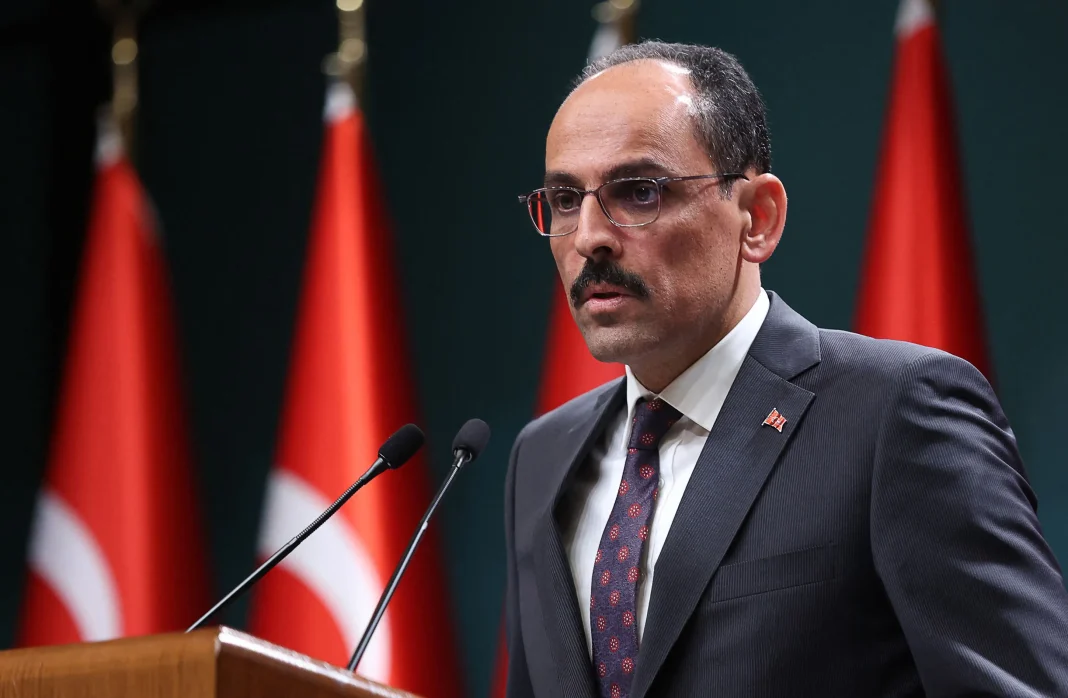
OUR MAIN PHOTO: Ibrahim Kalin
Behind the quiet visit: Aegean tensions, Israel, regional security, and the private channel between Ankara and Athens
By Helleniscope’s Editorial Team
A quiet visit to Athens by Turkey’s intelligence chief, Ibrahim Kalin, has opened a much
A quiet visit to Athens by Turkey’s intelligence chief, Ibrahim Kalin, has opened a much larger question: what exactly was Ankara trying to communicate to Greece at a moment when tensions in the Aegean are again rising?
What is now confirmed is that Kalin, the head of Turkey’s National Intelligence Organization, or MIT, met with the director of Greece’s National Intelligence Service, Themistoklis Demiris, on Friday, August 28, at EYP headquarters in Athens.
The meeting was not announced at the time. It became public only days later, fueling opposition accusations of “secret diplomacy.”
Greek reporting also says that after the intelligence chiefs met, Kalin and Demiris traveled to the Maximou Mansion, where Prime Minister Kyriakos Mitsotakis reportedly received Kalin. Greek media has reported the meeting strongly, although the government has not formally confirmed it.
So, what was discussed?
According to both Greek and Turkish accounts, the agenda went far beyond routine intelligence cooperation.
It reportedly included Greek-Turkish relations, security in the Aegean and Mediterranean, NATO security, terrorism, organized crime, illegal migration and human smuggling.
The Turkish side provided an even broader picture. According to Anadolu Agency, Kalin and Demiris discussed the wider regional environment, including the U.S.-Iran conflict, Syria, Libya, Palestine, Gaza and the West Bank, as well as Israeli military actions in Syria and Lebanon.
That regional agenda is significant because Ibrahim Kalin is not simply a career intelligence official.
Before taking control of MIT, he was one of President Recep Tayyip Erdogan’s closest foreign-policy advisers and has repeatedly been entrusted with sensitive diplomatic missions. When Kalin travels, he can therefore also serve as a direct political channel to Erdogan.
Greek reports suggest his message in Athens was meant to reassure.
According to SLpress and other Greek outlets, Kalin reportedly indicated that Turkey’s principal strategic concern is currently Israel, rather than Greece, and that Ankara was not seeking an immediate confrontation with Athens. Other reporting stresses that Kalin delivered no ultimatum and no direct threat.
But the timing makes that reassuring message hard to separate from events unfolding publicly.
While Kalin maintained a confidential channel with Athens, Ankara again escalated its rhetoric over the Aegean.
Turkey has renewed its objections to the militarization of Greek islands, challenged Greek maritime spatial planning, and declared its own so-called national marine parks in areas that Greece says extend outside Turkish jurisdiction and into the Greek continental shelf.
On September 3, Athens responded with a formal diplomatic protest to Ankara, rejecting the Turkish positions as arbitrary and lacking legal foundation. Greece stressed that international treaties have already clearly and definitively established sovereignty in the Aegean.
And this is the central contradiction surrounding Kalin’s visit:
Public confrontation — but private communication.
The most plausible interpretation is that Athens and Ankara are preserving a high-level backchannel precisely because their fundamental disputes remain unresolved.
Intelligence chiefs can speak away from television cameras, test the other side’s intentions, exchange sensitive information and, most importantly, prevent a maritime or military incident from escalating into a political crisis.
That does not necessarily mean Greece and Turkey have entered a new period of trust.
It means both governments appear to recognize the danger of losing control of their confrontation.
And that may be the real significance of Ibrahim Kalin’s quiet trip to Athens: not that Turkish policy toward Greece has changed, but that Erdogan wants to keep a direct line open to Athens while Turkey continues pursuing its wider strategic objectives in the Aegean and Eastern Mediterranean.
Sources
- SLpress — Greek diplomatic protest over Turkish marine parks and opposition accusations of “secret diplomacy”
- CNN Greece — EYP confirms the Kalin–Demiris meeting and outlines the security agenda
- Anadolu Agency — Turkish account of the talks, including the Aegean, NATO, migration, Syria, Libya and Israel
- eKathimerini — Report on Kalin’s Athens visit and the wider Greek-Turkish context
- eKathimerini — Renewed Erdogan rhetoric and rising tensions in the Aegean
- ERT News — Greece’s formal diplomatic protest to Turkey over maritime planning and marine parks
September 3, 2026, www.helleniscope.com, n.stamatakis@aol.com
DISCLAIMER: The views and statements expressed in this article constitute constitutionally protected opinions of this author.
















There is one common denominator of Greek Media, Ahepa, Bartholomew , Epidophoros, the Greek Archdiocese of America, Archons, and Mistotakis and the Greek Regime, they all support the Neo Nazi Jewish Zionist regime of Zelensky, Netanyahu, and the Evangelical Protestant Christian Zionist Regimes of America and EU/Nato , who will be charged at the Venue to honor Zelensky, for being “State Sponsors of Terrorism ” against Orthodox Christians and Christians in the Ukraine , Russia, Serbia, Iraq, lebanon, Gaza, Syria, Palestine, and most of the middle East and Europe! This reflex the fact that Greece and Cyprus are now captured as “Colonies” by the now acknowledged Zionist states , not Christian States of America and Israel .. Period! Consequently, Mistotakis and the Government , like in U.S , Israel and Ukraine are criminal enterprises who demand compliance of the Churches, Media, Justice Department, law enforcement and Law Makers of the parliament of
Greece and Cyprus, if not they will be removed from their positions, like Zelensky did in the Ukraine ! I bet, that the Turkish emissary also met with his Nato partners in Greece, right before… they invaded the Orthodox Christians of Cyprus and terrorized the civilian population , murdered them, and burned their churches and homes …just like Zelensky and Netqnyahue did in Ukraine and Gaza , and which was allowed by Nato leader.. Evangelical Protestant Christian Zionist America! What ever , intelligence they were sharing , they share with Israel and America , not the people of Greece or Cyprus! The bottomline .. All crimes committed by Trump, Biden , Obama and Clinton against Russia, Ukraine and the world .. make Greece and Cyprus accessories to those Crimes.. including genocide and being state sponsors of Terrorism. None of the acts of war by Trump and his Evangelical Christian Zionist Crusaders have been approved as constitutionally mandated by vote of the peoples representatives in Congress! And why, because the Zionist know that every one of them would be draged out of office, they put their name on document that declared war on Russia or any other country in the world! And the same goes for Greece and Cyprus! Consequently, all these acts of war without a declaration of war, become nothing less than Unilateral ” State Sponsored Terrorism” by the “Ruling Political Zionist parties of America, not the will of the people! And that is enough to send Turkish, Israeli, U.S and EU Nato emissaries down the well’s like the Spartans did . when the Persian emissary came and asked for the “Land and Water” of Sparta!
Well, Michael One was angry at lots and lots of groups.
What do others on here think? Is it good for Greece and Cyprus to have closer associations with Israel?
The wiretapping scandal in Greece gave the Israelis secrets – and therefore control – of almost all Greek political leaders. This fact alone make the strategic alliance uneven and extremely risky for Greece at a critical moment.
After Achilles Shield deal, Israeli air defense dominates in Europe as continent races to rearm.
jpost (dot) com / defense-and-tech / article-907334
According to the article above Israel 🇮🇱 now controls Greece’s air defense capabilities 🤔
Will Artificial Intelligence play a role in how the Achilles Shield 🛡 functions?
Do the Israelis 🇮🇱 have access to a hidden kill switch on the Achilles Shield 🛡 which can aim the Missiles 🚀 at Greece instead of another country?
If something goes wrong, will it be too late?
Only time will tell!
“In popular media, Skynet is often used as an analogy for the possible threat that a sufficiently advanced AI could pose to humanity.”
I have thought about this matter some more and, although I see dangers for Greece in being the weaker partner in any alliance, I then have to ask, what better alternative does Greece have?
Without this agreement, does the US stand ready to do more to protect Greece? Does Russia?
In any event, if this is a done deal, we should wish the best for it.