


ΕΑΝ ΠΡΟΤΙΜΑΤΕ ΕΛΛΗΝΙΚΑ ΠΑΤΗΣΤΕ ΤΗ ΣΗΜΑΙΑ ΣΤΟ ΚΑΤΩ ΜΕΡΟΣ ΤΗΣ ΟΘΟΝΗΣ
When Powerful Institutions Decide Which Political Opinions May Be Heard, the Fight Is No Longer About Gaza Alone—It Is About the Meaning of Free Speech in America
By Helleniscope’s Editorial Team
Please allow us to start with a short and sharp video by Tucker Carlson:
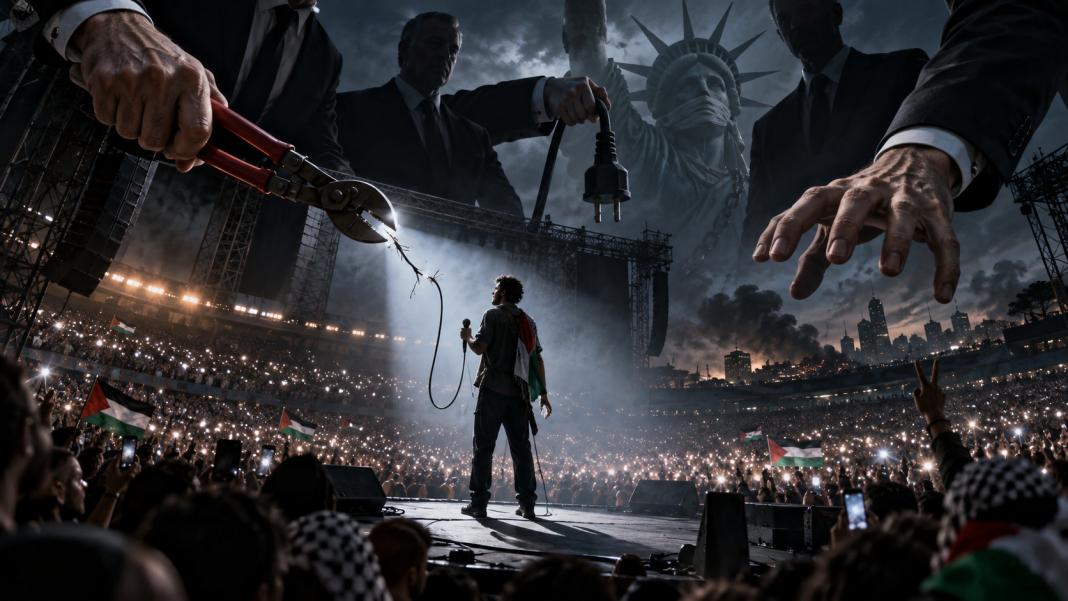
The Macklemore controversy is not really about a rapper, and Tucker Carlson was right to frame it as something larger: a test of whether Americans still believe in free political expression when the subject is Israel, Gaza, and the rapidly collapsing consensus that once insulated Israeli policy from serious criticism in the United States.
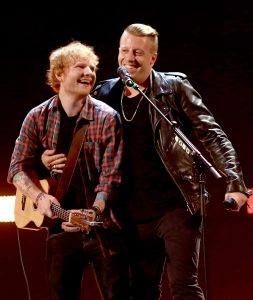
The facts are straightforward. While opening for Ed Sheeran at MetLife Stadium, Macklemore spoke about Gaza, said “Free Palestine,” performed his protest song Hind’s Hall, and explicitly told Jewish listeners that his criticism of Israel was not criticism of Jews. Soon afterward, the Israeli-American Council demanded his removal, Robert Kraft made clear that Macklemore would not perform at Gillette Stadium, and other NFL owners were reportedly prepared to take similar action. Faced with the possibility that major venues would cancel concerts, the promoter removed Macklemore from the remaining tour dates, prompting several other performers to withdraw in protest.
That is what makes Carlson’s argument uncomfortable for conservatives who spent years denouncing cancel culture. If corporations, universities, and wealthy institutions were wrong to punish people for politically unpopular speech when the target was a conservative, why should the principle suddenly change when the speaker is criticizing Israel?
The issue is not whether Macklemore must be admired, whether every slogan he uses is wise, or whether every charge made against Israel is legally proven. The issue is whether powerful private institutions should be able to impose such a severe economic price on political speech that the practical result is silence.
Antisemitism is real and should be confronted wherever it appears, but criticism of the Israeli government, its military conduct, settlement policy or the devastation in Gaza is not automatically antisemitism, and collapsing those categories is both intellectually dishonest and politically dangerous. The Holocaust remains one of history’s supreme crimes, but its memory cannot become a permanent shield against criticism of a modern state, nor can allegations of antisemitism be allowed to function as a universal veto against speech about Palestinian suffering.
The International Court of Justice – although it has not issued a final ruling that Israel committed genocide – it has imposed provisional measures under the Genocide Convention (which Israel totally ignored), while the United Nations General Assembly has repeatedly demonstrated overwhelming international opposition to the conduct of the Gaza war. Those facts are grave enough without exaggeration.
American public opinion is also changing rapidly. Polling in 2026 showed a clear deterioration in attitudes toward the Israeli government and a historic rise in sympathy for Palestinians, particularly among younger Americans, which helps explain why attempts to suppress pro-Palestinian speech increasingly appear not merely heavy-handed but politically counterproductive.
The same tension appeared at Columbia University, where legitimate disciplinary questions about building occupations and campus disorder became entangled with a broader national campaign to pressure universities over pro-Palestinian activism. Students who commit vandalism, trespass, or violence can be punished for conduct, but political speech must remain distinguishable from misconduct, because once institutions begin treating dissent itself as punishable, the principle at stake is no longer Gaza but the meaning of American freedom.
This is where the Macklemore affair becomes important. Robert Kraft has every right to condemn Macklemore, advocacy groups have every right to criticize him, and audiences have every right to reject his views, but when venue owners coordinate enough economic pressure to make a politically controversial performer disappear from a national tour, Americans are entitled to ask whether this is precisely the kind of coercive institutional power that was denounced as cancel culture when it targeted someone else.
That is Carlson’s strongest point, and it deserves to be taken seriously.
Free speech is meaningless if it protects only speech approved by powerful institutions, major donors, or politically influential organizations. Its value is tested precisely when the speech is offensive, provocative, or unwelcome.
The deeper mistake being made by some pro-Israel organizations is the assumption that pressure can restore an older political consensus. It cannot. They have lost the political game, and the more they show an arrogant, supremacist face, the more the American people will reject Israel’s Genocidal practices in Gaza and the West Bank. Americans are seeing Gaza, debating Gaza and forming their own conclusions about Gaza, while younger generations in particular are far less willing to accept the proposition that criticism of Israel is presumptively illegitimate.
The attempt to police that discussion therefore risks producing the opposite of its intended result, because Americans tend to resent being told that one subject, one government or one foreign conflict lies outside the normal boundaries of political debate.
The Macklemore story is ultimately about a very American question: whether unpopular speech should be answered with argument or with sufficient institutional power to make the speaker disappear.
If the answer depends on whose politics are being silenced, then the principle was never really free speech at all.
September 19, 2026, www.helleniscope.com, n.stamatakis@aol.com
DISCLAIMER: The views and statements expressed in this article constitute constitutionally protected opinions of this author.










I couldn’t have said it better myself, Nick.