

ΕΑΝ ΠΡΟΤΙΜΑΤΕ ΕΛΛΗΝΙΚΑ ΠΑΤΗΣΤΕ ΤΗ ΣΗΜΑΙΑ ΣΤΟ ΚΑΤΩ ΜΕΡΟΣ ΤΗΣ ΟΘΟΝΗΣ
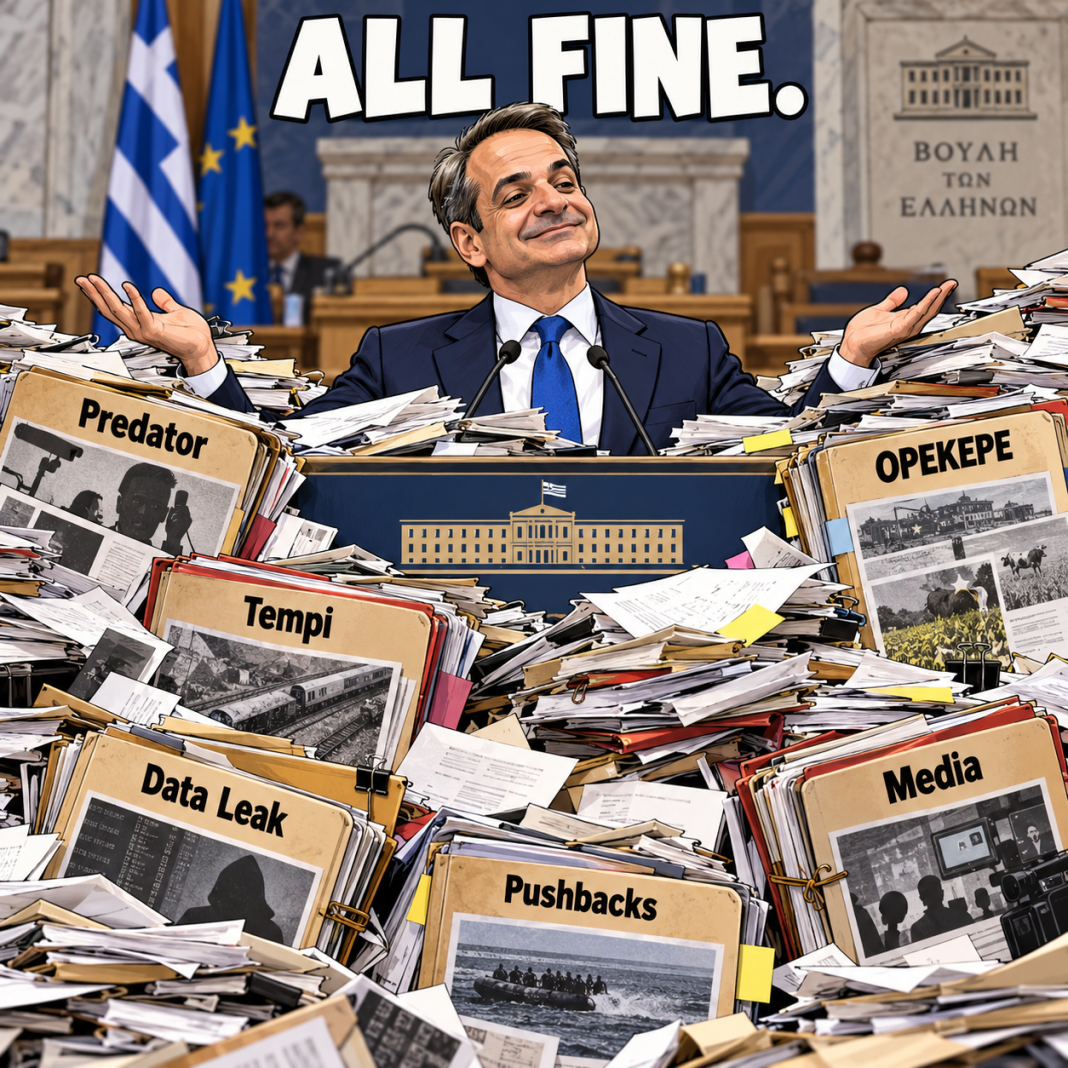
PHOTO: An artistic rendition of the King of Scandals, Mitsotakis!!
From Predatorgate and Tempi to OPEKEPE, media influence, data breaches, and contested defense decisions, a documented examination of the controversies that have defined Greece’s government since 2019.
By Nick Stamatakis
The Mitsotakis government’s record since 2019 reads like an ever-expanding catalog of scandals: surveillance, public money, institutional interference, railway safety, personal-data abuses, media manipulation, and repeated questions about the rule of law. The government that marketed itself as the administration of the “Best and Brightest” soon began to resemble something rather different: an impressive collection of expensive suits in search of substance. The first cracks appeared early, with Antonis Diamataris resigning amid his lies over his University degrees. And in a piece of political theatre almost too perfect to invent, this is the very man who introduced Mitsotakis yesterday. You could not script the irony more efficiently.
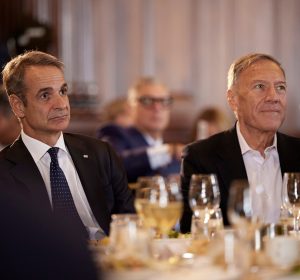
PHOTO: Is this Mike Pompeo next to Mitsotakis?… I had a hard time recognizing him; he’s lost tens of pounds. Is he preparing a presidential run? I seriously doubt it – but we live in an era where the puppets succeed as they are considered useful by “the powers that be”… Who would believe two years ago that Trump would transform into such a puppet?
What makes the scale of these controversies especially striking is the contrast with Mitsotakis’s own carefully cultivated image of his administration as the force that would modernize, reform, and rescue Greece. That narrative sits uneasily beside a record that includes documented instances of unlawful or improper state conduct, senior-official resignations, regulatory sanctions, and investigations by European prosecutors. Critics have gone further, accusing the government of systematic deception, eroding constitutional safeguards, and using public office to benefit politically connected interests. Those broader allegations have not been established as judicial findings across the board, but the sheer number and seriousness of the underlying cases raise profound questions about transparency, accountability, and the Mitsotakis government’s exercise of power.
1. Predatorgate / EYP surveillance. Opposition leader Nikos Androulakis and journalists, including Thanasis Koukakis, were subjected to state surveillance or targeted with Predator spyware. The affair forced the resignations of EYP chief Panagiotis Kontoleon and Mitsotakis’s chief of staff and nephew, Grigoris Dimitriadis. Intellexa, founded by former Israeli military-intelligence officer Tal Dilian, marketed Predator. The episode was an exceptionally grave attack on democratic institutions, bordering on treason, as the operation of the Greek surveillance program by Israeli intelligence has been established by a Greek court.
2. Tempi railway disaster and Contract 717. Fifty-seven people died in the February 2023 collision at Tempi. The catastrophe exposed failures in signaling, remote-control and railway-safety systems, while the European Public Prosecutor’s Office brought charges concerning the long-delayed EU-funded Contract 717 and alleged damage to Greek and European public funds. Here is the measure of Mitsotakis failure on the rasilway scandal – as he was 100 percent cognizant of the railway problems in 2019 and he did ABSOLUTELY NOTHING!!
3. The handling of the Tempi crash site and alleged cover-up. Families of victims and opposition parties have accused the authorities of altering the accident site, failing to preserve evidence properly, and obstructing full political accountability. Serious deficiencies in evidence preservation and investigation have been documented, while the allegation of a centrally directed governmental cover-up remains contested and has not been established as a final judicial fact.
4. OPEKEPE agricultural-subsidy scandal. European prosecutors have investigated alleged systematic fraud involving agricultural subsidies, false land declarations and officials at OPEKEPE. EPPO transmitted information to Parliament concerning the possible involvement of former ministers, sought the lifting of MPs’ immunity, and secured convictions in related fraudulent-subsidy cases.
5. The “Petsas List” media-funding affair. During the pandemic, roughly €20 million in public advertising money was distributed among media organizations. Critics and press-freedom organizations argued that the allocation disproportionately favored government-friendly outlets and lacked sufficient transparency, making the affair symbolic of wider concerns about the relationship between the government, state advertising and the Greek media.
6. Expatriate-voter data leak (“email-gate”). Personal information concerning expatriate voters improperly left the Interior Ministry and reached New Democracy MEP Anna-Michelle Asimakopoulou, who used it for political communications. Greece’s Data Protection Authority fined the Interior Ministry €400,000 and Asimakopoulou €40,000, and she withdrew from the European election.
7. Andreas Patsis affair. New Democracy MP Andreas Patsis was expelled from the party after revelations concerning his involvement in companies dealing in non-performing loans, foreign companies, and contracts connected to the state-owned postal service ELTA. The affair led to prosecutorial scrutiny and the resignation of ELTA’s chief executive.
8. Media freedom, institutional pressure and surveillance of journalists. International watchdogs have raised concerns about surveillance of reporters, SLAPP litigation, state advertising, access to information and pressure on independent media and oversight bodies. The government rejects the broader assertion that it has systematically undermined press freedom, but European and international institutions have repeatedly raised these concerns.
9. Transfer of military equipment from the Aegean islands to Ukraine. The government transferred 40 BMP-1 infantry fighting vehicles to Ukraine under a 2022 agreement with Germany, which undertook to replace them with 40 Marder vehicles. Opposition politicians argued that removing the BMP-1s reduced the firepower available on the eastern Aegean islands, particularly because Mitsotakis subsequently said the replacement Marders would be deployed in Evros rather than on those islands. The government maintained that the military leadership approved the arrangements and later ruled out transferring Greece’s strategically important Patriot and S-300 air-defense systems because they were essential to national defense. Ukraine does have serious documented corruption problems—Transparency International scored it 36/100 in its 2025 Corruption Perceptions Index—but calling it simply “the most corrupt Ukraine” overstates what those data show.
10. The erosion of trust in the justice system. Perhaps the most damaging legacy of the Mitsotakis years is the deepening public distrust of Greece’s justice and accountability institutions. The handling of Predatorgate, Tempi, OPEKEPE, and other major cases shows that politically sensitive investigations too often move slowly, become entangled in procedural obstacles, or fail to produce accountability commensurate with the seriousness of the allegations. European institutions have repeatedly raised concerns about the efficiency, independence, and functioning of Greece’s justice system, while EU surveys continue to show significant public concern about judicial independence; across the EU, perceived political interference is the most frequently cited reason for doubting the independence of courts and judges. To say that “nobody” in Greece trusts the courts would be an exaggeration, but the broader crisis of confidence is real—and when citizens begin to believe that the law is applied differently depending on wealth, political connections or proximity to power, the damage extends far beyond any single scandal. It strikes at the credibility of the democratic state itself.
For those of us critical of the Mitsotakis government, perhaps the most dispiriting spectacle was the enthusiastic reception he continues to receive from parts of the Greek-American community, despite the controversies and institutional failures that have marked his years in office. Yes, we understand that the various “presidents” of our organizations want to “show off”… And we understand even better that many among those who applauded him have business “to take care of” in Greece – and therefore need the government to “assist” them. But to applaud a political leader while overlooking scandals involving surveillance, public accountability, regulatory sanctions, and investigations by European prosecutors risks turning civic pride into political complacency. The Greek diaspora has every right to celebrate Greece and its achievements, but admiration for the country should not require uncritical support for any government, nor should ethnic solidarity replace scrutiny, accountability, and democratic judgment.
September 24, 2026, n.stamatakis@aol.com www.helleniscope.com
DISCLAIMER: The views and statements expressed in this article constitute constitutionally protected opinions of this author.
















The Trump government beats the Mitsotakis government when it comes to corruption. Isn’t it time we all wake up? I mean our churches, our governments, our corporations are destroying civilization. What are we doing? Zzzz.
…and the list of scandals just goes on. Even before the Russian-Ukrainian war, I thought it was such a joke that a comedian would eventually become the President of a country whose government he had so vehemently criticized when he was a comedian. But Mitsotakis trumps (no pun intended) Zelensky. Mitsotakis has turned the Greek government into a reality-TV s@it-com…with one exception – the people of Greece don’t think it’s very punny; and Mitsotakis should not get too comfortable either, because as divided and flippant and opportunistic as Greeks can be – like selling your vote for a pack of cigarettes – we all know what they are capable of once they all rally behind a common enemy.
Dear Zelensky, Mitsotakis and Bartholomew: the US is NOT your friend, so stop selling off your Mothers