

ΕΑΝ ΠΡΟΤΙΜΑΤΕ ΕΛΛΗΝΙΚΑ ΠΑΤΗΣΤΕ ΤΗ ΣΗΜΑΙΑ ΣΤΟ ΚΑΤΩ ΜΕΡΟΣ ΤΗΣ ΟΘΟΝΗΣ
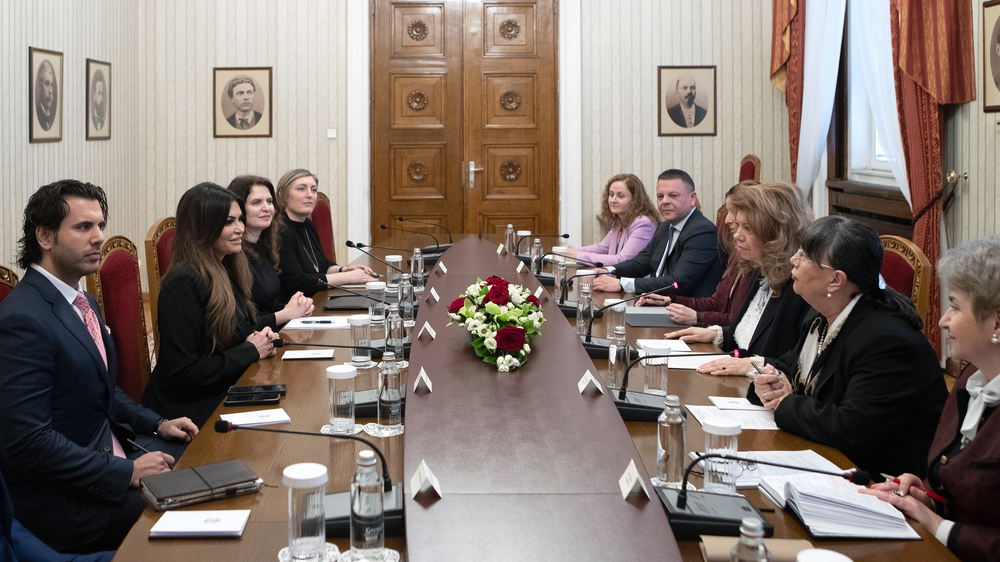
PHOTO: Bulgarian and US delegations during talks at the Presidency, Sofia, April 1, 2026 (President’s press secretariat). What is Marafatsos’ role next to the US Ambassador at an official business meeting?
By Helleniscope’s Editorial Team
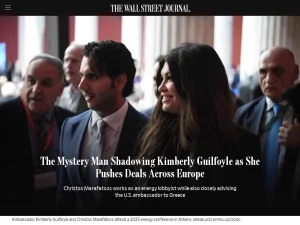
Perhaps the most explosive passage in the Wall Street Journal’s investigation into U.S. Ambassador Kimberly Guilfoyle, lobbyist Christos Marafatsos and the promotion of American LNG interests in southeastern Europe had little to do with contracts, lobbying registrations or even AKTOR.
It concerned a dinner in Athens.
According to the WSJ:
“They are also fearful of getting on her bad side. In March, at a dinner in Athens attended by Greek and U.S. officials, Guilfoyle got into an argument with Greece’s energy minister, Stavros Papastavrou, in front of the other guests. Referring to the impending collapse of the Romanian government, Guilfoyle told the group, ‘We can do that to any country we want. We can do that here,’ according to a person who attended the dinner and others who were told about it. The conversation became heated, with Papastavrou retorting that the U.S. couldn’t replace Greece’s government, which was elected by the people. Guilfoyle’s lawyer disputed the characterization of the exchange.”
That allegation — and the denial attached to it — may ultimately prove more politically consequential in Athens than the labyrinth of LNG deals described elsewhere in the Journal’s report. Greek Energy Minister Stavros Papastavrou is portrayed as having directly challenged the suggestion that Washington could determine the fate of Greece’s elected government. Greek and Romanian outlets have already highlighted the exchange, while Guilfoyle’s lawyer disputes the WSJ’s characterization of what occurred.
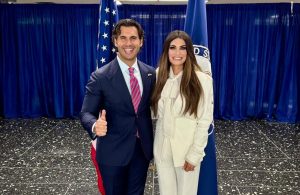
PHOTO: From Marafatsos’ own FB page
The Timing Could Hardly Be More Awkward
The report also lands at a particularly sensitive moment in U.S.-Greek relations.
Secretary of State Marco Rubio is expected in Athens in early October for the next round of the U.S.-Greece Strategic Dialogue. Greek reporting has identified October 6–8 as the dates currently under consideration, although as of September 27 those dates had not been formally confirmed by the State Department. Energy is expected to be among the major agenda items, alongside defense, migration and regional security.
In other words, a story questioning how American energy diplomacy has been conducted in Greece and the Balkans has broken barely days before Washington’s top diplomat is expected to arrive in Athens.
That timing guarantees questions.
Rubio’s delegation can reasonably expect Greek officials, competitors in the energy industry, and perhaps officials within the U.S. government itself to want clarity about where official American policy ended, and private commercial advocacy began.
Who Wanted This Story Out?
Another question worth asking, while being careful not to confuse hypothesis with evidence: who benefited from the Wall Street Journal investigation appearing now?
The Journal’s reporting depicts Guilfoyle as persistently promoting AKTOR in regional discussions while Marafatsos — who, according to the WSJ and subsequent Greek coverage, was registered to lobby for AKTOR — was repeatedly present in or around official meetings. Greek outlets have focused heavily on precisely that intersection between diplomacy, lobbying and the commercial push to move U.S. LNG northward through Greece.
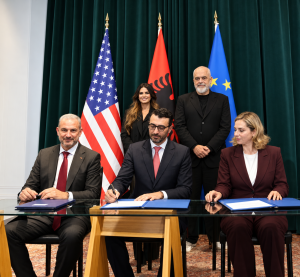
PHOTO: Albanian Energy Minister Enea Karakaçi, center, signs a memorandum of understanding in Tirana as Ambassador Guilfoyle, back left, and Albanian Prime Minister Edi Rama, back right, look on. Albgaz CEO Amarda Kapaj appears front right, and Aktor CEO Alexandros Exarchou is front left.ALBANIA PRIME MINISTRY
One plausible explanation for how such a detailed story came together is that competing commercial interests had reasons to talk.
The market for supplying U.S. LNG into Greece, Bulgaria, Romania and the wider Vertical Corridor is worth billions. If rival American gas suppliers, traders or infrastructure interests believed that one commercial grouping was receiving unusually favorable access to diplomatic channels, they would have every incentive to draw journalists’ attention to it.
That does not establish that a rival LNG supplier planted or orchestrated the WSJ story. No public evidence currently shows that.
But in Washington, where energy companies employ lobbyists, lawyers, political consultants and former officials to compete for access, contracts and regulatory advantage, commercial rivals are an obvious potential source pool for reporters examining whether the playing field was level.
Put more simply: if other U.S. natural-gas suppliers believed they had been pushed aside while AKTOR and its American LNG partner enjoyed privileged access, resentment would hardly be surprising.
And the extraordinary level of detail in the WSJ report suggests that somebody — in fact, probably numerous people — was willing to talk.
The Fallout in the Greek Press
The story did not remain confined to the Wall Street Journal for long.
By Sunday, September 27, it had spread across a broad spectrum of Greek media, with several publications giving particular prominence to Marafatsos’s unusual presence beside the U.S. ambassador and to the alleged confrontation with Papastavrou.
LiFO — «Αποκάλυψη Wall Street Journal για Γκίλφοϊλ…» — Focuses on the WSJ account of Christos Marafatsos’s role alongside Guilfoyle, including his presence in official Balkan meetings. Read LiFO
Zougla — «Οι υπόγειες business της Κίμπερλι Γκίλφοϊλ, ο μυστηριώδης λομπίστας και ο Όμιλος ΑΚΤΟΡ» — Summarizes the WSJ reporting on Guilfoyle, Marafatsos, AKTOR and regional energy deals. Read Zougla
Financial Report — «Το δημοσίευμα της WSJ για Γκιλφόιλ, λόμπινγκ και Aktor…» — Covers Marafatsos’s lobbying role, Guilfoyle and AKTOR, including the Romanian/Balkan dimension. Read Financial Report
Newpost — «Κίμπερλι Γκιλφόιλ, lobbying και AKTOR…» — Reviews the WSJ investigation into the overlap between diplomatic contacts, lobbying and commercial energy interests. Read Newpost
Greek City Times — “WSJ raises questions over Kimberly Guilfoyle’s role in Greek LNG deals and adviser’s ties to AKTOR” — English-language Greek coverage detailing Marafatsos, AKTOR, Bulgaria and Albania. Read Greek City Times
Dete.gr — «Στο μικροσκόπιο της Wall Street Journal το παρασκήνιο των ενεργειακών συμφωνιών AKTOR και Κίμπερλι Γκιλφόιλ» — Identifies Guilfoyle, Marafatsos and Alexandros Exarchou/AKTOR as key figures in the WSJ story. Read Dete.gr
Piestirio — «Οι υπόγειες business της Κίμπερλι Γκίλφοϊλ…» — Recounts the Bulgaria episode, Marafatsos’s proximity to Guilfoyle and AKTOR’s business interests. Read Piestirio
Olympia.gr — «Η WSJ για τον “μυστηριώδη άνδρα” που συνοδεύει την Κίμπερλι Γκίλφοϊλ» — Concentrates particularly on Marafatsos and his presence alongside Guilfoyle during official contacts. Read Olympia
Parallaxi — «Αποκάλυψη WSJ για Κίμπερλι…» — Covers the WSJ investigation into Guilfoyle, Marafatsos, LNG interests and the Vertical Corridor. Read Parallaxi
Katehacker — «Η αμερικανική “ακτινογραφία” της Γκιλφόιλ στην Ελλάδα – Ο λομπίστας, η AKTOR και τα δισεκατομμύρια του LNG» — Focuses on Marafatsos, Guilfoyle, AKTOR and LNG-related commercial relationships. Read Katehacker
SKAI — «WSJ: Ο μυστηριώδης άνδρας που βρίσκεται στο πλευρό της Γκίλφοϊλ καθώς προωθεί συμφωνίες σε όλη την Ευρώπη» — Detailed Greek summary of the WSJ report, including Marafatsos, Bulgaria, AKTOR and responses from the parties involved. Read SKAI
Financial Report — earlier report — «WSJ για Γκιλφόιλ και το λομπίστα Μαραφάτσο…» — One of the earlier Greek reports directly naming Marafatsos and linking him to AKTOR/Exarchou’s natural-gas business. Read Financial Report
Makeleio — Published a highly polemical version of the WSJ story focusing on Guilfoyle and Marafatsos; useful mainly as evidence of wider Greek-media pickup rather than as a neutral summary. Read Makeleio
One notable point from my searches: Several mainstream Greek media outlets avoided the WSJ story, including Kathimerini, To Vima, Proto Thema, in.gr, Naftemporiki, Capital, ERTNews, and CNN Greece. If this fact is verified by Monday, then one way to draw inferences is to look at what business interests the media owners have with the Ambassador or in the U.S.
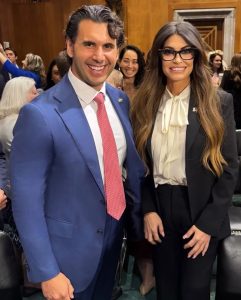
PHOTO: The day of Guilfoyle’s Enthronement
What Happens Now? They are both Finished!
The WSJ story is no longer something Washington can easily dismiss as a passing press controversy. The harder question is whether it triggers scrutiny of Marafatsos’s role in official meetings, his commercial ties, and the line between U.S. diplomacy and private business interests.
Then there is Rubio.
His expected Athens visit gives the controversy a very short fuse. Instead of fading, the story will still be circulating as U.S.-Greek energy relations — LNG and the Vertical Corridor included — return to the diplomatic agenda.
Among people following the affair, we have repeatedly heard the same stark assessment: “They are both finished now.”
For now Guilfoyle remains ambassador, and no public evidence shows that Washington has decided her fate or that Marafatsos has lost his access.
But the damage is already evident. The question now is not simply what the Wall Street Journal reported, but what Washington, Athens, and the commercial interests that believe they were shut out decide to do.
September 27, 2026, www.helleniscope.com, n.stamatakis@aol.com
DISCLAIMER: The views and statements expressed in this article constitute constitutionally protected opinions of this author.











RE: “…[Guilfoyle’s] suggestion that that Washington could determine the fate of Greece’s elected government.”
Suggestion? I thought it was a long-known fact that in the history of post-Revolutionary Greek government, every “elected” government was controlled by England, France, Germany and more recently, the US of A!
Good morning to all our friends here on Helleniscope. Much is being written and spoken about this character marafatsos. How about some investigative work on the church front. (His affiliation with the real estate committee of the church of Greece. His association with the new deacon in Mexico the son of the GOAA MOBSTER. And his association with the new development in Athens. YUP! Barts boy. As we have all been told since our young years, GOLLOW RMTHE MONEY, and then you’ll have all the answers you need to move forward.
I wonder if anyone
Previous Didasjkalos Tou Genous were Yale’s Geanakoplos and Fordham’s
Dumquafles. Does Marafakas have a doctorate?
The short answer is no.