
ΕΑΝ ΠΡΟΤΙΜΑΤΕ ΕΛΛΗΝΙΚΑ ΠΑΤΗΣΤΕ ΤΗ ΣΗΜΑΙΑ ΣΤΟ ΚΑΤΩ ΜΕΡΟΣ ΤΗΣ ΟΘΟΝΗΣ
The Great Sea Interconnector controversy has exposed troubling questions about Athens’ reluctance to confront Turkish intimidation and its failure to translate sovereign rights into decisive action. Despite renewed American and European support, the prolonged delays raise a fundamental question: Can Greece defend its national interests without allowing Ankara’s threats to dictate its policies?
By Helleniscope’s Editorial Team
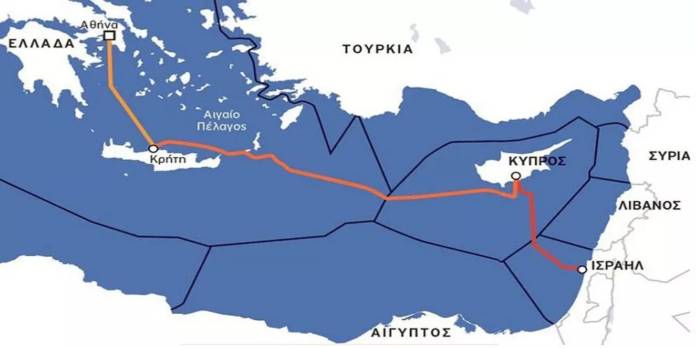
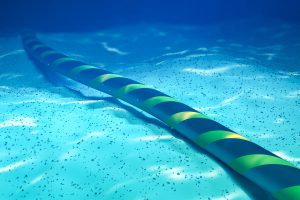
The Great Sea Interconnector (GSI), a €1.9 billion European project connecting Greece and Cyprus through an undersea electricity cable, was designed to end Cyprus’s energy isolation and strengthen European energy security. Instead, it has become a revealing test of Greece’s willingness to exercise its sovereign rights in the face of Turkish intimidation.
The controversy erupted in July 2024, when Turkey deployed five warships near Kasos and Karpathos to challenge seabed surveys conducted by the Italian research vessel Ievoli Relume. Ankara claimed jurisdiction over the area, relying partly on its disputed maritime agreement with Libya. Following a tense confrontation, the surveys stalled. Nearly two years later, the project remained hostage to geopolitical uncertainty, financial disagreements, and governmental indecision.
On October 15, Athens announced preparations to resume seabed surveys. Cyprus expressed similar optimism, while U.S. Secretary of State Marco Rubio reaffirmed Washington’s support. French investment and European Union financing further strengthen the project’s international backing. These are welcome developments. But they cannot erase the fundamental question: Why should Greece need American diplomatic intervention and French involvement to proceed with a legitimate European infrastructure project?
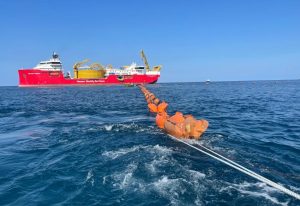
The Mitsotakis government’s handling of the confrontation has fueled accusations that its foreign policy toward Turkey is phobic. Athens consistently invokes international law while appearing excessively concerned about provoking Ankara. Avoiding military confrontation is responsible diplomacy; letting the threat of Turkish warships paralyze lawful activities sets a dangerous precedent. Although Greece insists it has never accepted Turkish jurisdiction, the prolonged suspension of surveys raises legitimate questions about how effective that position is in practice.
The problem extends beyond one electricity cable. If Turkish naval pressure can delay strategic infrastructure, what prevents similar interference with future energy exploration, telecommunications cables, or other maritime projects? Sovereign rights lose much of their practical significance when exercising them depends on another country’s presumed reaction. Meanwhile, the project’s financial disputes between Athens and Nicosia demonstrate that Greece must also address domestic administrative shortcomings rather than attribute every obstacle to Turkey.
Equally troubling are reported connections between Turkish business interests, including the Koç Group, and strategic energy investments in Crete. These reports require clarification, not unsubstantiated accusations. Nevertheless, the Greek government owes the public full transparency on foreign participation in infrastructure that affects national energy security.
Ultimately, the GSI controversy highlights Greece’s longstanding reluctance to extend its territorial waters in the Aegean to 12 nautical miles, despite its recognized right under international maritime law. Greece has already exercised this right in the Ionian Sea, while Turkey itself maintains 12-mile territorial waters elsewhere. Ankara’s 1995 casus belli continues to influence the political environment surrounding Greece’s decision. Extension would not automatically resolve every maritime dispute, but it would fundamentally alter the legal and strategic landscape.
The resumption of surveys must therefore be judged by results, not announcements. Athens must demonstrate that diplomatic restraint does not amount to acquiescence in coercion.
Greece must demonstrate the resolve to defend its sovereign rights and never allow Turkish threats or intimidation to dictate its national policy.
Sources & Further Reading
Reuters, October 15, 2026: EU-backed undersea cable project applies to resume seabed surveys — Latest developments concerning survey resumption.
eKathimerini: The 40-hour standoff in the Aegean — Background on the July 2024 confrontation near Kasos.
Cyprus Mail, October 15, 2026: Interconnector NAVTEX expected by month’s end — Cyprus government’s latest position.
- ELIAMEP: Turkey and the Geopolitics of Regional Electricity Interconnections — Analysis of geopolitical and infrastructure risks.
- Greek Ministry of Foreign Affairs: Territorial Sea – Casus Belli — Official legal position on the 12-nautical-mile issue and Turkey’s 1995 resolution.
- i-Epikaira, October 2026: Greek commentary on the GSI controversy — The commentary you supplied; its full text could not be independently retrieved.
October 15, 2026, www.helleniscope.com, n.stamatakis@aol.com
DISCLAIMER: The views and statements expressed in this article constitute constitutionally protected opinions of this author.