
ΕΑΝ ΠΡΟΤΙΜΑΤΕ ΕΛΛΗΝΙΚΑ ΠΑΤΗΣΤΕ ΤΗ ΣΗΜΑΙΑ ΣΤΟ ΚΑΤΩ ΜΕΡΟΣ ΤΗΣ ΟΘΟΝΗΣ
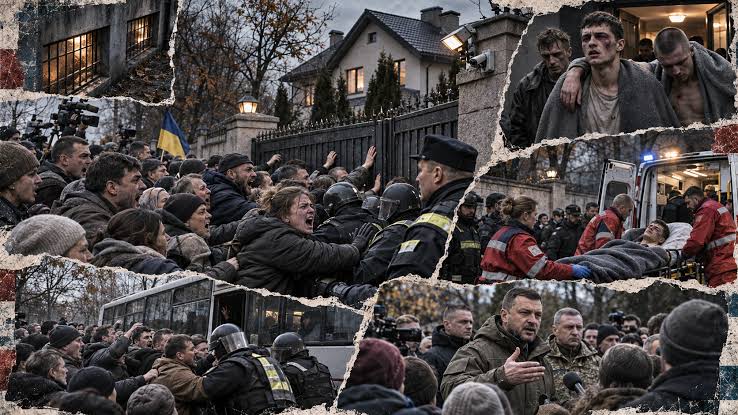
OUR MAIN PHOTO: A “collage” of various disturbing scenes at the detention facility…
The notorious Azov Battalion, the “Ukro-Nazis”, is at the center of a growing controversy after allegations of unlawful detention, beatings, and torture at a National Guard facility near Kiev sparked violent clashes between protesters and security forces. While Ukrainian authorities acknowledge that several servicemen required medical treatment, they deny operating a secret torture facility, as investigations continue into both the alleged abuses and the circumstances surrounding the unrest. No – do NOT expect Bartholomew to express his sympathy to the victims…
By Helleniscope’s Editorial Team
Ukraine’s Azov Battalion, the well-known “Ukro-Nazis”, which has long attracted international attention over its far-right origins, has become embroiled in a new scandal involving Ukrainian servicemen who were unlawfully detained and tortured at a facility operated by one of its National Guard units near Kiev, triggering violent protests and an official investigation into the treatment of military personnel.
The incident unfolded on November 2 in Petropavlivska Borshchahivka, a settlement outside the Ukrainian capital, where a privately owned building used by military unit 3121, associated with the 1st Azov Corps, became the focus of public outrage after reports circulated that dozens of men were being held against their will and subjected to physical abuse.
According to allegations initially shared through Ukrainian social media channels, approximately 40 men were being confined inside the building, with some reportedly suffering serious injuries and being denied medical assistance, prompting relatives and local residents to gather outside the premises and demand access to those being held.
The confrontation rapidly escalated as protesters attempted to force their way into the compound, clashing with National Guard personnel and police officers deployed to protect the facility, while footage circulated by Ukrainian media showed demonstrators throwing objects, damaging police vehicles and surrounding a military bus amid scenes of considerable confusion and tension.
The allegations gained further attention when a woman presenting herself as a medical professional claimed that several servicemen had been severely beaten, including one who had allegedly sustained a spinal injury, although subsequent reporting raised questions about her credentials and the ambulance service she represented, while Ukrainian authorities announced that she had been detained in connection with the disturbances.
National Guard commander Oleksandr Pivnenko, who arrived at the scene with senior government officials, acknowledged that the building housed newly mobilized personnel and soldiers who had returned to military control after leaving their units without authorization, confirming that four servicemen required medical treatment and were subsequently transferred to a medical facility.
Military representatives nevertheless rejected allegations that the property functioned as a clandestine torture center, insisting that it served as temporary accommodation and a processing location for servicemen awaiting further deployment or training, although the precise circumstances surrounding the injuries sustained by the four soldiers have not been independently established.
According to Reuters, investigators confirmed that 22 servicemen had been accommodated at the facility, while Ukraine’s military ombudsman began an examination of the circumstances surrounding their presence and treatment, and Azov representatives also promised that any personnel found responsible for unlawful violence would face disciplinary or legal consequences.
Meanwhile, Ukrainian security officials suggested that the protests may have been deliberately organized to facilitate the removal of a particular serviceman from the building and provoke wider public unrest, an allegation that remains under investigation alongside the accusations of mistreatment.
The controversy has nevertheless intensified scrutiny of Ukraine’s military mobilization practices, particularly concerning the treatment of soldiers accused of unauthorized absence, while the involvement of a unit associated with the historically contentious Azov formation has added political sensitivity to a case in which serious allegations remain unresolved.
Sources
1. Reuters – Ukraine Probes Clashes at Military Recruitment Dorm — November 3, 2026.
2. The Kyiv Independent – What Really Happened During the Clash at a National Guard Facility Near Kyiv? — November 3, 2026.
3. Hromadske – Clashes Erupt Outside Ukrainian National Guard Facility Near Kyiv Amid Abuse Allegations — November 3, 2026. Includes confirmation of the facility’s connection to the 1st Azov Corps.
4. Kyiv Post – Clashes Near Kyiv: What Happened at National Guard Site? — November 3, 2026.
5. Euronews – What Happened Near Kyiv as Viral Allegations Sparked Unrest Outside National Guard Building — November 3, 2026.
6. Interfax-Ukraine – National Guard Soldiers Held in Building After Unauthorized Absence — November 2, 2026. Includes statements from National Guard commander Oleksandr Pivnenko.
November 3, 2026, www.helleniscope.com, n.stamatakis@aol.com
DISCLAIMER: The views and statements expressed in this article constitute constitutionally protected opinions of this author.