

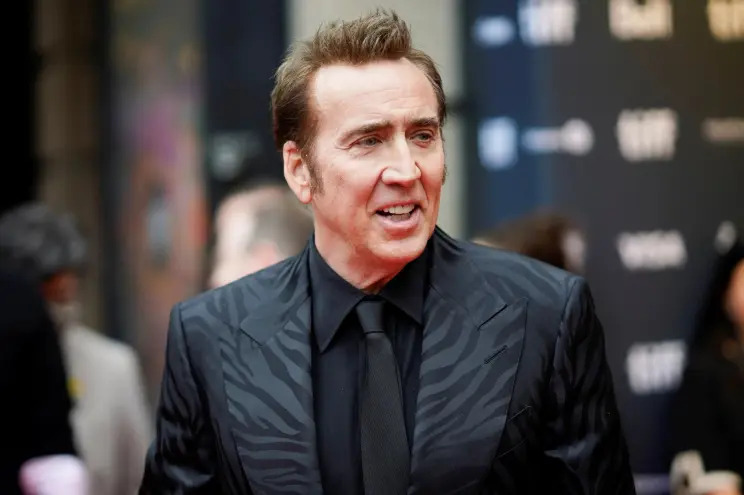
According to reports by Espressonews.gr, about two months ago, one of the most prominent Hollywood film companies, in a letter to the Municipality of Megareo, made it clear that this significant film project will take place in a natural environment: to film a part of the Hollywood film entitled “The Carpenter’s Son”, which refers to the miracles of Jesus Christ. The film is directed by Egyptian-American Lotfy Nathan, who intends to illuminate a rarely-told side of Jesus’ childhood with an impressive image because of the miracles he performed. Paris-based film production company Cinenovo and Los Angeles-based Spacemaker have taken over handling this major cinematic venture, and the film is expected to sweep the box office! The film company on its social media profile says: “The story of Jesus as you have never seen it before. Nicolas Cage, FKA Twigs and Noah Jupe will star in “Carpenter’s Son”, a film that will go down in history!
The actor is already in Greece in preparation for the filming.
However, according to relevantmagazine.com, “In some of the worst Hollywood casting ever, Nicolas Cage will be playing Joseph, the father of young Jesus, in a new horror movie titled The Carpenter’s Son. The film will focus on the period of Jesus’ boyhood where he’s between 5-12 years old. That would make his mother Mary — being played by FKA Twigs — somewhere between 19-26 years old, so of course casting a 60-year-old Cage to play Joseph makes perfect sense.
The film’s director, Lotfy Nathan, is pulling inspiration for the story from the apocryphal Gospel of Thomas, which includes stories of Jesus’ youth. The Carpenter’s Son is choosing to explore this often-overlooked part of Jesus’ life through a horror lens.
According to the film’s synopsis, “The Carpenter’s Son tells the dark story of a family hiding out in Roman Egypt. The son, known only as ‘the Boy’, is driven to doubt by another mysterious child and rebels against his guardian, the Carpenter, revealing inherent powers and a fate beyond his comprehension. As he exercises his own power, the Boy and his family become the target of horrors, natural and divine.”
Cage has been cast as “the Carpenter,” alongside Twigs (Honey Boy) as “the mother” and Noah Jupe (A Quiet Place) as “the Boy.”
Which begs the question: was no one else available? If a white person is going to be cast, is Andrew Garfield too busy? Did Chris Evans not pick up the phone? Has Hollywood truly lost the plot so much that Nicolas Cage is the only viable option for Jesus’ dad?”
==========================
A miracle made in Hollywood with a leprous Greek actor
“Divine touch” for the protagonist of serials and plays
Hollywood star Nicolas Cage, who came incognito to our country, has been staying in a hotel on Syngrou Avenue for a few twenty-four hours now! Dressed in a hat and black glasses, the Philhellenic star is once again in our country to start shooting for the new film that is expected to enter the box office of the world cinema industry!
By Nikos Nikolizas
As “Espresso” first wrote in a worldwide exclusive, the filming of the movie “The Carpenter’s Son”, based on the apocryphal Gospel of Thomas and the childhood of Jesus Christ, will begin in a few days in the Kryptes ton Megara area, which, as evidenced by the new photos brought exclusively by “Espresso”, it has been transformed into a village of that era!
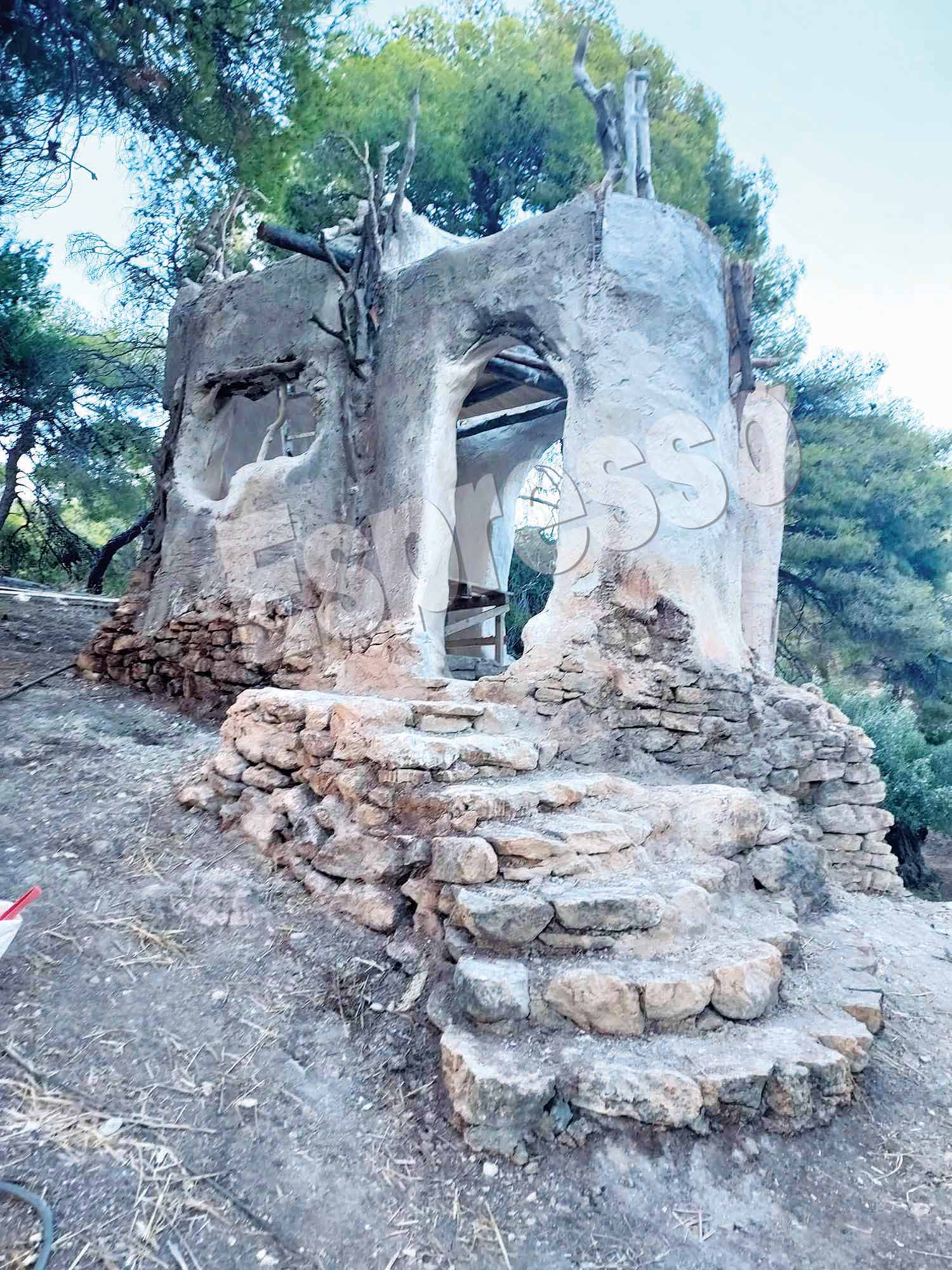
“Espresso,” therefore, has once again secured several new photos from the impressive sets set up in Megara for “The Carpenter’s Son,” which, according to the British and Spanish media, is expected to break the box office due to the specificity of the subject which deals with the life of Jesus. As you will see from the photos we have secured, the scenery “steps” exactly on the time when Jesus lived in Bethlehem, while all the materials are ecological, with the main component being wood, which dominated during the years of Christ. However, already in the Kryftes Megaran area the security measures by the film production companies Cinenovo and Spacemaker are impressive, as, after the front page of “Espresso”, the news was reproduced by international media, referring to the newspaper’s report.
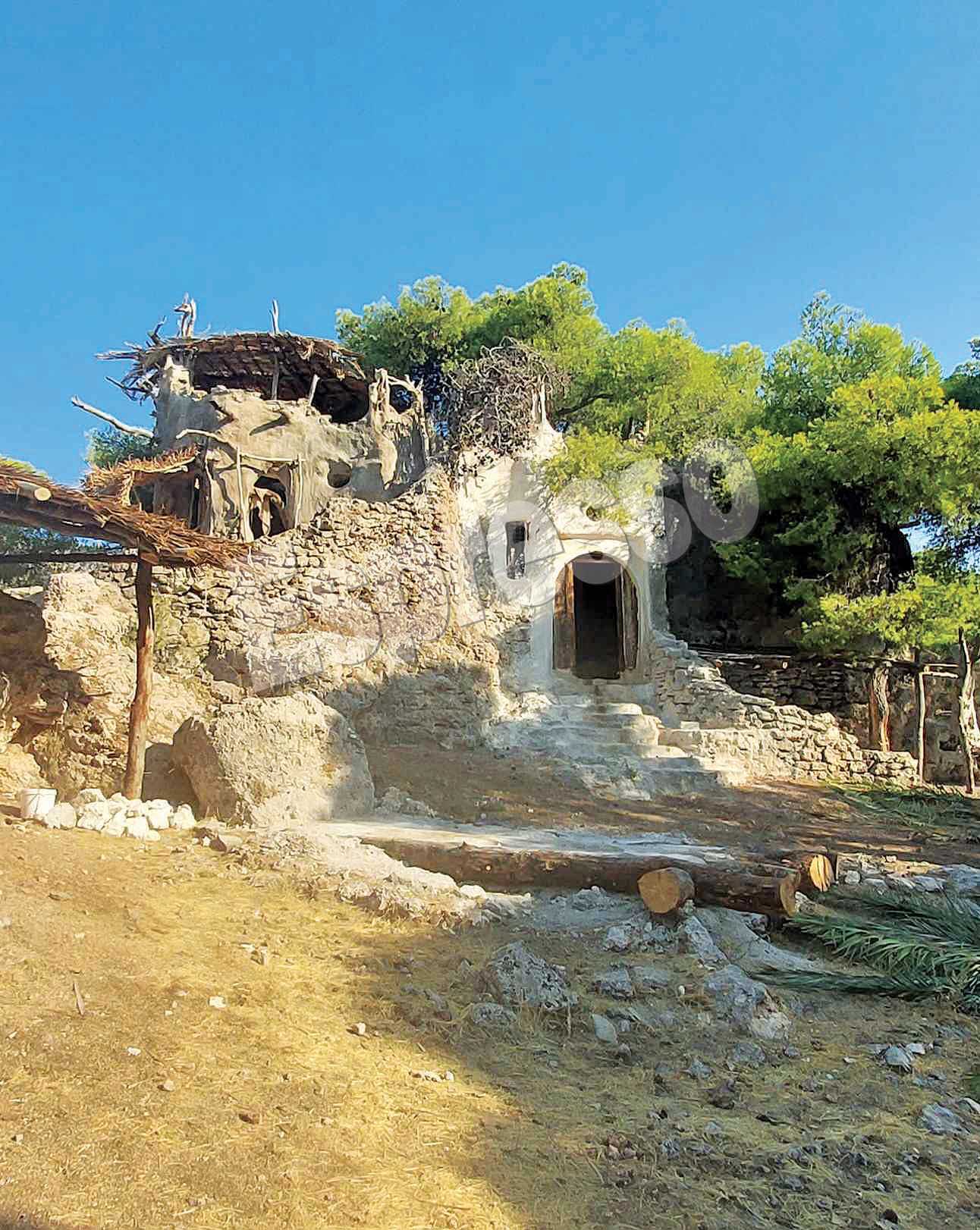
Natural landscape
As first revealed last week by “Espresso”, a few kilometers outside of Athens, specifically in the unspoiled mountains of Megara, in the famous and impressive Kryftes, with the unique caves and the natural landscape reminiscent of other times, for a few weeks the machines of the Municipality of Megareo work non-stop. Moreover, the area and the name Kryftes are not accidental, as in ancient times this area was a true fortress for the inhabitants of Attikovoiotia, who hid from the invaders of other regions.
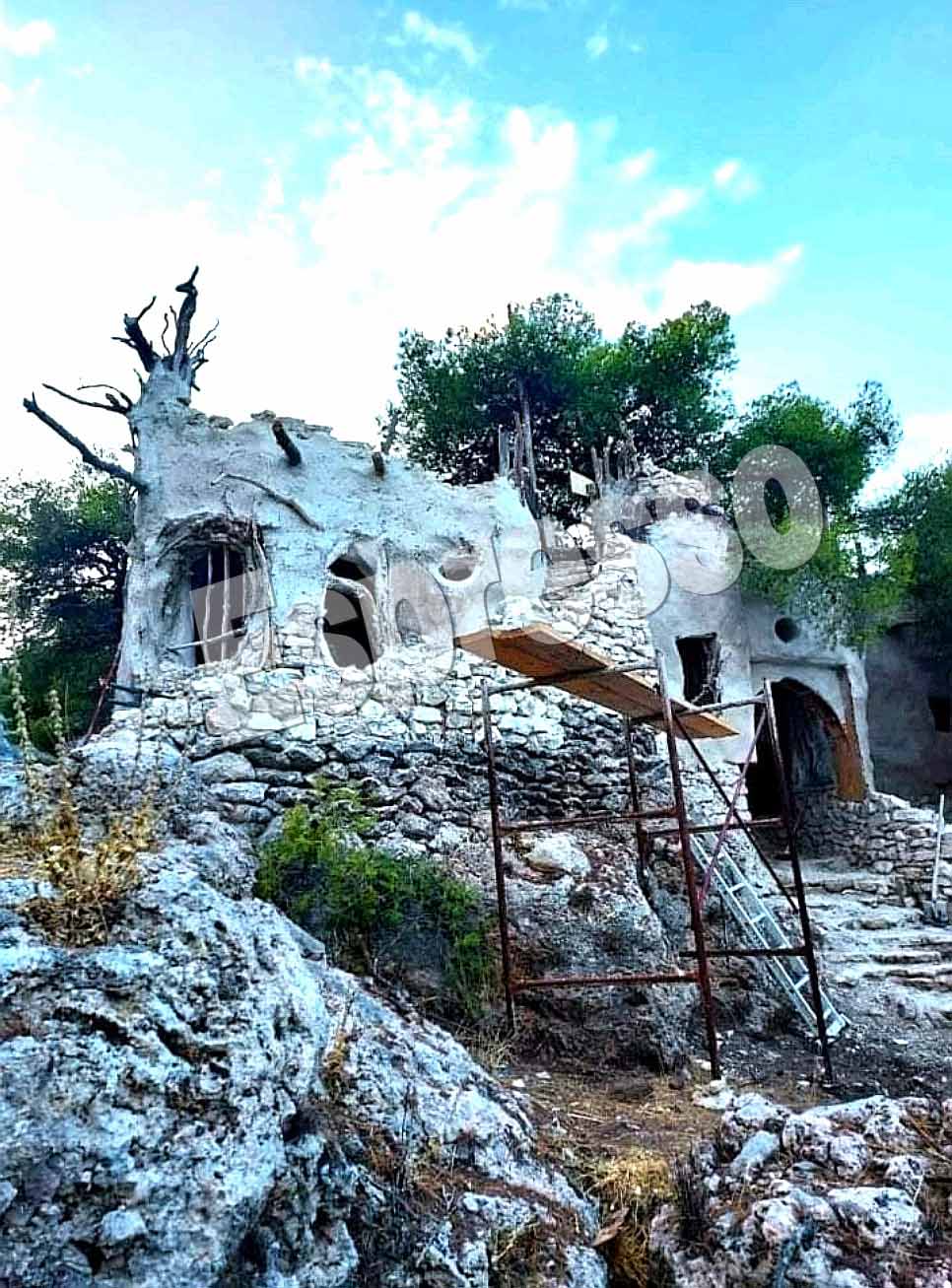
Continuing today’s report on “The Carpenter’s Son”, we are able to know that the film production company has already left large sums of money to the local community of Megara and Sfakia in order to set up the impressive scenery where Nicolas Cage will play with the other famous actors, while the residents of the two areas are convinced that this promotion will give a big tourist boost in the coming years.
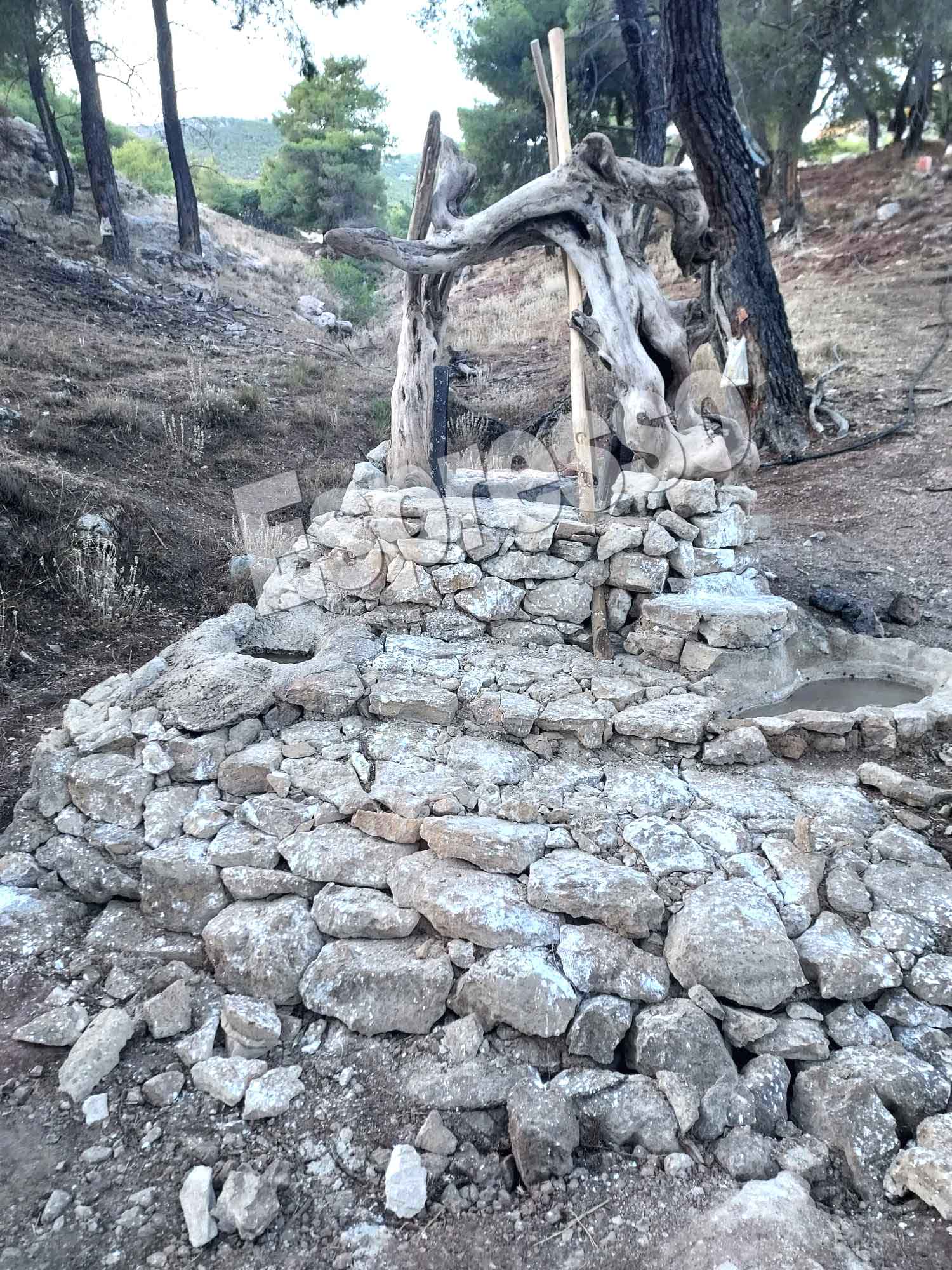
But the first “let’s go” will be heard in the area of Sfakia where the whole cast has already moved and then the cameras will be set up in the specific area of Megara! The production company’s crews aim to stay on schedule, with renowned Egyptian-American director Lotfi Nathan looking forward to directing a rarely told side of Jesus’ childhood, focusing on the miracles he performed! And if cinematically it is a… miracle how quickly the scenes were set up and prepared in the Crypts, we reveal to you that the film will also have a Greek acting color, since two well-known Greek actors will play, one of whom will play a leper which the young Jesus heals! This particular actor (who is bound by a non-disclosure agreement until he is on set) has major appearances in TV series and plays!
=========================
Θαύμα made in Ηollywood με λεπρό Έλληνα ηθοποιό
«Θείο άγγιγμα» για πρωταγωνιστή σίριαλ και θεατρικών παραστάσεων
Σε ξενοδοχείο της λεωφόρου Συγγρού διαμένει εδώ και λίγα εικοσιτετράωρα ο χολιγουντιανός σταρ Νίκολας Κέιτζ, ο οποίος ήρθε ινκόγκνιτο στη χώρα μας! Ντυμένος με καπέλο και μαύρα γυαλιά, ο φιλέλληνας σταρ βρίσκεται για άλλη φορά στη χώρα μας προκειμένου να αρχίσει τα γυρίσματα για τη νέα ταινία που αναμένεται να μπει στο box office της παγκόσμιας βιομηχανίας κινηματογράφου!
- Από τον
Νίκο Νικόλιζα
Οπως πρώτη η «Espresso» έγραψε σε παγκόσμια αποκλειστικότητα, τα γυρίσματα της ταινίας «Ο γιος του ξυλουργού», που βασίζεται στο απόκρυφο Ευαγγέλιο του Θωμά και στα παιδικά χρόνια του Ιησού Χριστού, θα αρχίσουν σε λίγες ημέρες στην περιοχή Κρύφτες των Μεγάρων, που, όπως μαρτυρούν και οι νέες φωτογραφίες που φέρνει κατ’ αποκλειστικότητα η «Espresso», έχει μεταμορφωθεί σ’ ένα χωριό εκείνης της εποχής!
Η «Espresso», λοιπόν, άλλη μια φορά εξασφάλισε πλήθος νέων φωτογραφιών από τα εντυπωσιακά σκηνικά που στήνονται στα Μέγαρα για τον «Γιο του ξυλουργού» που, σύμφωνα με τα βρετανικά και ισπανικά μέσα, αναμένεται να σπάσει ταμεία λόγω της ιδιαιτερότητας που έχει το θέμα που πραγματεύεται τη ζωή του Ιησού. Οπως θα διαπιστώσετε και από τις φωτογραφίες που εξασφαλίσαμε, τα σκηνικά «πατάνε» ακριβώς πάνω στην εποχή που έζησε ο Ιησούς στη Βηθλεέμ, ενώ όλα τα υλικά είναι οικολογικά, με κύριο συστατικό το ξύλο, που κυριαρχούσε στα χρόνια του Χριστού. Ηδη πάντως στην περιοχή Κρύφτες Μεγάρων τα μέτρα ασφαλείας από τις κινηματογραφικές εταιρίες παραγωγής Cinenovo και Spacemaker είναι εντυπωσιακά, καθώς, μετά και το πρωτοσέλιδο της «Espresso», την είδηση αναπαρήγαγαν διεθνή ΜΜΕ, κάνοντας αναφορά στο ρεπορτάζ της εφημερίδας.
Φυσικό τοπίο
Οπως πρώτη αποκάλυψε την περασμένη εβδομάδα η «Espresso», λίγα χιλιόμετρα έξω από την Αθήνα, συγκεκριμένα στα απάτητα βουνά των Μεγάρων, στους περίφημους και εντυπωσιακούς Κρύφτες, με τις μοναδικές σπηλιές και το φυσικό τοπίο να παραπέμπει σε άλλες εποχές, εδώ και μερικές εβδομάδες τα μηχανήματα του Δήμου Μεγαρέων δουλεύουν ασταμάτητα. Αλλωστε δεν είναι τυχαίες η περιοχή και η ονομασία Κρύφτες, καθώς στα αρχαία χρόνια η περιοχή αυτή ήταν σωστό φρούριο για τους κατοίκους της Αττικοβοιωτίας, που κρύβονταν από τους εισβολείς άλλων περιοχών.
Συνεχίζοντας σήμερα το ρεπορτάζ για τον «Γιο του ξυλουργού», είμαστε σε θέση να γνωρίζουμε ότι η κινηματογραφική εταιρία παραγωγής ήδη έχει αφήσει μεγάλα χρηματικά ποσά στην τοπική κοινωνία των Μεγάρων και των Σφακίων προκειμένου να στηθούν τα εντυπωσιακά σκηνικά όπου θα παίξει ο Νίκολας Κέιτζ μαζί με τους άλλους διάσημους ηθοποιούς, ενώ οι κάτοικοι των δύο περιοχών είναι πεπεισμένοι ότι αυτή η προβολή θα δώσει μεγάλη τουριστική ώθηση τα επόμενα χρόνια.
Το πρώτο «πάμε» όμως θα ακουστεί σε περιοχή των Σφακίων όπου ήδη έχει μεταβεί όλο το καστ και μετά οι κάμερες θα στηθούν στη συγκεκριμένη περιοχή των Μεγάρων! Στόχος των συνεργείων της εταιρίας παραγωγής είναι να μη βγουν καθόλου εκτός των χρονοδιαγραμμάτων, με τον διάσημο Αιγυπτιοαμερικανό σκηνοθέτη Λότφι Νέιθαν να ανυπομονεί να φωτίσει σκηνοθετικά μια σπάνια ειπωμένη πλευρά της παιδικής ηλικίας του Ιησού, εστιάζοντας στα θαύματα που έκανε! Και αν κινηματογραφικά είναι ένα… θαύμα το πόσο γρήγορα στήθηκαν και ετοιμάστηκαν τα σκηνικά στους Κρύφτες, σας αποκαλύπτουμε πως η ταινία θα έχει και ελληνικό υποκριτικό χρώμα, μια και θα παίξουν και δύο πολύ γνωστοί Ελληνες ηθοποιοί, ένας εκ των οποίων θα υποδυθεί έναν λεπρό τον οποίο θεραπεύει ο νεαρής ηλικίας Ιησούς! Ο συγκεκριμένος ηθοποιός (που δεσμεύεται με συμβόλαιο εχεμύθειας μέχρι να βρεθεί στα γυρίσματα) έχει σημαντικές παρουσίες σε τηλεοπτικά σίριαλ και θεατρικά έργα!











No way will I ever watch dopey
Nick Cage play Jesus.
Am I the only person who has serious doubts about this? And why isn’t the Church doing anything about it.
I can see a movie about His childhood years (of course it would all be Hollywood soon) but a horror movie? What?
What I find ironic was that this statement seems to be made satirically, although it’s actually based on reality:
“The film will focus on the period of Jesus’ boyhood where he’s between 5-12 years old. That would make his mother Mary — being played by FKA Twigs — somewhere between 19-26 years old, so of course casting a 60-year-old Cage to play Joseph makes perfect sense.”
Eusebius who was an attendee of the 1st Ecumenical Council wrote a book called Ecclesiastical History. In that book, he explicitly pointed out that the Church had determined what the Canonical Books of the Old and New Testament were, and that the other ones were rejected because either they were “heretical or of dubious origin” (aka “apocryphal texts”).
Of course, it wasn’t Eusebius who personally decided these matters…he was merely quoting Apostolic Canon 85 (defining the Canonical texts), which also pairs with Apostolic Canon 60 (which doesn’t look favorably upon the Orthodox who “study / teach” Non-Canonical texts as if they were 100% valid)…
If it is true that Hollywood has taken an interest in texts that were rejected by the Orthodox Church, so that they can present them as “historical reality”, this is not surprising. But to George C’s point above, the Church should at least educate the faithful about why we don’t really focus on, or teach from (or accept the text of) this particular “Apocryphal book” that is now being leveraged to create a movie…
As for Nicholas Cage participating in this film, if he self-identifies as Orthodox, he should probably reconsider what he is actually getting involved with…
The canon of the New testament was not determined at the first ecumenical council but rather by councils in Carthage and Hippo. It was also affirmed by St Athansius.
JK,
That’s not what I said above…please re-read carefully. Apostolic Canon 85 is clearly a “Canon” defining the Canonical books of the Old & New Testament, and it clearly predates the councils of Carthage & Hippo, and so does Eusebius’s Ecclesiastical History, as does the Codex Sinaiticus that contains the same books that Carthage “affirmed”. And by the way, Balsamon’s & Zonaras’ commentaries on several Canons of the 1st Ecumenical Synod repeatedly quote the related Apostolic Canons that are relevant to each one, supporting the widespread acceptance that the Apostolic Canons were known in written format at least since the early 4th century (70 to 80 years prior to Carthage), and were in fact known to and accepted by those Fathers who attended the 1st Ecumenical Council.
The fact that there was a specific debate about a couple of books that emerged lingered for many years and caused the discussion to make it on the Carthage agenda does not automatically conclude that a New Testament Canon was non-existent prior to Carthage and Hippo, and also that “nobody” was using the “correct” Canon prior to those synods…that would not be an accurate historical inference.
The later affirmations you are referencing had more to do with settling a couple outstanding debates that had grown over time, such as with the book of Revelation… (some of these debates are referenced further below in Eusebius’s own words, written 70-80 years prior to Carthage).
And here’s another important detail. The book of Revelation is included in Codex Sinaiticus (~A.D. 350), but of course that date is after the 1st Ecumenical Council, but well BEFORE the 2nd Ecumenical Council (380), Carthage(397), and Hippo(393)…
source: https://codexsinaiticus.org/en/manuscript.aspx?book=59
αποκαλυψιϲ ιυ χυ
ην εδωκεν αυτω
ο θϲ δειξαι τοιϲ αγιοιϲ αυτου α δει γενεϲθαι εν ταχει
και εϲημανεν αποϲτειλαϲ δια του
αγγελου αυτου τω
δουλω αυτου ϊωα
2
νει οϲ εμαρτυρη>
ϲεν τον λογον του
θυ και την μαρτυ
ριαν ιυ χυ οϲα ϊδε
Either way, the Codex Sinaiticus did contain the same 27 books of the New Testament that were “affirmed in Carthage” 40 years later (plus a couple others – Barnabas, Shepherd of Hermas, and some fragments), and historians are pretty convinced that the alignment of the codices Sinaiticus & Alexandrinus indicates that they are copies of manuscripts dating back to at least the early 2nd century A.D, and possibly earlier….I’m sure you will agree that that’s pretty interesting history, isn’t it?
Usually I’d just paste the original Greek below, but for the sake of others who may want to help educate people before this rumored film is actually released, I’ll just cite a readily available translated excerpt of what Eusebius had to say in the “Ecclesiastical History” about these matters during his contemporary time…(including a clear statement that the “Gospel of Thomas” was “cited by heretics” and considered among the works deemed “rejected” as being “absurd and impious” by the Orthodox Fathers of the early 4th century A.D.)
source: https://apostles-creed.org/wp-content/uploads/2014/09/Eusebius-Pamphylus-Church-History.pdf
CHAPTER XXV.
The Divine Scriptures that are accept and those that are not.
Since we are dealing with this subject it is proper to sum up the writings of the New Testament which have been already
mentioned. First then must be put the holy quaternion of the Gospels; following them the Acts of the Apostles. After this
must be reckoned the epistles of Paul; next in order the first former epistle of John, and likewise the epistle of Peter, must
be maintained. After them is to be placed, if it really seem proper, the Apocalypse of John, concerning which we shall give
the different opinions at the proper time. These then belong among the accepted writings. Among the disputed writings,
which are nevertheless recognized n by many, are extant the so-called epistle of James and that of Jude, also the second
epistle of Peter, and those that are called the second and third of John, whether they belong to the evangelist or to another
person of the same name. Among the rejected writings must be reckoned also the Acts of Paul, and the so-called
Shepherd, and the Apocalypse of Peter, and in addition to these the extant epistle of Barnabas, and the so-called Teachings
of the Apostles; and besides, as I said, the Apocalypse of John, if it seem proper, which some, as I said, reject, but which
others class with the accepted books. And among these some have placed also the Gospel according to the Hebrews, with
which those of the Hebrews that have accepted Christ are especially delighted. And all these may be reckoned among the
disputed books. But we have nevertheless felt compelled to give a catalogue of these also, distinguishing those works
which according to ecclesiastical tradition are true and genuine and commonly accepted, from those others which, although
not canonical but disputed, are yet at the same time known to most ecclesiastical writers–we have felt compelled to give
this catalogue in order that we might be able to know both these works and those that are cited by the heretics under the
name of the apostles, including, for instance, such books as the Gospels of Peter, of Thomas, of Matthias, or of any others
besides them, and the Acts of Andrew and John and the other apostles, which no one belonging to the succession of
ecclesiastical writers has deemed worthy of mention in his writings. And further, the character of the style is at variance
with apostolic usage, and both the thoughts and the purpose of the things that are related in them are so completely out of
accord with true orthodoxy that they clearly show themselves to be the fictions of heretics. Wherefore they are not to be
placed even among the rejected writings, but are all of them to be cast aside as absurd and impious. Let us now proceed
with our history…
Markos, I did take the time to read the canon you mentioned and the letters by Clement are included. Obviously, the council had it wrong . It wasn’t until the latter councils of Carthage and Hippo that the church confirmed the actual canon of the N T.
“Wrong” is quite a harsh term to use when referring to Council decisions…and perhaps not historically appropriate either.
Would you also suggest that the Fathers of the 1st Ecumenical Council “had the first version of the Creed wrong”, too, since an amendment was required later to deal with new heresies that emerged?
Was it “wrong” for you to read the Clement texts, given that the Fathers of 6th ecumenical council drafted the 2nd Canon that basically tells you and me to “stop reading those texts from Clement”, given that “the heterodox had corrupted the meaning and even the original text over the years” (aka incremental emergence of heresy)?
Did the 6th Council “have it wrong” when they re-affirmed the remainder of Apostolic Canon 85 (minus Clement) as being valid, when it’s wording was not exactly 100% congruent with that of Carthage?
And by the way, how can anyone explain how the authors of the Codex Sinaiticus “got it right” and included the Canonical books that we know today 40 years prior to Carthage “affirming” those books?
Furthermore, if the experts agree that Sinaiticus and Alexandrinus were copies of other manuscripts from at least the early 2nd century, how is that explained in the context of who got what “right” vs. “wrong” and “when” they first did?
Sometimes we have to accept historical limitations so that we don’t end up in “frivolous debates” that waste valuable time on this earth…
Trying to analyze things 1700 years later, without the full spectrum of detailed context and assumptions that may have been much clearer 1700 years ago can easily lead us down a “wrong” path of assumptions and intellectual dead-ends, too…Eusebius doesn’t tell us WHEN the “correct” list started to be used…he merely pointed out that there was an active debate by the time he was alive (the Church has survived many different debates)… However, it’s clear that at least a significant part of the Church body was already using “the correct” set well before Carthage, given the evidence from Sinaiticus, which predated Carthage, and one thing is clear: Carthage is not historically “day #1” of the “correct list”…
It was quite common throughout ecclesiastical history for debates and misinterpretations of Canons to occur, and even new heresies to emerge in between Synods, that would require later Synods to clarify, settle, and even re-affirm prior Canons, without necessarily negating the wording of those prior Canons. Even the 1st Ecumenical Synod produced Canons that explicitly mentioned related Apostolic Canons (it further clarified them to obviously get rid of some confusion that had arisen)
There are even contemporary debates in our day and age, too, such as non-uniformity across Orthodox jurisdictions about who gets baptized vs. chrismated, vs. even reading a statement rejecting false dogma…And how about the phenomenon of Patriarchs and other hierarchs that openly and repeatedly violate multiple Canons in their “dealings” with heretics, as well as during their election process when they exclude the people from it (and MANY other examples of violations as well)…Who exactly would you suggest “has it wrong” in these cases, too?
Nevertheless…
The “position” that the NT Canon was not “determined” prior to Carthage is not something that can be automatically accepted at face value, especially with evidence such as the Codex Sinaiticus, which proves that many years prior to Carthage & Hippo, there was already a pre-existing tradition within the wider body of the Church that was already reading and using the “correct” texts (according to Carthage)…so the allusion that “they had it wrong” (up until Carthage) certainly presents a clear contradiction in this historical light.
Markos, please give me a simple yes or no answer. Do you consider the church canons as having the same authority and inspiration as the the scriptures?
ANSWER FROM MARKOS:
Why do you ask illogical, “Protestant mindset” (almost Lutheran) questions like this?…this is shameful. Very reminiscent of the “trick questions” the Pharisees were trying to trick Christ with once upon a time.
Here is the simple answer you seek. I am fully aligned with what St. Nektarios wrote on this matter (“how must the Holy Synods be understood”):
Αι επτα Οικουμενικοι ιεραι Συνοδοι δια τον εσωτερικον, στενον αυτων, και αδιασπαστον συνδεσμον, και δια το σπουδιαοτατον και λυσιτελεστατον αυτων μεγα εργον εισιν οι επτα ακραδαντοι στυλοι της Εκκλησιας, εφ’ων ως επι βαθρων ασφαλων και στερρων θεμελιων εδραζεται απαν το οικοδομημα του χριστιανισμου. Οι επτα υπερυψηλοι πυργοι της αληθειας οι ανυψωθεντες προς φρουρησιν του ουρανοθεν αποκαλυφθεντος ημιν θειου δογματος. Οι επτα της πιστεως προμαχωνες οι υποστηριζοντες την ευσεβειαν κατα της απιστιας. ΚΑΙ ΟΙ ΕΠΤΑ ΠΕΡΙΒΟΛΟΙ ΤΗΣ ΟΡΘΟΔΟΞΙΑΣ ΟΙ ΔΙΑ ΚΑΝΟΝΩΝ ΚΑΙ ΟΡΩΝ ΚΑΙ ΔΙΑΤΑΞΕΩΝ ΠΕΡΙΧΑΡΑΚΩΣΑΝΤΕΣ ΤΑΣ ΙΕΡΑΣ ΑΛΗΘΕΙΑΣ ΑΠΟ ΤΩΝ ΣΟΦΙΣΜΑΤΩΝ ΤΩΝ ΚΑΚΟΔΟΞΩΝ.
(source: Αγιου Νεκταριου Οθοδοξος Ιερα Κατηχησις, εκδοσεις Ρηγοπουλου)
I am also fully aligned with the words of the doxastikon that we chant on every Sunday of the Fathers (commemorating the various Ecumenical Councils), given that they are the “authors” of those Canons”. The phrases θεηγόροι ὁπλῖται, παρατάξεως Κυρίου and τὰ πάγχρυσα στόματα τοῦ Λόγου clearly denote in masterful poetic meter the Church’s interpretation of where the Holy Fathers get their authority and inspiration from:
Τῶν ἁγίων Πατέρων ὁ χορός, ἐκ τῶν τῆς οἰκουμένης περάτων συνδραμών, Πατρός, καὶ Υἱοῦ, καὶ Πνεύματος ἁγίου, μίαν οὐσίαν ἐδογμάτισε καὶ φύσιν, καὶ τὸ μυστήριον τῆς θεολογίας, τρανῶς παρέδωκε τῇ Ἐκκλησίᾳ· οὓς εὐφημοῦντες ἐν πίστει, μακαρίσωμεν λέγοντες· Ὦ θεία παρεμβολή, θεηγόροι ὁπλῖται, παρατάξεως Κυρίου, ἀστέρες πολύφωτοι, τοῦ νοητοῦ στερεώματος, τῆς μυστικῆς Σιὼν οἱ ἀκαθαίρετοι πύργοι, τὰ μυρίπνοα ἄνθη τοῦ Παραδείσου, τὰ πάγχρυσα στόματα τοῦ Λόγου, Νικαίας τὸ καύχημα, οἰκουμένης ἀγλάϊσμα, ἐκτενῶς πρεσβεύσατε, ὑπὲρ τῶν ψυχῶν ἡμῶν.
Perhaps you would also like to ask the question of why for many centuries now, the Orthodox Church uses the terms Θεηγοροι, Θεοφοροι, Θεοπνευστοι to refer to Fathers of the Ecumenical Councils? That answer might render your original question moot, too.
**************
And now for the “less simple answer” (that you didn’t ask for):
Everyone knows what the purpose of a Canon is, and why the Church Fathers specifically elected the term “κανων” instead of “νομος” in order to describe this collection of regulations (Canons) that later became necessary to “settle” ecclesiastical quarrels, heresies, and general cases of disorder that occurred over the centuries …all a result of human weaknesses and demonic delusions…Everyone also knows that “Canons” can be of dogmatic, or even “regulatory/administrative” (terms used for simplification) nature. Every “dogmatic canon” (such as the Creed), is based in Orthodox Patristic interpretation of scripture. There should not be any debate there. Many “regulatory/administrative” Canons can also be directly traced to scripture (for example the Canonical prohibition of “Simony” (ordination in exchange for money [like the Poroshenko exchange reported in press circles?] indisputably and explicitly originates from the famous event described in the Book of Acts), but some other Canons in this category may not be as easily seen as “automatically connected”. This is where your original question starts becoming illogical at its foundation, because it tries to “bucketize” and blend all Canons into a single “thing”. Per St. Nektarios’ words above, he identifies several categories of outcomes from Holy Synods…(.ΔΙΑ ΚΑΝΟΝΩΝ ΚΑΙ ΟΡΩΝ ΚΑΙ ΔΙΑΤΑΞΕΩΝ).
The general scriptural concept of “they shall be known by their fruit” applies to the attendees of the Ecumenical Synods as well. Where exactly did St. Spyridon get his “authority and inspiration” when he held that clay/brick fragment and performed the miracle with fire/water/earth(dirt) at the 1st Ecumenical Synod? Don’t you feel the Canons that were influenced by that St. Spyridon miracle, or the ones resulting from the famous miracle of St. Ephymia at the 4th Ecumenical Synod share that same “authority and inspiration”? St. Nektarios also writes in his Holy Orthodox Catechesis about the “unwritten Gospel”, which is in essence “Holy Tradition”, which Protestants commonly reject (i.e. anything not explicitly written in the Old & New Testament), even though there is a clear scriptural reference that “Christ performed many other things that were not written.”
And exactly upon this point, Protestant thinking always had trouble understanding what a Synodic Church is about, and where this Synod of Bishops obtains its “authority and inspiration” from, even though the scriptural example of the “Technically” first Ecumenical Synod of the Church (the Day of Pentecost), with the scriptural account of thunderous sound from the sky, and the fiery tongues settling upon the heads of the Apostles should have already answered your question before you even asked it.
Therefore, Scripture tells us how these Ecumenical gatherings of bishops (successors to the Apostles), aka “Ecumenical Synods” obtain their authority, and we don’t mean “pseudo Synods” like Ferrara, which occur during periods of spiritual decline and corruption, but whose “false outomes” also usually get rebuked in later years of spiritual height, demonstrating that their evil, twisted, fabricated nature and agenda can’t stand the “test of time”. The “bad Synods” and their decisions are easy to determine from their “fruits”…they usually contribute to controversy, schism and heresy (proving again that “they shall be known by their fruit”…).
We won’t digress too much into well-known recent historical “fruit of Local Synod decisions” that have resulted in schisms and fragmentation of the wider body of the Church, or about the disastrous example of the failure of “Kolymbari” to attract and assemble all Orthodox Churches (mainly due to 1) the insistence of Constantinople to deviate from the original agenda that for 60 years was being painstakingly and systematically compiled by multiple bishops and committees across all Orthodox Autocephalous Churches, in favor of a “different Constantinopolitan agenda”…as well as 2) the insistence on the limitation of attendees [bishops] from certain jurisdictions that were “more populous”, “not always aligned with Constantinople’s views”, and which “might skew the desired voting outcomes” on the “revised agenda” topics had they attended with proportional representation), but everyone gets the point… when honesty, transparency, trust and collaboration are absent from a Synod, it fails to yield a “fruit of the Holy Spirit”, it fails to achieve “unity of false faith”, and that’s a good thing for Orthodoxy. In theory, it should force the bishops to figure out how to become more Christ-like, but this outcome protects the Church from spiritually corrupt bishops forcing their agenda over the long run. And in our day and age, clearly “the time is not right” to have an Ecumenical Synod because the bishops and autocephalous Churches don’t have the either the level of mutual trust and aligment needed, nor do they even respect each other enough to successfully convene one. But the Church is never in a hurry, historically. We can wait until the time is right and egos settle down across the board.
Protestants also have a hard time accepting Church Tradition, in essence, accepting the delusion that Church history and valid catechetical (Apostolic) works somehow “stopped” being produced after the 1st Century AD, and the need for Canons to support the Church’s mission in the face of destructive heresies and misunderstandings was somehow “not really important” or “relevant”. As a result, they keep defaulting to the well-known Lutheran “sola scriptura” dogma, a clear underlying tone of your original question above.
Somehow, Protestants conclude that ONLY the scriptural works of those original Apostles of the 1st century should be focused on, that no worthwhile teaching or catechesis was recorded or explained in the 2000 years since that time, even though Christ explicitly told the original Apostles that future generations of faithful (and Apostles) would perform even “greater miracles”….”, provided they had “the faith of a mustard seed”…Aren’t later saints also worthy Apostles and Teachers, performing miracles, prophesizing, congregating in Ecumenical Councils (gathering from all parts of the earth like the model provided for on the original day of Pentecost), but Teachers who happened to author some needed Canons to deal with heretics and ecclesiastical disorders along the way, in addition to their other catechetical works? Wasn’t the authority and inspiration of the miraculous fire stemming from the clay/brick that St. Spyridon held in his hand a similar to the authority and inspiration of the fire that sat upon the heads of the Apostles on the day of Pentecost?
But then again…”Selective theology” remains abundant and prevalent, even in the face of these examples…that’s the Protestant-minded virus that can easily infect the Orthodox flock, in our day and age. A natural consequence of being surrounded by a sea of Protestant thought, and reliance upon translations of original text into a language that can’t convey all meanings with absolute precisions..
Nick, I assume you received my response to Markos and chose not to post it. If needed I will resend.
JK – when the dialogue descends into personal attacks the exchange is over. We should stick to the arguments that make the discussion meaningful. You made your points and you received Markos’s response.