


ΕΑΝ ΠΡΟΤΙΜΑΤΕ ΕΛΛΗΝΙΚΑ ΠΑΤΗΣΤΕ ΤΗ ΣΗΜΑΙΑ ΣΤΟ ΚΑΤΩ ΜΕΡΟΣ ΤΗΣ ΟΘΟΝΗΣ
By Helleniscope’s Editorial Team
Introduction: Judgment, Accountability, and the Charge Against Us
For years now, Helleniscope has been accused—sometimes privately, sometimes publicly—of “judging,” of “condemning,” and of violating Christ’s command in Matthew 7:1 whenever we expose grave moral failures within the Orthodox Church hierarchy, particularly in the United States and, most pointedly, in the Phanar.
These accusations rest on a fundamental confusion between judgment as condemnation and discernment as moral and institutional accountability. Our work has never claimed authority over souls. What we have done—consistently and publicly—is document, analyze, and denounce patterns of arrogance, materialism, hypocrisy, and money-centered governance that stand in open contradiction to both the Gospel and the ascetic, patristic tradition of the Church. In plain words, we resurrect the “voice of conscience” of our Church history, that examines current events and calls out blatant deviations from p, Canonical, – and yes-, even Dogmatic Tradition.
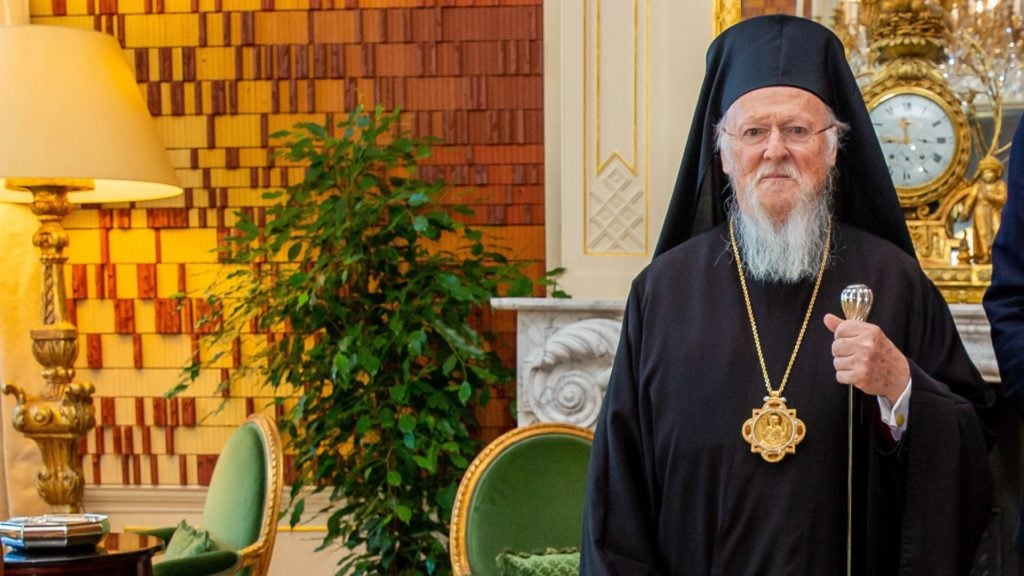
The contrast is not theoretical. It is concrete and visible. Patriarch Demetrios lived modestly in a small room within the Phanar. His successor, Patriarch Bartholomew, acquired for himself a multi-million-euro villa (mostly paid for by wealthy Greek-Americans), overlooking the Bosporus, located in one of the most exclusive and expensive districts of Constantinople. This departure from patriarchal sobriety is not a matter of rumor, but of public record, and it raises unavoidable questions concerning priorities, witness, and ecclesial credibility. Loyal followers and emulators of Bartholomew, such as Makarios of Australia, have also raised eyebrows with their expensive “primary residences”.
Even more troubling is the Phanar’s handling of the widely reported 2019 scandal involving the Metropolis of France. At that time, Metropolitan Emmanuel and his assistant Maximos repeatedly invited Bulgarian gay escorts into the Metropolis building. The matter came to the attention of French authorities following the reported theft of hundreds of thousands of euros. The French police compiled an official report detailing not only the financial crime but also homosexual activities allegedly taking place within ecclesiastical premises.
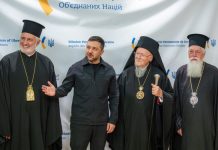
Despite the gravity of these allegations, Patriarch Bartholomew never requested the official police report from French authorities. No transparent investigation was initiated. No disciplinary measures were taken. On the contrary, Metropolitan Emmanuel and Maximos were subsequently promoted. Today, Emmanuel occupies the position of second-in-command within the Phanar hierarchy, recently even being cited as not only the “architect” of the Ukrainian “tomos”, but also the master organizer of the Papal visit to Nicea, the Phanar, and the Turkish authorities.
It is precisely at this point that the invocation of “judge not” becomes most revealing. When calls for transparency, investigation, and repentance are dismissed as “judgment,” Christ’s saying is transformed from a warning against hypocrisy into a shield for unaccountable power. Helleniscope rejects that distortion. Exposing abandonment of Holy Tradition, blatant and public violation of canons by clergy, corruption, moral scandal, and institutional hypocrisy is not an act of condemnation; it is an act of fidelity—to truth, to the Church’s own canonical conscience, and ultimately to the Gospel itself.
1. The Saying of Christ and Its Original Language
The passage most frequently cited against such exposure appears in Matthew 7:1:
Μὴ κρίνετε, ἵνα μὴ κριθῆτε
“Do not judge, so that you may not be judged.”
The verb κρίνω (krínō) in Koine Greek carries a broad semantic range: to distinguish, to evaluate, to discern, but also to condemn, to pass sentence, to assume judicial authority. The text itself does not settle the meaning; context does.
Any interpretation that flattens this term into an absolute prohibition against moral evaluation already abandons both linguistic precision and exegetical responsibility. We must not forget the famous example of how the laity ultimately rejected the “Ferrara agreement” that the treasonous hierarchy signed in 1439. Was that “loud majority” of Byzantine ancestors guilty of “judging the clergy”, or instead were these individuals ultimately Confessors of the Faith? Church history validates the latter, with Mark of Ephesos being designated a Saint for NOT signing what everyone else signed…
2. Immediate Context: Hypocrisy Condemned, Discernment Preserved
Christ immediately follows Matthew 7:1 with the image of the log and the speck. The target is not moral clarity but hypocritical judgment—the posture of those who scrutinize others while ignoring their own grave corruption.
The conclusion of the passage is decisive:
“First take the log out of your own eye, and then you will see clearly to take the speck out of your brother’s eye.”
The command is not silence, but repentant clarity. The goal is not the abolition of correction, but its purification from pride and self-exaltation.
3. Christ Commands Righteous Judgment Elsewhere
Any claim that Jesus forbade all judgment collapses under comparison with His own words in John 7:24:
“Do not judge according to appearance, but judge with righteous judgment.”
Here, judgment is not rejected but commanded, provided it is just, truthful, and free from superficiality. Scripture therefore interprets Scripture: Matthew 7:1 condemns condemnatory hypocrisy, not discernment, moral reasoning, or institutional accountability.
4. The Fallacies Behind “Judge Not” as a Shield
The charge leveled against Helleniscope relies on several recurring logical and theological fallacies.
Proof-texting isolates Matthew 7:1 from its context and from Christ’s broader teaching.
Equivocation collapses judgment-as-condemnation into judgment-as-discernment, treating all disagreement or exposure as sinful.
False dichotomies insist that one must either affirm and celebrate corruption or be guilty of hatred and judgment.
Tu quoque reasoning argues that because critics are sinners themselves, they are disqualified from speaking, ignoring Christ’s command to repent first, not to remain silent forever.
In each case, the saying of Christ is stripped of its moral seriousness and repurposed as a tool to enforce silence.
5. Accountability Is Not Condemnation
The Orthodox tradition has never equated silence in the face of scandal with humility. The prophets, the Fathers, and the canons all testify that unrepentant sin in leadership damages the entire body of the Church.
To expose documented excess, moral scandal, and abuse of authority is not to “judge souls.” It is to refuse the lie that institutional power is immune from moral scrutiny.We must not forget the famous example of how it was the laity who ultimately rejected the “Ferrara agreement” that the treasonous hierarchy signed in 1439. Was that “loud majority” of Byzantine ancestors guilty of “judging the clergy”, or rather were these individuals ultimately Confessors of the Faith? Church history validates the latter, with Mark of Ephesos being designated a Saint for NOT signing what everyone else signed…
Matthew 7:1 does not protect corruption. It condemns hypocrisy. And it warns most sharply those who invoke Christ’s words to avoid repentance.
Conclusion: On the Charge of “Heresy Hunting”
The accusation that Helleniscope engages in “heresy hunting” misunderstands both our intent and the Orthodox tradition itself. We do not seek condemnation or expulsion, but clarity, repentance, and fidelity to the Gospel. The Fathers never treated doctrinal or moral scrutiny as pathological; on the contrary, St. Basil the Great warned that “silence in the face of error is betrayal of the truth,” for unaddressed falsehood and scandal corrode the Church from within. To ask whether teaching, conduct, and the exercise of power remain coherent with the faith is not to hunt heresy, but to take unity and truth seriously. When such questions are dismissed as divisive, it is often not peace that is being protected, but unaccountable authority.
December 14, 2025, n.stamatakis@aol.com www.helleniscope.com
DISCLAIMER: The views and statements expressed in this article constitute constitutionally protected opinions of this author.













I agree wholeharteadly with this article. The “judge not so you will not be judged” has been used by many, including church people, to shield themselves from deserved criticism. We should not let ourselves be intimidated by such wrong interpretation. Criticize the hypocrites. But make sure you hve evidence and know scripture and church tradition. Otherwise, you’re harming, instead of healing
UOC’s Metropolitan Luke proposes Jerusalem Patriarchate as center of Church unity. I think this will be a great solution. Anybody but Barto. He proved incapable of unity in the OC. I have followed Metr. Luke for several years and I love his orthodox spirit.
https://orthochristian.com/174525.html
Found this interesting article, OCU former “clergy” had a wake up call and decided to tell the truth and expose corruption with OCU. God bless him!
https://spzh.eu/en/news/89607-organizers-of-uoc-church-seizures-receive-big-money-former-ocu-cleric