
ΕΑΝ ΠΡΟΤΙΜΑΤΕ ΕΛΛΗΝΙΚΑ ΠΑΤΗΣΤΕ ΤΗ ΣΗΜΑΙΑ ΣΤΟ ΚΑΤΩ ΜΕΡΟΣ ΤΗΣ ΟΘΟΝΗΣ
After the Predator wiretapping scandal, fresh revelations of Israeli-linked election engineering demolish any remaining illusion of Greek sovereignty. When foreign, intelligence-adjacent operatives shape campaigns and domestic elites look away, democracy becomes theater. The real question is no longer what happened, but why Greece continues to tolerate it.
By Nick Stamatakis
If Greek democracy still belongs to the Greek people, someone neglected to inform the Prime Minister’s Office.
First came the Predator scandal: illegal surveillance software, built and brokered by Israeli firms, used to spy on journalists, political rivals, and even members of the Mitsotakis government itself. Resignations followed, explanations vanished, and accountability never arrived. Greece was urged to “move on.”
Now comes the deeper, more corrosive revelation: As Israel’s mainstream newspaper Haaretz reveals (link here and see report below), Israeli political operatives, former security officials, and online-influence specialists may have quietly assisted New Democracy’s 41% electoral victory in 2023—at the very height of Greece’s supposed “Watergate.”
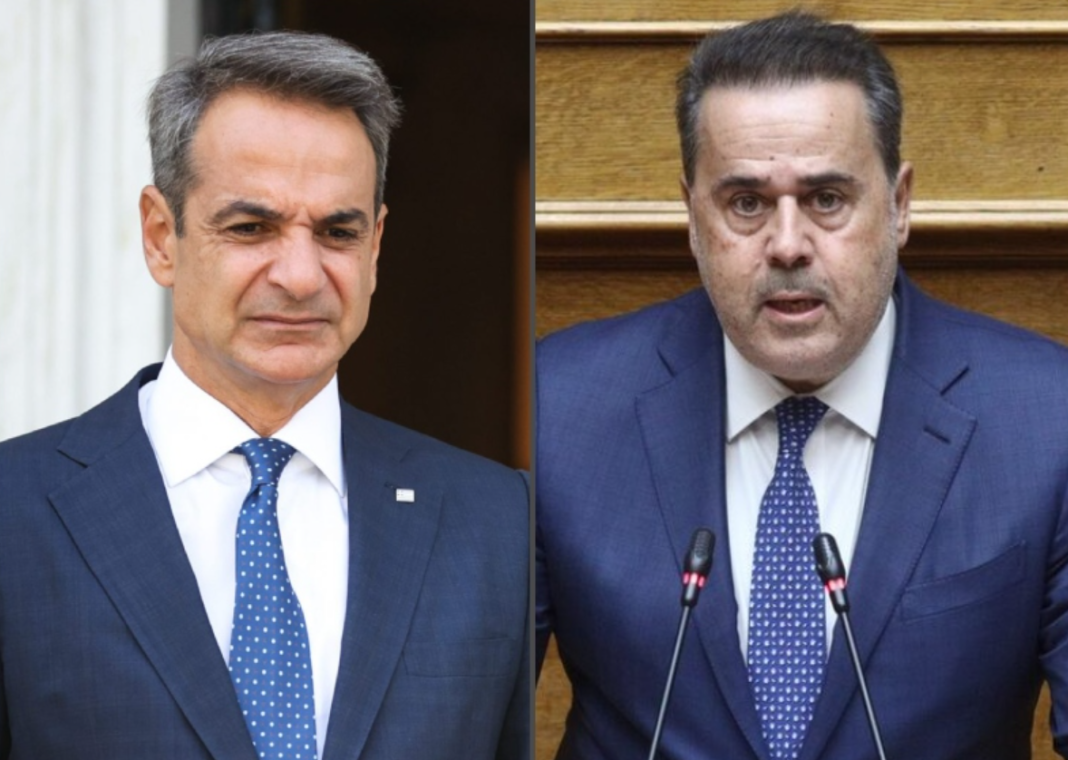
At the center of this web stands Stavros Papastavrou, the discreet intermediary between Athens and Tel Aviv, who maintained ties to Israeli President Isaac Herzog and served as the key conduit to Israeli consultants. Officially, he “wasn’t directly involved.” Politically, he emerged rewarded—installed as Minister of Environment and Energy once the operation concluded.
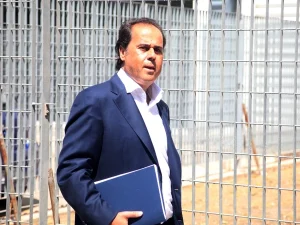
This is no longer about isolated scandals. It is about a pattern: foreign cyber-surveillance, election manipulation, plausible deniability, and post-election promotion. Surveillance gives way to influence; influence gives way to power.
A government that spies on its opponents using foreign cyber-weapons and then coordinates—quietly—with foreign political handlers forfeits any claim to democratic legitimacy. Elections are not won “discreetly” or “behind the scenes” by imported troll mechanisms run by former intelligence operatives. That is not democracy. It is management.
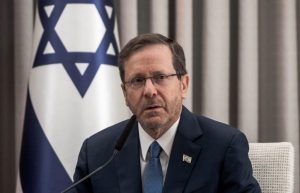
PHOTO: Israel’s President Isaac Herzog
So the question sharpens: who is actually governing Greece? And at what point do Greek elites stop dismissing this as embarrassment and confront it for what it is—external interference enabled by domestic consent?
Democracy rarely collapses overnight. It erodes quietly, through silence, denials, and the expectation that no one will dare to say the obvious out loud.
Patriotic Greeks and patriotic Americans ultimately face the same dilemma. In both countries, citizens are being asked to accept Israel’s overwhelming and disproportionate influence over domestic politics as normal, inevitable, or untouchable. Questioning that influence is treated as taboo, even when it intersects with surveillance, election manipulation, or elite collusion. Democracies cannot survive when foreign power operates beyond scrutiny—and when loyalty to sovereignty is quietly rebranded as extremism.
January 8, 2026, n.stamatakis@aol.com www.helleniscope.com
DISCLAIMER: The views and statements expressed in this article constitute constitutionally protected opinions of this author.
TO SUPPORT HELLENISCOPE OR BECOME A SUBSCRIBER, LINK HERE!!
==================
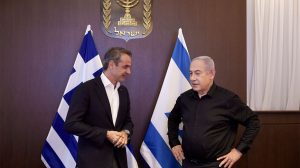
source – defendemocracypress.com
Shock revelation: Israeli involvement propelled ND to 41% in 2023 – How they set up a troll mechanism and the role of Papastavrou
After securing 41% in the elections, Stavros Papastavrou took over the Ministry of Environment and Energy.
A shock revelation by the Israeli newspaper Haaretz concerns Israel’s involvement in the 2023 Greek elections, when New Democracy (ND) and Kyriakos Mitsotakis received 41%. At the center of the case is Stavros Papastavrou, who acted as the main point of contact between Greek officials and foreign consultants, without being directly involved in the campaign or online influence techniques.
The Israeli team included former Israeli security officials and online campaign experts who met with the Greek side discreetly, aiming to exchange advice and behind-the-scenes strategies. All this occurred while the Predator wiretapping scandal was raging in Greece.
The case gains additional weight within the context of recent Israeli political developments, as Moti Sander, a former close associate of President Isaac Herzog, has claimed he can reveal details about similar behind-the-scenes connections, especially in view of a potential pardon for Benjamin Netanyahu. The Haaretz report outlines a circle of informal contacts and processes showing how clandestine influence networks operated, both internationally and in the relations between Israeli consultants and Greek government officials.
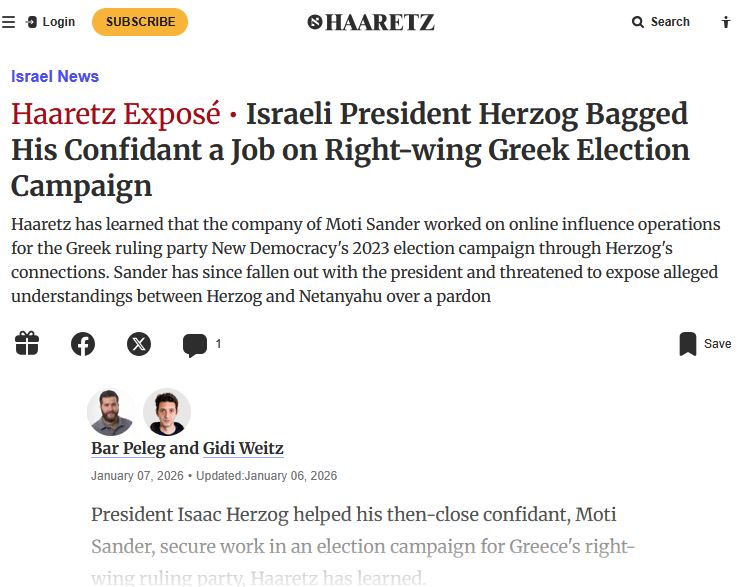
According to the report, Israeli President Isaac Herzog helped his then-close confidant, Moti Sander, secure work on ND’s election campaign. For many years, Sander operated behind the scenes as Herzog’s advisor on political and communication issues and, after the 2015 elections in which Herzog was defeated by Benjamin Netanyahu, he even acted as a mediator in an attempt to form a national unity government between Herzog and the Prime Minister. “The relationship between Herzog and Sander was very close,” a person familiar with both told Haaretz.
The pardon of Netanyahu
Relations between the two deteriorated a few months ago. As Haaretz previously reported, Sander recently sent threatening messages to the Presidential Office: If Herzog granted Netanyahu an unconditional pardon under “surrender terms,” Sander warned he would reveal everything he knows about Herzog, including alleged previous understandings between Herzog and Netanyahu regarding the pardon. The President categorically denies any agreement to grant Netanyahu a pardon in exchange for support of his presidential candidacy in 2021 and states he never assigned Sander a role in mediation or message delivery.
Israel’s “mechanism” in Greece
The close relationship between Herzog and Sander is also reflected in events preceding the Greek elections. Sander, an entrepreneur who had tried his hand in various sectors, formed a team of professionals aimed at conducting international election campaigns. Along with two former members of the security apparatus specializing in online influence operations, the team included Israel “Srulik” Einhorn, a former Netanyahu advisor who was later involved in the “Bibileaks” and Qatargate scandals. Sander prepared a brochure to promote the team and presented it to Herzog. The President, in turn, promoted the group led by his friend.
In late 2022, on the eve of the Greek parliamentary elections, Herzog approached Sander and asked him to get in touch with Stavros Papastavrou of ND. As a result, Israeli consultants met with their Greek counterparts. “All contact was carried out discreetly,” a diplomatic source familiar with the matter told Haaretz. “The Greeks were cautious about being identified with Israel because the Greek ‘Watergate’ scandal had broken out shortly before.” In the months leading up to the connection, investigations in the Greek media mentioned government relations with Israeli offensive cyber-technology companies, which allegedly helped monitor the phones of the government’s political opponents, including top politicians and journalists. In this context, in August 2022, the head of the Greek intelligence service and the director of the office of the Greek Prime Minister, Kyriakos Mitsotakis, resigned.
The Israeli Presidential Office denies the report
According to a report by the website Shomrim, Herzog also recommended Sander to a Romanian politician ahead of the country’s 2024 elections. “Generally, he tried to help Sander wherever he could,” said a person familiar with their relationship. “There were moments of tension between them, for example, when Herzog did not include Sander in his delegation during a state visit to Greece with the local leadership, where Sander has extensive business connections. I assume he preferred to help him mainly behind the scenes.”
However, the Presidential Office rejects the information: “The claim is categorically denied and is false. The President had no involvement in Sander’s activities in Greece and did not recommend him, did not lead, nor did he help him, or anyone on his behalf, in the campaign in Greece or any other activity. As far as we know, Moti Sander has had extensive activity in Greece for many years. In this specific case, the President was asked, on a single occasion, if he knew Sander and was then asked, solely at the request of the interested parties, to forward a telephone number so that Mr. Sander could contact them. The transmission of the telephone number was done only because of the President’s previous acquaintance with Sander, about whom he had been asked. The President had no previous acquaintance, nor does he have today, with Mr. Papastavrou, just as he has and had no knowledge of Sander’s activities in Greece, and does not know if anything resulted from said request.”