
By Helleniscope’s Editorial Team
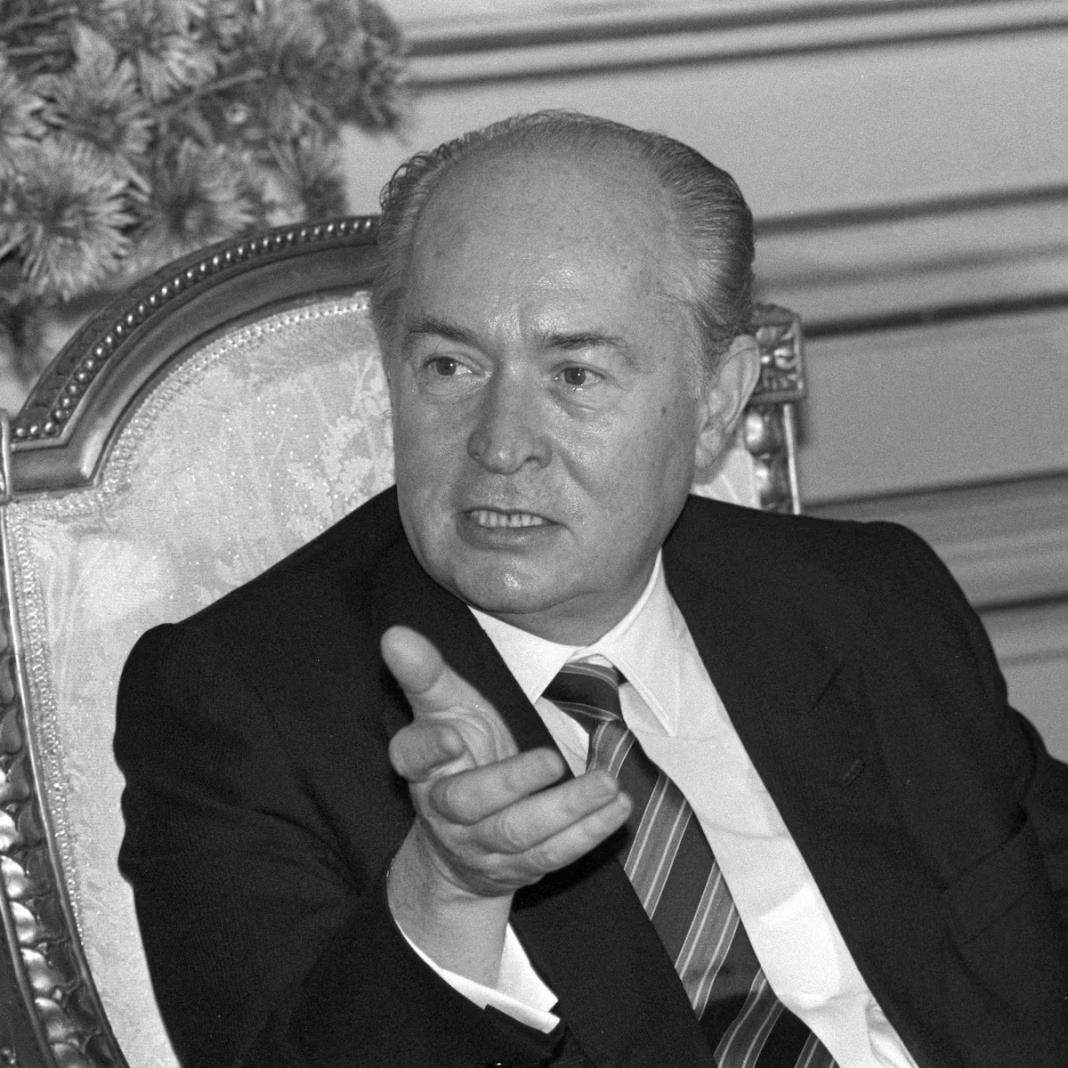
Cyprus is bidding farewell to George Vassiliou, a leader whose life and career were defined by moderation, reform, and an unyielding belief that dialogue—however difficult—was the only path forward for a divided island. News of his passing has prompted tributes across the political spectrum in Cyprus, Greece, and Europe, reflecting the rare breadth of respect he commanded.
A reformer in office
Elected President of the Republic of Cyprus in 1988, Vassiliou emerged not from the traditional party establishment but from civil society and the business world. His presidency was marked by an effort to modernize the Cypriot state, liberalize the economy, and reduce entrenched patronage networks. At a time when Cypriot politics were deeply polarized, his technocratic style and calm demeanor stood in sharp contrast to the confrontational norms of the era.
Above all, his tenure is remembered for a renewed push toward rapprochement between Greek Cypriots and Turkish Cypriots. Though comprehensive reunification proved elusive, Vassiliou invested political capital in confidence-building measures and sustained negotiations, arguing—often against prevailing public sentiment—that compromise was not weakness but necessity.
The Cyprus problem: persistence without illusion
Commentary following his death consistently highlights his realism. Vassiliou neither romanticized reunification nor abandoned it. He understood the limits imposed by regional geopolitics and internal mistrust, yet insisted that the alternative—permanent division—was unacceptable. His approach laid intellectual groundwork later reflected in UN-backed frameworks and bicommunal initiatives. Critics at the time accused him of excessive pragmatism.
A European Cypriot
After his presidency, Vassiliou continued to serve Cyprus on the international stage as European Commissioner, reinforcing the country’s European orientation well before EU accession became a national consensus. In Brussels, he was regarded as a serious, policy-driven figure—less interested in spectacle than in results. His work helped anchor Cyprus firmly within the European political and regulatory framework.
NOTE: We have seen that everyone touts George Vassiliou as a superb pro-EU statesman, but we would be remiss not to underline that, without a Greek Undersecretary of Foreign Affairs, Giannos Kranidiotis, of Cypriot descent, Cyprus would never have joined the EU. The difference is that at that time, Greece had leadership with substantial independence and patriotism, unlike today’s puppets.
Personal style and public memory
Tributes emphasize not only what Vassiliou did, but how he did it. He was soft-spoken, analytically rigorous, and notably free of the populist theatrics that dominate contemporary politics. Even opponents acknowledged his integrity and personal decency—qualities increasingly rare in public life.
For many Cypriots, his passing evokes a sense of loss beyond party lines: the loss of a political culture that valued persuasion over provocation, substance over slogans.
A measured legacy
In an era when political reward often favors loud certainty over thoughtful doubt, Vassiliou stood for something harder: responsible leadership in the face of unsolved problems. That, ultimately, is why his death resonates not only as the passing of a former president but as the departure of a statesman whose relevance may be even clearer now than when he first took office.
January 14, 2026, n.stamatakis@aol.com www.helleniscope.com
DISCLAIMER: The views and statements expressed in this article constitute constitutionally protected opinions of this author.