
ΕΑΝ ΠΡΟΤΙΜΑΤΕ ΕΛΛΗΝΙΚΑ ΠΑΤΗΣΤΕ ΤΗ ΣΗΜΑΙΑ ΣΤΟ ΚΑΤΩ ΜΕΡΟΣ ΤΗΣ ΟΘΟΝΗΣ
Why Cinema Keeps Missing the Rage, the Return, and the Moral World of the Epics
By Eleni Phufas-Jousma (*)
For Greeks and for the Greek diaspora, Homer is not simply an ancient poet or a schoolroom classic. He is inheritance. The Iliad and The Odyssey are not only foundational texts of Western literature; they are moral worlds, structured by ideas of rage, restraint, justice, memory, and return that continue to shape how Greeks understand honor, exile, endurance, and belonging.
Yet after more than a century of international cinema—from silent European epics to modern Hollywood blockbusters—no film has yet succeeded in entering that world on its own terms. The failure is not one of budget, spectacle, or talent. It is a failure of understanding.
Consider The Iliad for one. Cinema repeatedly mistakes The Iliad for a war movie. Homer’s poem is not about battlefield heroics but about μῆνις (mênis): a catastrophic rage expressed not through violence, but through refusal. Achilles does not storm the battlefield in fury; he withdraws, sits apart, and allows the moral order of the Achaean world to unravel in his absence. Modern films, most notably Troy (2004), rewrite Achilles as a familiar action hero—angry, rebellious, and decisive. In doing so they erase the poem’s central insight: that some forms of rage devastate not by acting, but by refusing to act at all.
Odysseus fares no better. His defining trait is νόος (noos)—intelligence disciplined by restraint, delay, and disguise. Odysseus survives not by releasing anger, but by mastering it. Even his killing of the suitors is not an eruption of θυμός (thymos-anger), but its discipline: delayed, measured, and carried out only when waiting itself would become injustice.
Yet cinema consistently misunderstands this form of heroism. From Ulysses (1954), which turns Odysseus into a conventional action figure, to The Return (2024), which reduces the Odyssey to psychological endurance and trauma, film struggles to portray heroic rage that withholds action. At the opposite extreme, O Brother, Where Art Thou? (2000) caricatures Odysseus as a comic trickster, turning moral intelligence into charm and improvisation.
Why does film get this wrong so consistently? Because modern cinema is built to reward momentum, spectacle, and emotional display. It collapses μῆνις into θυμός and has little patience for νόος—the intelligence of waiting. What it can easily show is advancing rage, violent release, and catharsis. What it cannot tolerate is absence, delay, and moral suspension. The result is not interpretation but erasure: Homer’s tragic architecture gives way to spectacle, and audiences are invited to admire what the poems meant us to fear.
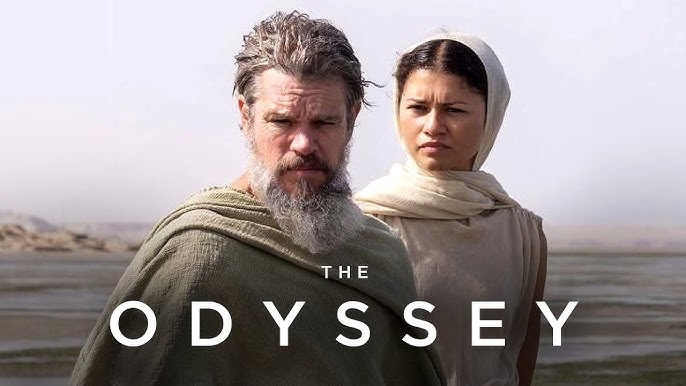
This long history brings us to Christopher Nolan’s forthcoming adaptation of The Odyssey. Nolan, as he has shown through some of his work, is one of the few contemporary directors preoccupied with time, memory, restraint, and delayed action—qualities that align more closely with Homer than most of his predecessors. And yet even here the pattern persists. Nolan’s announced cast includes not a single Greek actor, continuing a century-old habit of treating Homer as universal myth while quietly erasing the culture that produced him. From Helen of Troy to Troy (2004), Greekness has been costumed or abstracted rather than embodied.
Casting alone, however, will not decide the film’s fate — even when it is designed to provoke interest and expand box-office appeal. Accuracy in spirit matters more than phenotype (physical appearance) alone. A non-Greek actor who understands μῆνις, νόος, restraint, and moral consequence will come closer to Homer than a “Greek-looking” cast trapped in spectacle, melodrama, and speed. The real question Nolan’s film raises is deeper and more unsettling: The real question Nolan’s film raises is deeper and more unsettling: can a profit-driven, impatient cinema slow itself enough to honor a hero whose greatness lies in restraint?
Homer does not ask to be modernized; he asks whether we — and the film industry — possess the νόος to understand him at all.
(*) Eleni Phufas-Jousma is a Professor Emerita of English Literature (USA) who devoted her career to teaching English courses, including film theory, film history, and cinematic criticism.