


ΕΑΝ ΠΡΟΤΙΜΑΤΕ ΕΛΛΗΝΙΚΑ ΠΑΤΗΣΤΕ ΤΗ ΣΗΜΑΙΑ ΣΤΟ ΚΑΤΩ ΜΕΡΟΣ ΤΗΣ ΟΘΟΝΗΣ
By Nick Stamatakis
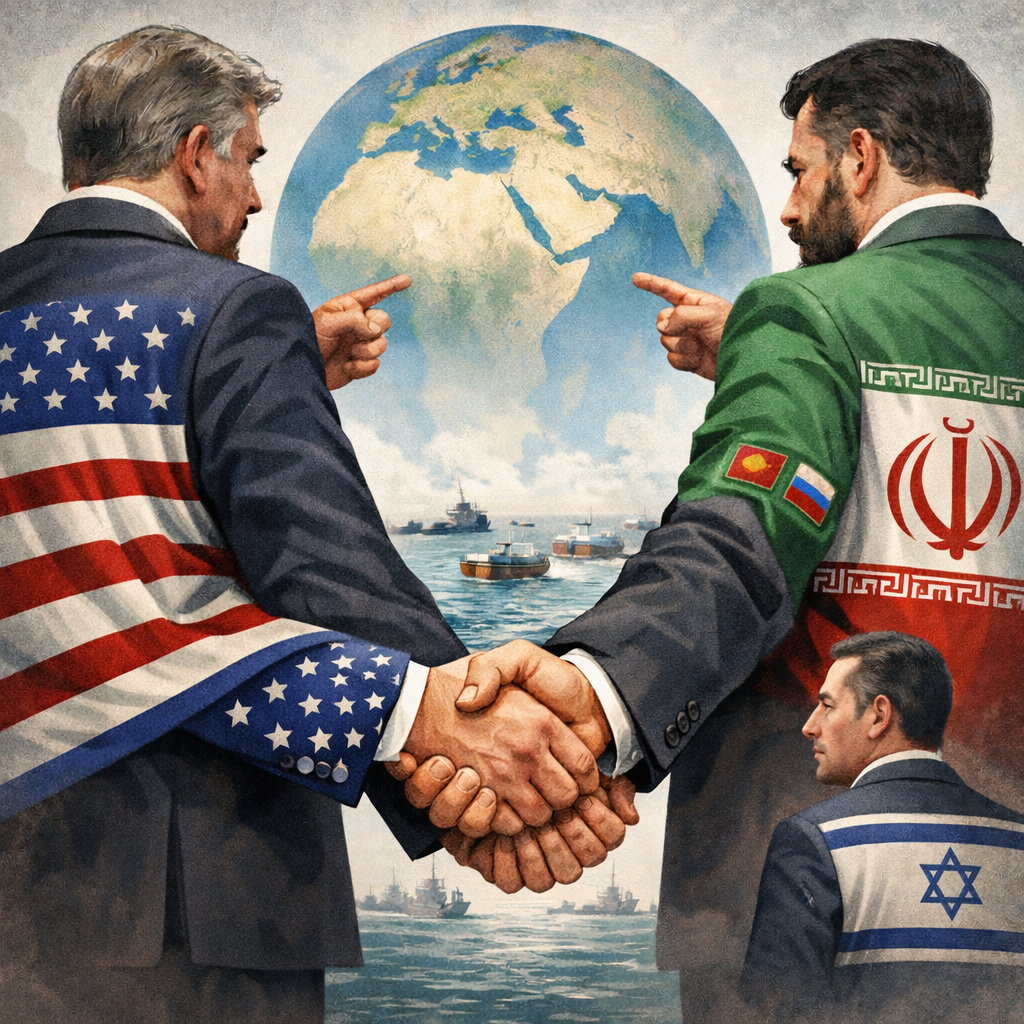
There are several reasons to believe that the March-April 2026 confrontation has reached its apex, and we are now in the process of de-escalation. We woke up this morning with a flurry of news that points in this direction: oil prices sliding fast, heavy diplomatic activity dominated by Sergey Lavrov’s visit to China, Saudi Arabia asking the US to stop the war (after the Houthis threatened to close the Red Sea), etc, etc. All this as the April 8, 2-week-long ceasefire is bound to expire on April 21st.
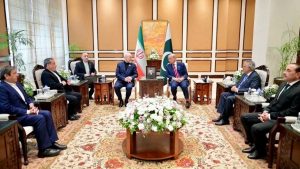
According to both sides, they have “achieved [their] goals”; Trump’s administration suspended air raids on Iran, while Iran reopened shipping lanes across Hormuz. In light of this development, Pakistan, which had hosted the initial talks, arranged for further negotiations as the U.S. and Iranian diplomats prepared to meet again soon – probably not in Islamabad. Several key indicators of de-escalation are described further below.
Conditions of the Ceasefire & Its Enforcement
According to the terms, Iran should have “completely, immediately and safely” reopened the Hormuz Strait, and all large-scale attacks against Iran must stop. In accordance with the Pakistani Prime Minister, hostilities should stop in “all directions”, including Iran’s bombardment of Gulf states, as well as Israel’s air raids on Iran’s positions and in Lebanon. In actuality, Iran allowed ships to move across Hormuz again, unblocking the oil supply route, while the U.S. and Israel ceased their air attacks for two weeks. One aspect that is still disputed is whether the ceasefire is valid in Lebanon: Iran and Pakistan claim that the ceasefire covers Israel’s offensive in Lebanon; however, Israel denies this statement, while the U.S. has remained silent. However, EU States are increasing the pressure on Israel, and in the last 24 hours, we saw the first signs of Israel holding back its attacks on Lebanon. Regardless of what happens in Lebanon, the initial suspension has led to a lull in attacks, and no new targets in the Gulf States have appeared.
Several specialists have identified the opening of the Hormuz Strait as an important first step toward de-escalation. By ceasing the attacks, the U.S. has allowed Iran to start allowing “non-hostile” ships through the Strait, in line with its previous statements. According to the CFRI, the UN must establish a humanitarian route via Hormuz to restore the flow of aid and oil – the UN should do “a great deal of work in [this] area”. The actual implementation of such measures would be an indicator of the opening of the Hormuz route, previously blocked by Iran.
Pressure from Western Countries to Cease Hostilities in Lebanon
Several European and American leaders have issued statements calling on Israel to cease military operations against Iran’s ally Hezbollah in Lebanon. Italian Premier Giorgia Meloni, Greek Premier Kyriacos Mitsotakis, Spanish Prime Minister Pedro Sanchez, French President Emmanuel Macron, German Chancellor Merz, and the leaders of the EU Council & Commission issued a joint statement on April 8. The document emphasized that the ceasefire must be honored by all parties and called on participants in the negotiation process to reach a sustainable peace agreement.
Similarly, the UK government has called for an immediate ceasefire to include Lebanon. However, Israeli PM Netanyahu has already stated his intention to keep attacking Hezbollah targets in Lebanon, putting him in opposition to Western calls for de-escalation. In general, Western countries seem to be increasingly concerned about the widening of the conflict to other countries – this might be a clear indication that Israel will eventually have to make concessions in exchange for peace.
Israeli Position in Public Discussions
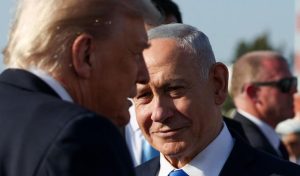
Israel’s top leaders are already framing the conflict as a win in order to achieve a ceasefire. Their army is exhausted, and their population grows tired of living in bunkers… In his televised address, Netanyahu claimed that in the course of the 39-day war, Israel had successfully weakened Iran’s regime to the extent that “its foundations have become unstable.” Addressing the citizens, Netanyahu noted that “the United States and Israel dramatically changed the landscape of the Middle East in our favor”. Internal sources confirmed that Netanyahu is boasting about a “great victory in which we accomplished everything we wanted”. (It is worth noting that Netanyahu added that there are “some additional goals that we have to achieve” in Iran.) Netanyahu’s words suggest that Israel is ready to accept the ceasefire as a victory. In addition, Netanyahu announced that the key requirement for negotiating with Lebanon is: the “disbanding of the Hezbollah organization and destruction of its military forces.”
Mediation of Saudi Arabia & Other Gulf States
Some Arab states are also seeking ways to achieve de-escalation. First, Saudi Arabia has contacted the US Administration and asked to resume negotiations rather than engage in the war. According to Saudi Arabia’s officials, Riyadh requested the US to lift its blockade on Iranian ports and start negotiations. According to them, such moves risk further escalation of conflicts in the Hormuz Strait, where oil exports from Iran pass.
In particular, Saudi diplomats are afraid of a possible response from Iran, which might block, using the Houthis, another important passage, the Bab al-Mandeb Strait, leading from the Red Sea. Several diplomats told the Wall Street Journal that Iran’s allies in Yemen have already made public announcements threatening the closure of Bab al-Mandeb if the U.S. continues attacks on Iran.
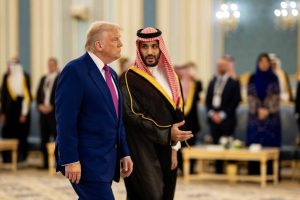
According to these reports, the Saudi Arabian Government, it succeeded in obtaining short-term assurances from the Houthis that they won’t attack Red Sea shipping, but the situation is unpredictable and may change if the attacks continue. The government of Oman openly welcomed the ceasefire decision and praised efforts made to achieve it, especially the mediation conducted by Pakistan. Other Gulf States, such as the UAE and Bahrain, have already started advocating peace.
Russia-China Cooperation on the Iran Crisis
Moscow and Beijing are also intensifying their contacts on the issue. On April 14-15, Russian Foreign Minister Sergey Lavrov came to Beijing to discuss relations with China, and the Iran problem is at the center of this discussion. Vladimir Putin is rumored to visit Beijing soon. China’s Foreign Ministry has already expressed concern over the current actions of the United States, referring to its naval blockade of Iranian ports as “irresponsible and dangerous.” During Lavrov’s visit, President Xi Jinping urged Russian diplomats to increase cooperation to defend their mutual interests. This clearly shows that Russia and China are coordinating on this problem: they both have blocked UN Security Council sanctions against Iran regarding the Hormuz Strait and support Pakistani mediation.
Mediation Efforts of Pakistan
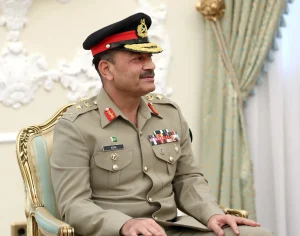
Pakistan continues to play a key role in the current mediation process. The country hosted a round of negotiations between Iran and the United States between April 11 and 12, and Pakistani Prime Minister Shehbaz Sharif announced the agreement reached by the parties. U.S. officials have indicated they expect another round of talks in Pakistan, but other reports place the next round of negotiations in Europe. On April 15, Pakistani Chief of Army Staff Field Marshal Asim Munir and a high-level delegation (including the Interior Minister) went to Iran to mediate in negotiations between the two conflicting parties. Both parties admitted they had made progress in discussions on extending the ceasefire to facilitate further negotiations. Iranian Foreign Ministry Spokesman Saeed Khatibzadeh announced that the Pakistani delegation has briefed Iranian leaders on the U.S. position and will continue to respond to it. The fact that the delegates continue working toward peaceful agreements suggests that such an achievement is quite probable.
Analysis of Current Trends and Forecast
States that have been indirectly involved in the war — such as the United Arab Emirates and Saudi Arabia – may now have stronger incentives to pursue de-escalation rather than prolong the conflict. Meanwhile, we can see signals of flexibility from Tehran, particularly its willingness to allow non-hostile shipping through the Strait of Hormuz.
The White House has expressed cautious optimism, indicating expectations for another round of talks – potentially facilitated by Pakistan but taking place in Europe – and confidence that a negotiated outcome is within reach. Donald Trump has reinforced this narrative, repeatedly emphasizing that the situation is nearing resolution while also warning that any violation of the ceasefire would trigger renewed military action, which suggests that the US is unable to apply it, especially if the Houthis are involved. Last year, the US withdrew an aircraft carrier that was hit by the Houthis in the Red Sea.
And finally, one has to consider President Trump’s visit to China in less than a month and the World Cup Soccer starting in North America in early June – they are certainly to have a serious influence in achieving peace.
IN CONCLUSION, a fragile truce has taken hold, and all global powers and regional actors are actively signaling a preference for diplomatic resolution. A convergence of public statements—from Washington and its allies to regional stakeholders—alongside diplomatic movements such as high-level visits and mediation efforts, points toward a structured negotiation process. Proposed confidence-building measures, including maintaining open maritime routes, further reinforce this trajectory. Taken together, these developments strongly suggest that formal negotiations are not only possible but likely imminent.
April 15, 2026, n.stamatakis@aol.com www.helleniscope.com
DISCLAIMER: The views and statements expressed in this article constitute constitutionally protected opinions of this author.














After the tensions of the last few months, I will be okay with each nation’s claim that it won its objectives.
Ditto
I think this is too optimistic. The US will do what it always does: lie. This is good cop-bad cop, and Netanyahu is still pulling the strings. America is a force for evil in the world today, and as soon as it’s convenient, the bombs will start falling again.
The only thing that could convince me otherwise is a public and decisive break with Israel – not just a policy difference, but a fundamental breakdown of our relationship with the Zionist regime, the likes of Spain or worse.
Yes, but we are coming closer and closer to that point. with the US practically out of the Middle East who is going to support the Zionists’ delusional dreams? Regardless of “deals” most American bases are destroyed… and even more than the bases the trust is destroyed… In today’s news USS aircraft carrier George Bush had to go around Africa to reach the Middle East -for fear of the Houthis…
Τα λιπάσματα αποτελούν τον ακρογωνιαίο λίθο της παγκόσμιας επισιτιστικής ασφάλειας, έχοντας μειώσει δραστικά την πείνα μέσω της εκρηκτικής αύξησης των αποδόσεων των καλλιεργειών. Η κρίσιμη σημασία τους αποδείχθηκε περίτρανα κατά την πρόσφατη κρίση στον Περσικό Κόλπο, όπου οι γεωπολιτικές αναταράξεις περιόρισαν τη διαθεσιμότητα φυσικού αερίου και πρώτων υλών για τη βιομηχανία λιπασμάτων. Η επακόλουθη έλλειψη οδήγησε σε κατακόρυφη πτώση της παραγωγής τροφίμων και απειλή λιμού σε πολλές περιοχές, επιβεβαιώνοντας ότι χωρίς τη χημική λίπανση, η ανθρωπότητα αδυνατεί να συντηρήσει τον σημερινό πληθυσμό της.