


ΕΑΝ ΠΡΟΤΙΜΑΤΕ ΕΛΛΗΝΙΚΑ ΠΑΤΗΣΤΕ ΤΗ ΣΗΜΑΙΑ ΣΤΟ ΚΑΤΩ ΜΕΡΟΣ ΤΗΣ ΟΘΟΝΗΣ
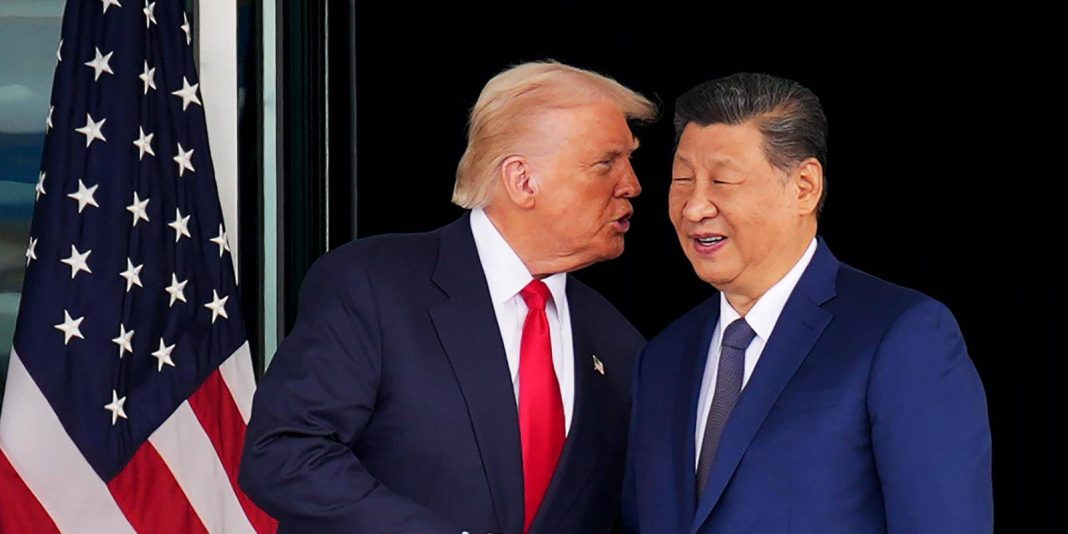
Xi Jinping’s invocation of the “Thucydides Trap” transformed today’s Trump–Xi summit from a routine diplomatic engagement into a stark meditation on the dangers of great-power rivalry. By referencing the ancient Greek theory that rising and established powers often drift toward conflict, Xi framed the modern U.S.–China relationship as a historic test of whether two global superpowers can avoid repeating the catastrophic patterns of the past.
By Helleniscope’s Editorial Team
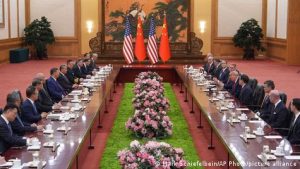
This week’s meeting between Donald Trump and Xi Jinping in Beijing became far from an ordinary diplomatic event. In fact, the Chinese leader used this opportunity to mention the “Thucydides Trap,” a theory that holds that wars are inevitable when rising powers threaten to overthrow established great powers.
According to sources, the very essence of U.S.-China relations, according to President Xi, lies in the two countries’ ability to avoid falling into the “Thucydides trap.” The phrase used by the Chinese president was no coincidence. On the contrary, it was intended as a cautionary statement to Washington, especially the American government, given that China is increasingly seen as America’s main strategic rival.
The phrase comes from the Greek historian Thucydides, who recorded the events of the Peloponnesian War. According to him, war became inevitable “because of the rise of Athens and the fear that this instilled in Sparta.”
These words served as a basis for what Harvard political scientist Graham Allison calls the “Thucydides Trap.” In his opinion, when a rising power gains enough strength to challenge a hegemonic nation, the chances of conflict increase drastically.
The significance of Xi’s statement is huge. China has been using the concept of the Thucydides Trap in its foreign policy strategy for many years. China claims that the rapid rise does not inevitably lead to war but requires some degree of accommodation from the leading state – the United States.
The Significance of the Theory
What does the Thucydides Trap mean? It is a well-known historical concept that has become a key factor in geopolitical thought in the 21st century.
According to the Thucydides Trap, when an established military power, in our case Sparta, is threatened by the rapidly rising state, Athens, the situation may easily escalate into conflict.
Similar processes occurred in history, including:
- The emergence of rivalry between Germany and Great Britain before World War I
- Japan and the United States in the run-up to World War II
- Rivalries within Europe in other periods of power transition.
Allison found that of 16 cases of rivalry between rising and ruling states in history, 12 ended in devastating war. In other words, the structure of power distribution alone leads to conflict, regardless of whether one of the countries seeks war.
Currently, the United States and China are the best examples of power rivalry that resemble those times. According to the Thucydides Trap,
China is a rising power with a steadily increasing influence in all spheres. The United States remains the world’s leading military and financial power. Taiwan is the only remaining explosive factor in their conflict.
Thus, the Chinese president’s words can be interpreted as follows. The past creates strong pressure on relations. Leaders need to find ways to overcome these historical challenges and prevent them from turning into confrontations.
Taiwan as an Exacerbating Factor
The issue of Taiwan came up time and again at the summit. As reported, President Xi warned Trump that mismanaging relations with Taiwan could provoke “clashes and even conflicts.” Taiwan is a clear example of the principles of power transition theory:
- rising powers struggle for recognition;
- existing powers try to defend their position and rights;
- disputes that are peripheral for both countries become critical tests of the rivals’ positions.
For China, Taiwan is a matter of honor and historical legacy. For the United States, it is a test of its influence in Asia and the credibility of its commitments to democracy in the region.
Within the framework of the theory, neither of the countries seeks a conflict, but both of them are prone to escalation due to deterrence, prestige, and fear.
President Trump’s Stance
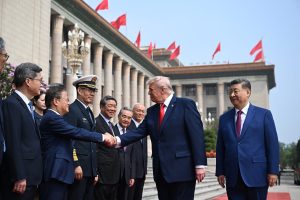
It should be mentioned that President Trump did not focus on historical analogies and warnings. On the contrary, he emphasized the economic benefits that may result from further collaboration with China.
The irony of the situation is obvious since:
- Xi stressed the importance of history, culture, and civilization.
- Trump put more focus on pragmatism and economic deals.
However, there are huge contradictions in today’s U.S. – Chinese relations:
-restrictions on semiconductor supplies;
– military rivalry in the Pacific region;
– trade disputes;
– competition in artificial intelligence;
– sanctions and export controls;
– Rivalry in global alliances.
Criticism of the Theory
Nevertheless, the theory of power transitions remains controversial among experts.
Critics claim that:
- historical analogies oversimplify modern geopolitics;
- Great powers behave differently due to nuclear deterrence;
- The process of globalization decreases the chance of war;
- The growth of the Chinese economy is declining, thus making “rising” meaningless.
Moreover, experts emphasize that references to Thucydides’ trap make it self-fulfilling. Once politicians perceive rivalry as an inevitable process, they tend to treat every step in a conflict situation negatively and fatalistically.
There are still many examples of relatively peaceful transfers of global dominance, for instance, between Britain and the United States in the first half of the twentieth century.
Nevertheless, today’s references to Thucydides’ theory show that China views the current rivalry as a historic shift.
Conclusion
In general, Donald Trump and Xi Jinping met with each other to discuss important geopolitical issues that concern the whole world. However, the most significant aspect of the meeting was the references of the Chinese president to historical facts. In this regard, it can be stated that China perceives its rivalry with the United States as an essential part of history.
May 13, 2026, n.stamatakis@aol.com www.helleniscope.com
DISCLAIMER: The views and statements expressed in this article constitute constitutionally protected opinions of this author.















What’s ironic is that there is no need for the US to emulate Sparta. Mainly because it’s official American policy that Taiwan is already part of China.
In my opinion, that’s a huge face-saving off-ramp for us. Unfortunately, our elites see things differently.
The silver lining is that this takes pressure off of our Ukrainian misadventure.
Absolutely correct… I would only add that it is now generally agreed that the “Thucydides trap” as a theory cannot be applied today as the circumstances are totally different… And the world is so integrated financially that “defeating the other superpower” in the end will likely be catastrophic for both – even without a nuclear exchange.
That’s The reality today , the immense inter- dependency of future acceleration by AI; that to intervene with hostilities , or any ill conceived invasions, is counter-productive to the whole technological system uprooting the functional status that needs to be protected ,otherwise it is a Sisyphean Task -a NO-NO Win. The deplorable
wastage in life and resources that must be acknowledged internationally, by the Iranian and Ukrainian Wars. Time out everybody please honor ‘The Olympic Truce”!!