

ΕΑΝ ΠΡΟΤΙΜΑΤΕ ΕΛΛΗΝΙΚΑ ΠΑΤΗΣΤΕ ΤΗ ΣΗΜΑΙΑ ΣΤΟ ΚΑΤΩ ΜΕΡΟΣ ΤΗΣ ΟΘΟΝΗΣ
Is Greece Becoming the Beggar of the Eastern Mediterranean? From the maritime compromises with Italy and Egypt to the silence over Saint Catherine’s Monastery, Mitsotakis’s diplomacy increasingly raises the question of whether Athens is exchanging strategic leverage for the appearance of stability and friendship.
By Nick Stamatakis
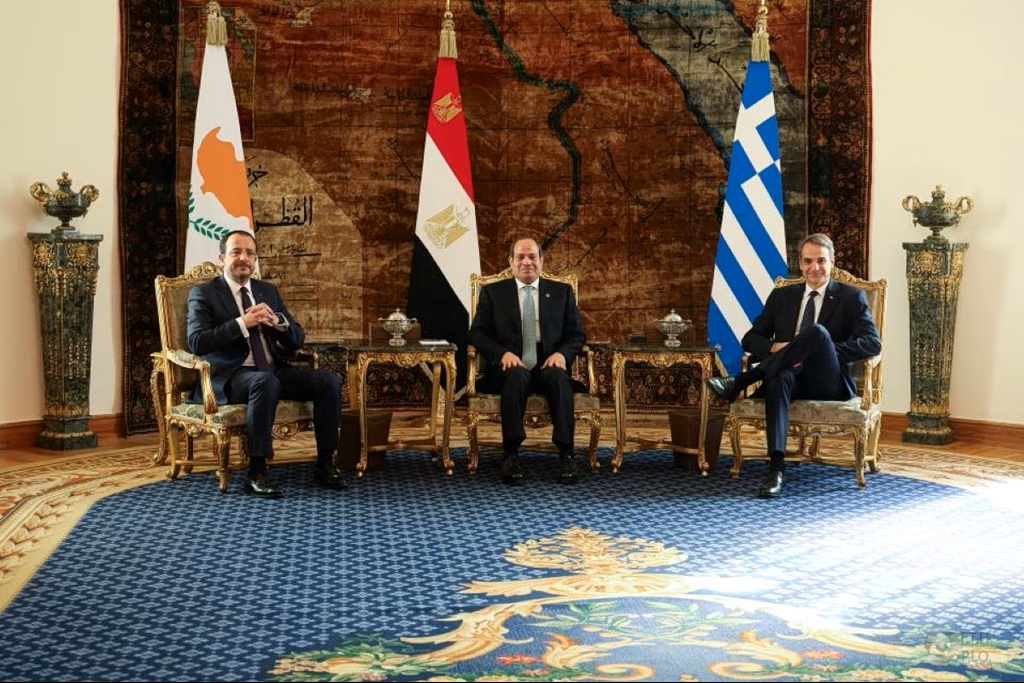
Kyriakos Mitsotakis went to El Alamein to meet Egyptian president El Sisi, once again carrying the vocabulary of “stability,” “dialogue” and “mutually beneficial convergences,” the familiar diplomatic language with which his government has learned to dress every retreat as prudence and every concession as responsibility, yet the question can no longer be avoided: when Greece repeatedly gives first, compromises first and reassures first, while asking little that is concrete in return, is this still foreign policy between equals or has Athens gradually accepted the role of supplicant in the Eastern Mediterranean?
The pattern did not begin with Saint Catherine’s Monastery. It was visible in the maritime agreements with Italy and Egypt, agreements which the government presented as historic diplomatic achievements but which required Greece to accept compromises on positions it had defended for decades, first with Rome and then with Cairo, while the political return was largely the satisfaction of having secured an agreement at all. The Egypt deal was partial, leaving crucial sectors of the maritime boundary unresolved, yet Athens celebrated the compromise as proof that international law and good relations could produce “convergences,” as though convergence were itself a national objective rather than the product of reciprocal bargaining. Greece did not literally surrender territorial sovereignty, since an Exclusive Economic Zone concerns sovereign rights over resources rather than sovereignty over national territory, but governments are judged not only by legal terminology but by whether concessions purchase something durable, and the growing suspicion is that Mitsotakis has made concession itself the currency of Greek diplomacy.
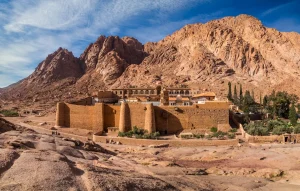
Saint Catherine’s now exposes the weakness of that philosophy with almost painful clarity. Mitsotakis met Abdel Fattah el-Sisi at El Alamein on 8 September, first bilaterally and then within the Greece-Egypt-Cyprus summit, and the official declarations found room for Gaza, Libya, Lebanon, maritime security, migration, energy, navigation, the Ethiopian dam and the waters of the Nile, but apparently no public room for one of the most sensitive unresolved questions in Greek-Egyptian relations, the future legal and property status of the Monastery of Saint Catherine at Sinai. We cannot know whether the subject was raised behind closed doors, but diplomacy is also measured by what governments are prepared to defend publicly, and the silence is extraordinary precisely because the monastery is not some peripheral sentimental concern but an institution whose ecclesiastical continuity, historical possessions and ability to function under Egyptian law are being renegotiated at this very moment.
Only four days before the summit, Foreign Minister George Gerapetritis had admitted that there was merely a “preliminary understanding” with Egypt and that the Sinaitic Brotherhood still had to decide upon it, meaning that months of negotiations have not yet produced a published, signed and legally enforceable settlement securing the monastery’s historic position. Archbishop Symeon is canonically elected and enthroned, yet questions surrounding his full civil recognition in Egypt have persisted, while the property dispute remains entangled in Egyptian litigation and negotiations that could leave the monks with permanent rights of religious use while the Egyptian state retains or consolidates underlying ownership of significant lands.
This is where another, more troubling question enters the discussion: the Egyptian state’s growing interest in Sinai’s mineral wealth. There is no evidence at present proving the most serious allegation, that Cairo is seeking specifically to seize monastery property in order to exploit rare-earth deposits, and no responsible analysis should turn suspicion into fact, yet the rumor does not arise in an economic vacuum. Egypt is expanding geological exploration for critical minerals and rare elements, South Sinai has been publicly identified as an area of mineral interest, and scientific work in the Saint Catherine region has identified zones worthy of further exploration for rare-earth and other mineralization. At the same time, Cairo is seeking clearer state control over land, pursuing enormous tourism and infrastructure ambitions in the area, and confronting UNESCO criticism over development that may damage the integrity of the World Heritage site, so it would be remarkably naïve to pretend that land in Sinai possesses only religious or archaeological value.
The issue after El Alamein is therefore larger than the monastery itself, because it concerns the credibility of Greek power and the purpose of Greek diplomacy. Friendship with Egypt is valuable, dialogue is necessary, and regional stability is unquestionably preferable to confrontation, but friendship between states is not philanthropy and diplomacy is not an exercise in demonstrating how accommodating one can be. When Greece compromises maritime claims and later finds itself reluctant even to speak publicly about Saint Catherine’s while Cairo retains the decisive legal instruments, property leverage and administrative authority, the imbalance becomes impossible to ignore.
A serious state does not need to shout, threaten or manufacture crises, but neither does it arrive at every negotiating table anxious to prove that it is reasonable before determining what it intends to receive in return. If the eventual Sinai settlement protects the monastery only by replacing historic rights with permissions granted by the Egyptian state, while Athens again presents the result as a triumph of moderation and strategic friendship, then the question will cease to be rhetorical: under Mitsotakis, is Greece negotiating as a sovereign equal in the Eastern Mediterranean, or has it become the region’s diplomatic beggar, forever offering concessions in exchange for goodwill and calling the receipt a victory?
Sources:
- Greek Foreign Ministry — Gerapetritis on the “preliminary understanding” over Saint Catherine’s, 4 September 2026 ·
- Egyptian Presidency — Joint Declaration of the El Alamein Egypt–Greece–Cyprus Summit, 8 September 2026
- UNESCO World Heritage Committee — 2026 decision on the Saint Catherine Area and the Great Revelation development project
- Egyptian Ministry of Petroleum and Mineral Resources — South Sinai identified as promising for rare metals and rare-earth elements, September 2026.
September 10, 2026, www.helleniscope.com, n.stamatakis@aol.com
DISCLAIMER: The views and statements expressed in this article constitute constitutionally protected opinions of this author.