
ΕΑΝ ΠΡΟΤΙΜΑΤΕ ΕΛΛΗΝΙΚΑ ΠΑΤΗΣΤΕ ΤΗ ΣΗΜΑΙΑ ΣΤΟ ΚΑΤΩ ΜΕΡΟΣ ΤΗΣ ΟΘΟΝΗΣ
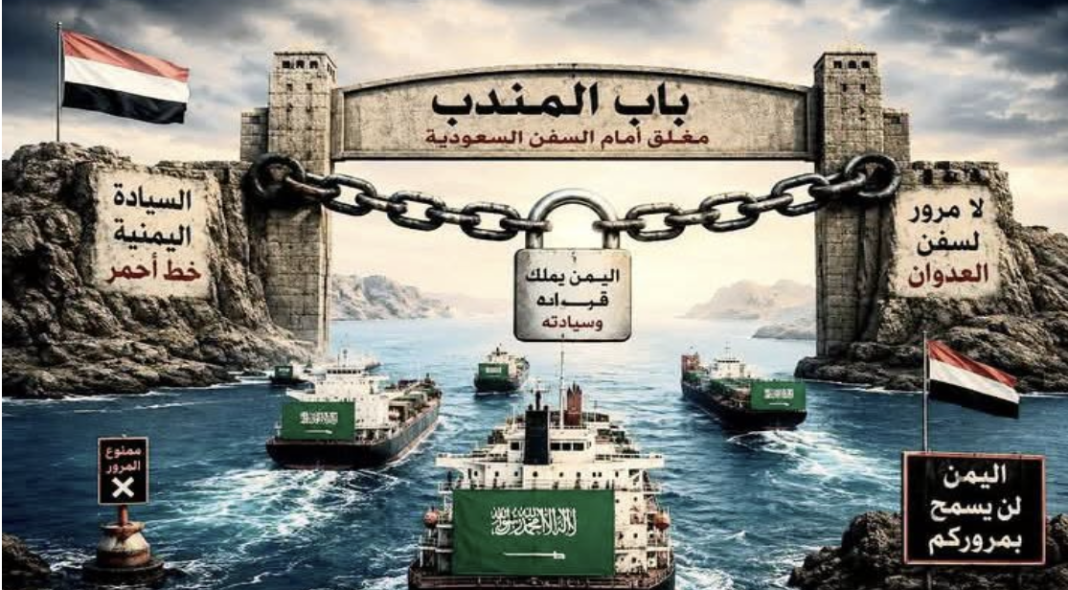
OUR MAIN IMAGE: The propagandistic graphic by the Houthis for the closing of the Bab-El-Mandeb Strait
Oman’s postponed Hormuz summit, MBS’s two appeals to Trump, the devastation of America’s Fifth Fleet hub—and why a China-backed regional security order is moving from possibility toward necessity
By Nick Stamatakis
The postponement of today’s Salalah meeting in Oman may ultimately prove more important than the meeting itself. The gathering was intended to bring Iran and Gulf states together around a mechanism for commercial passage through the Strait of Hormuz. Oman delayed it to seek broader consensus, with Saudi objections central to the impasse. Yet the significance lies precisely there: Gulf states are debating whether the region’s most vital security arrangements can be negotiated among themselves rather than under an American security umbrella.
That question became dramatically sharper after Mohammed bin Salman’s appeals to Washington. Axios, citing two U.S. officials, reported that the Saudi crown prince called President Donald Trump twice on September 10 and urged U.S. strikes against the Houthis as they advanced toward Bab el-Mandeb. Trump declined. Reuters subsequently reported the Saudi request for military assistance and said Washington was instead offering intelligence and targeting support. For Riyadh, this was more than a tactical disappointment. The assumption underlying the Saudi-American bargain was that, in extremis, American military power would protect the kingdom.
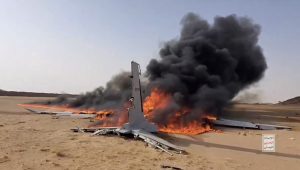
The condition of that military power is itself part of the story. Acting Secretary of the Navy Hung Cao has publicly acknowledged the severe damage inflicted on Naval Support Activity Bahrain, headquarters of the U.S. Fifth Fleet. “They blew the hell out of Bahrain,” he said, adding that the damage deprived deployed forces of their normal regional logistics hub and that a Navy task force is considering the base’s future. A Wall Street Journal investigation found extensive damage to the command headquarters, numerous buildings and satellite facilities, with reconstruction estimates reaching hundreds of millions of dollars.
This does not establish that every U.S. base in the Middle East has been destroyed. It establishes something strategically more important: American regional supremacy is no longer invulnerable. The headquarters of the Fifth Fleet itself can be rendered sufficiently dysfunctional that the Navy must debate whether, and how, to return.
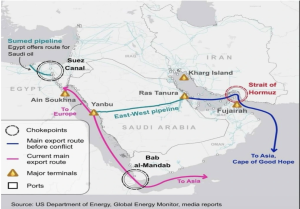
Saudi Arabia is consequently facing a strategic trap. Hormuz remains disrupted; its East-West Pipeline—the kingdom’s principal bypass around the strait—has been hit; and Houthi gains along the Red Sea threaten Bab el-Mandeb. The danger is therefore not merely to Saudi security but to the global oil market. A prolonged disruption at both maritime exits could transmit through oil, shipping, insurance, fertilizer and food prices, making Saudi Arabia the epicenter of a global economic shock without Riyadh deliberately causing one.
This also gives the so-called petrodollar reversal a deeper meaning. No formal fifty-year treaty ever forced Saudi oil to be sold exclusively in dollars. But the larger bargain was real: Saudi energy, dollar finance and American protection reinforced one another. If American protection becomes less dependable while Saudi Arabia deepens economic ties with China, the political logic of exclusive dependence on Washington weakens.
China cannot replace the United States militarily. But it does not necessarily need to. Beijing already has economic leverage with Iran, deep energy ties with the Gulf and the diplomatic precedent of brokering the 2023 Saudi-Iran rapprochement. A regional order could therefore emerge in which China provides diplomatic and economic ballast while Iran, Saudi Arabia, Oman and the other Gulf states negotiate their own security arrangements. Let’s not forget that for the past 3-4 years, China has been paying for Saudi oil in its own currency, the renminbi.
That is why Oman matters. The summit’s postponement is not proof that regional diplomacy has failed. It shows how difficult—and how necessary—the negotiation has become. If Washington will not open another front for Riyadh, and if American bases themselves are vulnerable, regional accommodation is no longer merely an alternative strategic vision. For the Gulf states, it may become a necessity.
We may be witnessing not simply the end of Saudi Arabia, but the end of the Middle East order Saudi Arabia inhabited for half a century.
Sources & Further Reading
Konstantinos Loukopoulos — i-Epikaira
On Saudi Arabia’s strategic trap between Hormuz, the East–West Pipeline and Bab el-Mandeb, and the wider implications for the global economy.
Read the article
“Yemen Rocks the Gate of Tears” — Helleniscope
Analysis of Yemen’s growing leverage over Bab el-Mandeb and its impact on Saudi security, Red Sea shipping, and regional power balances.
Read the article
“Το στρατηγικό αδιέξοδο της Σαουδικής Αραβίας” — Militaire.gr
Examines Riyadh’s shrinking strategic room for manoeuvre amid simultaneous pressure from Iran, Yemen, Hormuz and the Red Sea.
Read the article
IranWire — Oman Postpones Regional Summit on Strait of Hormuz
Reports Oman’s decision to postpone the Salalah meeting in order to seek broader regional consensus on Gulf maritime security.
Read the report
Reuters — MBS Sought U.S. Military Help Against the Houthis
Reuters reported Saudi requests for U.S. military assistance as Houthi advances increased pressure around Bab el-Mandeb.
Read the report
Associated Press — Damage to U.S. Bases Across the Middle East
AP reported that Iranian attacks damaged or destroyed hundreds of structures at U.S. bases and also hit aircraft, drones and other assets.
Read the report
Reuters — Gulf States Test China’s Influence Over Iran
Examines the growing tendency of Gulf governments to look to Beijing’s economic and diplomatic leverage as the regional balance shifts.
Read the analysis
September 14, 2026, www.helleniscope.com, n.stamatakis@aol.com
DISCLAIMER: The views and statements expressed in this article constitute constitutionally protected opinions of this author.