
ΕΑΝ ΠΡΟΤΙΜΑΤΕ ΕΛΛΗΝΙΚΑ ΠΑΤΗΣΤΕ ΤΗ ΣΗΜΑΙΑ ΣΤΟ ΚΑΤΩ ΜΕΡΟΣ ΤΗΣ ΟΘΟΝΗΣ
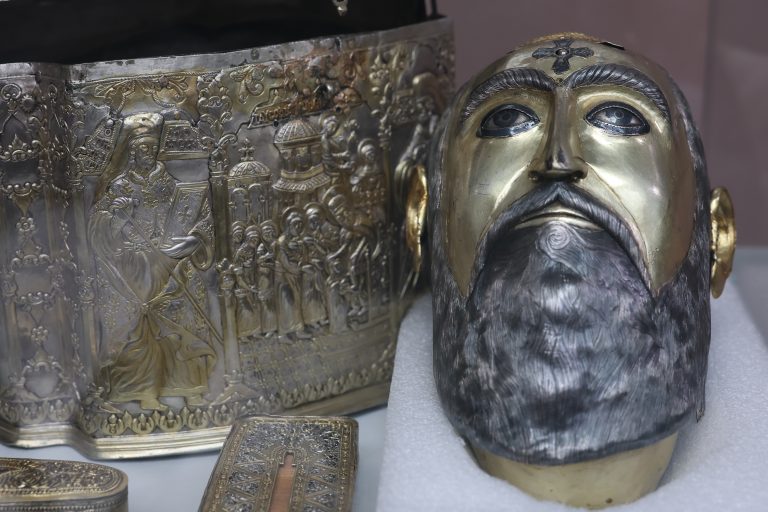
OUR MAIN PHOTO: Relics of Bulgarian Tsar Samuel
Greece transferred to Bulgaria the remains of Tsar Samuel, a symbol Sofia had sought for decades, while receiving only a limited selection of ecclesiastical treasures removed from northern Greece in 1917. With hundreds of manuscripts and other objects still outside Greece – and future restitution left to further negotiations – the question is why Athens surrendered its strongest bargaining leverage before securing a fuller settlement.
By Helleniscope’s Editorial Team
For critics of Greek diplomacy, this story feels uncomfortably familiar. In recent years, successive Greek governments have often entered negotiations with neighboring states in a spirit of accommodation, sometimes appearing more eager to close an outstanding issue than to exhaust the leverage available to Greece.
The comparison with the Prespa Agreement over the name of North Macedonia, or with negotiations over Exclusive Economic Zones, should not be exaggerated. Those were matters of vastly greater strategic significance. The return of ecclesiastical treasures is not an issue of national security. But the underlying diplomatic question is similar: when Greece possesses a documented claim and something the other side genuinely wants, why not use that leverage to secure the strongest possible settlement?
That question is difficult to avoid after the October 3 agreement with Bulgaria.
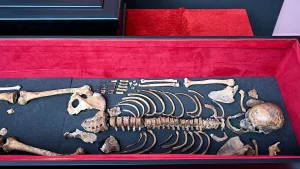
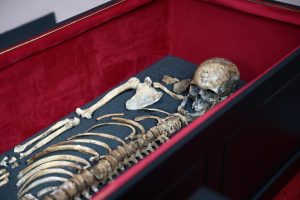
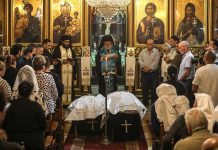
Greece transferred to Bulgaria the remains identified as those of Tsar Samuel, together with the anthropological material found in the four sarcophagi excavated by Greek archaeologist Nikolaos Moutsopoulos at the Basilica of St Achillios in Prespa. For Bulgaria, Samuel is a figure of immense historical and national importance, and Sofia received his remains with a state ceremony.
What did Greece receive?
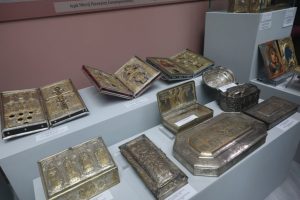
Forty-eight museum inventory entries — actually 53 physical ecclesiastical objects — originating from the monasteries of Eikosifoinissa and Timios Prodromos and from the Metropolis of Serres and Nigrita.
Important objects, certainly. But only a fraction of what was removed from northern Greece during the Bulgarian occupation in 1917.
And this is where the word “exchange” becomes problematic.
The Greek claim is that these objects were not Bulgarian property being generously traded for Samuel. They belonged to Greek monasteries and ecclesiastical institutions and were carried away during wartime occupation. More importantly, the 1919 Treaty of Neuilly dealt explicitly with precisely such material. Articles 125 and 126 required Bulgaria to return identifiable property removed from invaded territories and, specifically, documents, archives and objects of archaeological, historical or artistic interest taken from Greece during the war.
In other words, the critical argument is straightforward: why give Bulgaria something it had sought for decades in order to obtain the partial return of objects that Bulgaria was already under an international treaty obligation to restore?
Former Deputy Foreign Minister Markos Bolaris, writing in Orthodoxos Typos (link here), goes further. Bolaris, who was responsible for religious and cultural diplomacy in 2019, says previous negotiations were based on implementing the Treaty of Neuilly rather than arranging an exchange. He recounts that in March 2019 a Bulgarian deputy prime minister approached then-prime minister Alexis Tsipras during a European Council meeting and indicated that Bulgaria intended to honor its obligations under the treaty. According to Bolaris, administrative preparations then began, but were interrupted by the European and subsequent Greek national elections. This is Bolaris’s first-person account and has not, on the evidence presently available, been independently documented in the published bilateral texts. His former position at the Foreign Ministry is independently confirmed.
Even more important are the manuscripts.
The 2026 arrangement did not secure their general return. Bolaris describes decades of academic research identifying Greek manuscripts from monasteries, including Eikosifoinissa and Timios Prodromos, in Bulgarian collections. Whatever one thinks of the polemical language of his article, the essential point remains: the most historically important part of the dispute extends far beyond the 48 inventory numbers handed over in Thessaloniki.
The Greek government itself confirms that the present agreement does not close the issue. Its official announcement states that Greece and Bulgaria will continue negotiations to identify further historical objects for inclusion in a subsequent agreement.
There is another extraordinary detail. Bulgaria’s National History Museum told the Bulgarian News Agency that the 53 objects sent to Greece remain on the museum’s inventory. They have not been formally deaccessioned.
That raises an obvious question. Greece has physically relinquished Samuel’s remains. But has Bulgaria equivalently relinquished its legal claim over the ecclesiastical objects?
Indeed, the Greek Culture of Ministry itself carefully described the arrangement as an “αμοιβαία κατάθεση” — a mutual deposit — of objects of historical value, not simply as definitive restitution.
Bolaris also raises constitutional objections, arguing that an agreement involving such a transfer should have gone before Parliament. Article 36 of the Greek Constitution does require parliamentary ratification for certain international agreements containing concessions. But whether this particular memorandum legally falls within that category cannot responsibly be declared settled without examining the full text and precise legal character of the agreement.
That legal debate should not obscure the simpler diplomatic issue.
Bulgaria wanted something exceptionally important: Tsar Samuel. Greece therefore possessed leverage that might never again exist in precisely the same form.
Why, then, was the return of Samuel not made conditional upon the return of all identifiable ecclesiastical treasures and manuscripts covered by the century-old dispute, or at least upon a binding timetable for their restitution?
Instead, Greece transferred the object of greatest symbolic importance to Bulgaria, received a limited selection in return, and postponed the remainder to future negotiations.
Perhaps those negotiations will eventually succeed.
But leverage is most valuable before you surrender it, not afterward.
October 6, 2026, www.helleniscope.com, n.stamatakis@aol.com
DISCLAIMER: The views and statements expressed in this article constitute constitutionally protected opinions of this author.