
ΕΑΝ ΠΡΟΤΙΜΑΤΕ ΕΛΛΗΝΙΚΑ ΠΑΤΗΣΤΕ ΤΗ ΣΗΜΑΙΑ ΣΤΟ ΚΑΤΩ ΜΕΡΟΣ ΤΗΣ ΟΘΟΝΗΣ
OUR MAIN PHOTO: Publisher Giannis Philippakis, at the podium of the Anniversary celebration.
A Turkish columnist casts the future of Bartholomew’s leadership as a wider geopolitical struggle involving AB Elpidophoros, Washington, and the changing landscape of Fener and Balat.
By Helleniscope’s Editorial Team
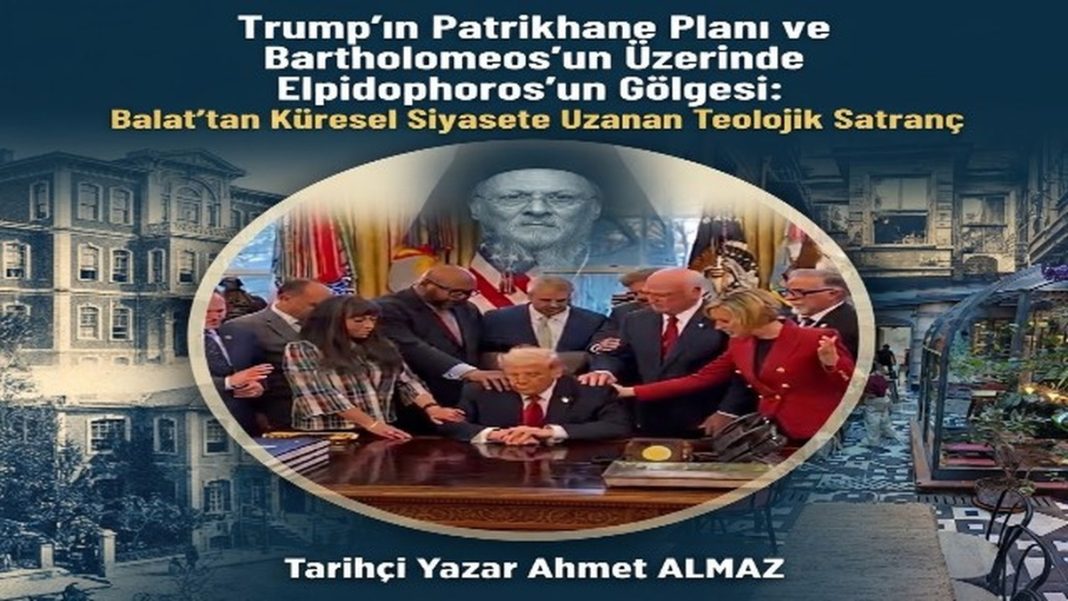
Ahmet Almaz’s article in the Turkish newspaper HABERLER (Link here) uses the historic Istanbul districts of Fener and Balat as a backdrop for a broader argument about the future of the Ecumenical Patriarchate and the geopolitical interests surrounding it. Beginning with descriptions of the neighborhood’s changing architecture, businesses, and property ownership, Almaz uses Balat’s physical transformation as a symbolic frame for what he sees as a deeper shift in the balance of religious and political influence around the Patriarchate.
This is obviously an effort of the Turkish establishment to promote someone they control as the leader of the Patriarchate. They know the Patriarchate has significant influence over powerful Greek communities in the Diaspora. Since 2018, and even earlier, they have applied a specific plan: ALL Metropolitans and Archbishops under the “Rum Patriarch” of Istanbul HAVE AN OPEN LINE WITH THE TURKISH FOREIGN MINISTRY. The purpose is obvious: to exercise control over the Greek Diaspora and to promote their policies, whether invisibly or openly. This is why, suddenly, in the last few years, you are hearing Elpidophoros and the rest talk about “peaceful coexistence” between Greece and Turkey.
Peaceful coexistence with Turkish troops in Cyprus? Peaceful coexistence with a “casus belli: since 1996 for the 12 miles territorial waters of Greece in the Aegean? Which is an international legal right? And Greece is the only country on Earth that has not exercised it?
The article’s central focus is the question of succession to Ecumenical Patriarch Bartholomew. Pointing to Bartholomew’s advanced age, Almaz argues that speculation over his eventual successor has gained significance well beyond the internal affairs of the Orthodox Church. In his telling, the succession has become intertwined with the interests of international political actors, particularly the United States, turning what would ordinarily be an ecclesiastical process into a geopolitical matter.
AB Elpidophoros of America emerges as the key figure in Almaz’s analysis. The columnist portrays him as a leading potential successor whose position in the United States has given him access to influential political and religious networks. Almaz emphasizes figures associated with Donald Trump and evangelical leader Paula White, suggesting that Elpidophoros’s connections in Washington could strengthen his position in any future succession contest. These assertions form the article’s political core, though they are presented largely as the author’s interpretation rather than as independently substantiated conclusions.
Throughout the piece, Almaz repeatedly links the local character of Fener and Balat to these larger claims. Historic schools, former Patriarchate properties, hotels, restaurants, and luxury businesses are described as signs of a neighborhood undergoing rapid social and economic change. The effect is to turn Balat into more than a setting: in the article’s narrative, it becomes a symbol of the intersection of tradition, capital, religious authority, and foreign influence.
The broader argument is that the post-Bartholomew era may be shaped by forces extending well beyond the Orthodox Church’s institutional structures. Almaz frames the succession question as part of a wider contest involving American political interests, religious networks, and competing ambitions within the Orthodox world. Whether or not one accepts that interpretation, the article reflects a growing tendency to view the future leadership of the Ecumenical Patriarchate not simply as a church matter, but as an issue with potentially significant diplomatic and geopolitical implications.
In the end, it is obvious who the Turkish establishment promotes as a successor to Bartholomew: Elpidophoros. We will be happy to see him go back home to Turkey. He does nopt belong here anyway. Neither does this Church belong to the Patriarchate – and one way or another it will find its path to Autocephaly.
October 7, 2026, www.helleniscope.com, n.stamatakis@aol.com
DISCLAIMER: The views and statements expressed in this article constitute constitutionally protected opinions of this author.