


As Helleniscope Anticipated Weeks Ago, the Trump–Putin–Xi Summit Signals a Historic Geopolitical Realignment—With Europe Increasingly Sidelined as the Great Powers Shape a New Multipolar World.
By Nick Stamatakis
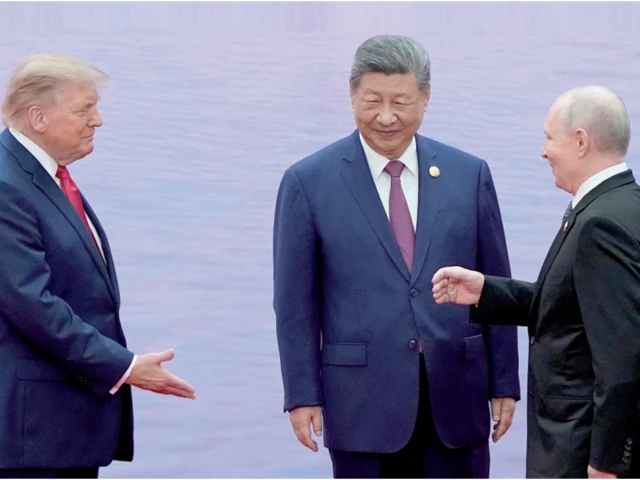
The historic November 19 meeting between Donald Trump, Vladimir Putin, and Xi Jinping in Shenzhen, China, may prove to be one of the defining geopolitical events of our time. Yet for Helleniscope readers, the possibility of such an extraordinary realignment should not come as a complete surprise.
On October 15, in our article “What If Trump, Putin and Xi Have Formed a Secret Alliance?”, we explored the provocative possibility of an emerging strategic understanding among the three leaders. Two days later, in “A Historic Turning Point?”, we argued that Trump’s decision to waive major sanctions against Russia could signal a fundamental restructuring of global power.
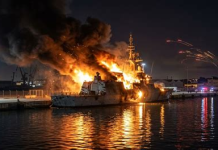
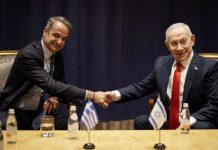
Barely five weeks later, the three leaders met face-to-face and issued a joint declaration addressing nuclear security, energy supplies, United Nations reform, and international institutions. Although this does not prove our earlier hypothesis of a secret alliance, it certainly renews the relevance of the questions we raised. Here are the two graphic images that accompanied our posts.
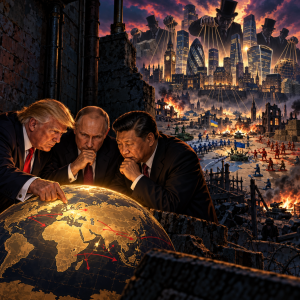
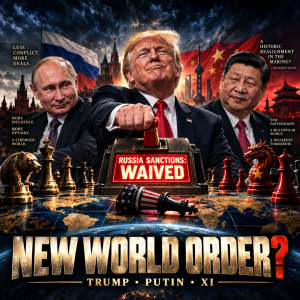
Europe Left Outside the Room
Perhaps the most revealing aspect of the Shenzhen summit was not what the three leaders announced, but who was conspicuously absent: Europe.
For decades, European governments assumed they would play an indispensable role in shaping Western foreign policy and global security. Yet the leaders of the United States, Russia, and China have now demonstrated their willingness to discuss the architecture of international relations directly, without European participation at their negotiating table.
This striking development was foreshadowed just two days earlier at NATO headquarters in Brussels.
On November 17, U.S. Under Secretary of Defense for Policy Elbridge Colby challenged Ukraine’s strategy of launching long-range strikes deep inside Russia, arguing that such attacks were not bringing the war closer to an end or significantly weakening Russian advances on the battlefield.
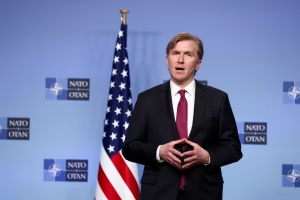
His remarks provoked an unusually sharp response from German Defense Minister Boris Pistorius and objections from British officials.
But Colby’s broader message was equally significant: Europe must assume primary responsibility for its conventional defense and take the lead in supporting Ukraine. Under Washington’s proposed “NATO 3.0” approach, America’s European allies are expected to carry a much greater share of their own security burden.
The political implications became clearer during the Shenzhen summit.
Trump publicly described Putin as “my friend.” More importantly, in discussions with European leaders and Ukrainian President Volodymyr Zelensky, Trump reportedly insisted that Putin wanted to end the war and encouraged them to reach an agreement with Moscow.
These statements revealed a growing divergence between Washington’s diplomatic approach and that of European governments determined to maintain strong pressure on Russia.
Nevertheless, the summit did not produce an agreement to end the war in Ukraine, and Washington continues to seek European participation in peace negotiations. It also reached no deal on ending the war with Iran and the Houthis.
What emerged instead was something potentially more consequential: a framework for direct strategic dialogue among the world’s three principal nuclear powers, independent of Europe’s traditional diplomatic structures. And a very important declaration NOT to use nuclear weapons.
This last statement on nuclear weapons was more than symbolic. It is no secret that the dark forces opposing all three leaders (the bankers mostly of the City of London, the puppets of the Brussels nomenclature, the US oligarchs, and the American “Deep State” controlled by the Zionists) have been fine-tuning their acts to lead the West to a nuclear attack on Iran.
The statement of the three leaders in China against the use of nuclear weapons put the brakes on such a disastrous option.
Could the Shenzhen summit mark the beginning of a multipolar order in which Europe increasingly bears the costs of regional security while the United States, Russia, and China negotiate the larger strategic framework?
That is precisely the kind of geopolitical transformation Helleniscope began questioning in October—and the question that must guide our analysis of what comes next.

While the common declaration that came out of that meeting, not to resort to nuclear war is certainly encouraging for the future of the world. However, it was just that. Empty words. No follow up discussions were scheduled, no goals for reduction of nuclear weapons were agreed upon. Without concrete steps on reduction of weapons, such as the previous SALT treaties, which were approved by the senate and the Soviet leadership and put in writing, with checks, such as sattelite images, to ensure the terms were followed, and which took years to negotiate, the common statement is pure Trumpish trash.
Trump has the attention of a two year old. He wants solutions right now, not negotiations. He thinks the world can be run as his casinos, which went bankrupt. Look at all the treaties that he broke. Such as Obama’s treaty with Iran. Or his own treaty with Canada and Mexico. He wants show and no substance. He might even use this agreement to better his chances for the much coveted Nobel peace prize.
Both Putin and Xi know that Trump is totally controlled by the EU Banksters and Globalists and by the American dark forces (AIPAC, the Military-Industrial Complex, and the tech oligarchs). Almost all of these dark forces have expressed their approval of using nuclear weapons against Iran and Russia. Therefore, even the symbolic declaration against their use plays a role and makes it more difficult or delays it. In this sense, it was very important.
You will not read this view in the NY Times or the mainstream media. But it is the correct analysis.
Do not forget that, in the same way, Putin and Xi have arranged another meeting with Trump next month – at the G20 in Miami, Dec. 14-15. In other words this is a concerted effort to pull Trump away from these dark forces. Not yet 100% verified, but it is highly likely. If I were Putin, I would avoid it, but we do not know what is lurking behind the scenes. Also, if I were Putin, I would send a clear message to the White House, the State Dept and the CIA that “I have 4 nuclear submarines near the US coasts (Atlantic and Pacific) and if anything happens to me during my stay in Miami, I would annihilate the CIA, the State Dept., and the Pentagon buildings and any other target I pick.
The Kalergi Plan continues to unfold:
The El-itists would rather have a communist world order than a nationalist one. Why do you suppose that is?
Greece’s ruling party targets majority rule, blocks right-wing coalition talks
en (dot) parapolitika (dot) gr/politics/325079/greeces-ruling-party-targets-majority-rule-blocks-right-wing-coalition-talks/