

ΕΑΝ ΠΡΟΤΙΜΑΤΕ ΕΛΛΗΝΙΚΑ ΠΑΤΗΣΤΕ ΤΗ ΣΗΜΑΙΑ ΣΤΟ ΚΑΤΩ ΜΕΡΟΣ ΤΗΣ ΟΘΟΝΗΣ
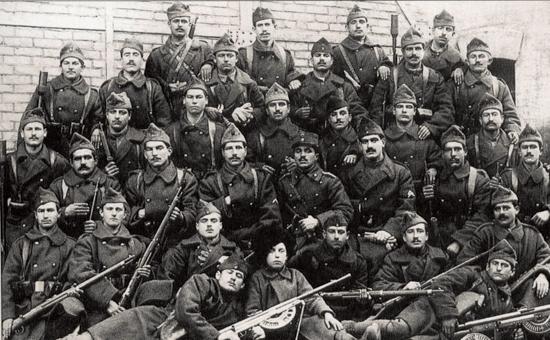
OUR MAIN PHOTO: Greek military expedition to Crimea, 1919.
The struggle between London and Moscow has repeatedly shaped the fate of Greece, from the Crimean War to the Asia Minor Catastrophe and the Greek Civil War.
By Helleniscope Editorial Team
For more than two centuries, Britain has regarded Russian expansion toward the Mediterranean as a threat to its strategic interests. From the nineteenth-century struggle over the Ottoman Empire to the confrontation surrounding Ukraine today, British policy has repeatedly sought to contain Russian influence. Greece, bound to Russia by Orthodox Christianity and historical sympathies but geographically exposed to British naval power, has frequently found itself caught in the middle.
The Crimean War: Greece Under Occupation, 1854–1857
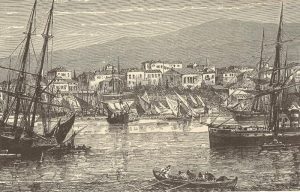
PHOTO: Historical engraving of Piraeus in 1852, shortly before the Anglo-French occupation.
The Crimean War of 1853–1856 provides a striking example. Britain and France joined the Ottoman Empire against Russia in 1854 to prevent Russian expansion. King Otto of Greece sympathized with Russia, reflecting widespread Greek hopes that a Russian victory might help liberate fellow Greeks still under Ottoman rule.
Britain and France responded by blockading Piraeus in May 1854 and landing occupation forces. They compelled the formation of a government acceptable to the Western powers, effectively limiting Greek sovereignty. The occupation continued until February 1857, even after the war had ended. A devastating cholera epidemic compounded the suffering.
The Russian Civil War: A Disastrous Greek Intervention, 1919
After the First World War, Western powers intervened against the Bolsheviks in Russia. Prime Minister Eleftherios Venizelos, seeking British and French support for Greek claims in Asia Minor, sent troops from two Greek divisions to southern Russia, including Odessa and Crimea.
The Allied intervention failed, and Greek forces withdrew in 1919. Greece had participated in a campaign against a new Soviet government with which it had no direct territorial conflict.
Catastrophe: Soviet Support for Kemal, 1920–1922
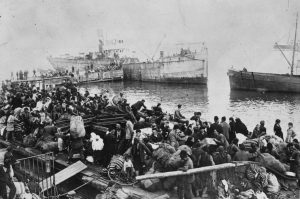
The consequences were profound. Soviet Russia subsequently formed an alliance with Mustafa Kemal Atatürk, providing gold, weapons, ammunition and political assistance to the Turkish nationalist movement.
Moscow sought an ally against Western intervention, while Greece was identified with British interests in Anatolia. Soviet assistance helped strengthen Kemal’s forces, although it was not the sole cause of Greece’s defeat.
In 1922, the Greek army collapsed in Asia Minor. Smyrna was devastated, and hundreds of thousands of Greeks fled or were displaced from ancestral homes. The catastrophe marked the destruction of a centuries-old Greek presence in much of Anatolia.
The Greek Civil War: Britain Intervenes Again, 1944–1949
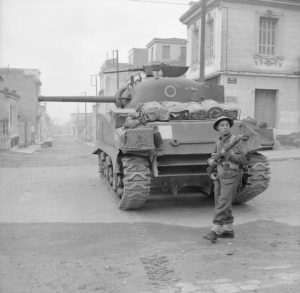
Britain again intervened militarily in Greece in December 1944, fighting communist-led resistance forces in Athens and subsequently supporting the Greek government during the Civil War.
Although the conflict reflected the emerging Cold War, Stalin largely respected his understanding with Churchill that Greece would remain in Britain’s sphere of influence. Soviet involvement was therefore much more limited than the simple image of a British-Russian proxy war suggests.
We have to remember that Churchill – who also handled the 1915 catastrophe in Gallipoli and the Dardanelles – at the end of WWII wanted to start a campaign against Russia!!
The Historical Lesson
These episodes reveal a recurring geopolitical dilemma. Britain repeatedly intervened to limit Russian influence, while Greek leaders attempted to navigate between the great powers—sometimes with tragic consequences.
From the occupation of Piraeus to the failed expedition in Russia, the destruction of Greek Asia Minor and the Civil War, Greece repeatedly experienced the costs of great-power rivalry.
History does not establish that Britain alone caused these disasters. It does, however, demonstrate how dangerous it can be for a smaller nation when its interests become entangled with those of competing empires.
The enduring lesson is that Greece must judge great-power conflicts by its own national interests, rather than assume that the interests of powerful allies will necessarily coincide with its own.