
ΕΑΝ ΠΡΟΤΙΜΑΤΕ ΕΛΛΗΝΙΚΑ ΠΑΤΗΣΤΕ ΤΗ ΣΗΜΑΙΑ ΣΤΟ ΚΑΤΩ ΜΕΡΟΣ ΤΗΣ ΟΘΟΝΗΣ
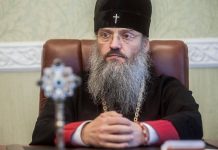
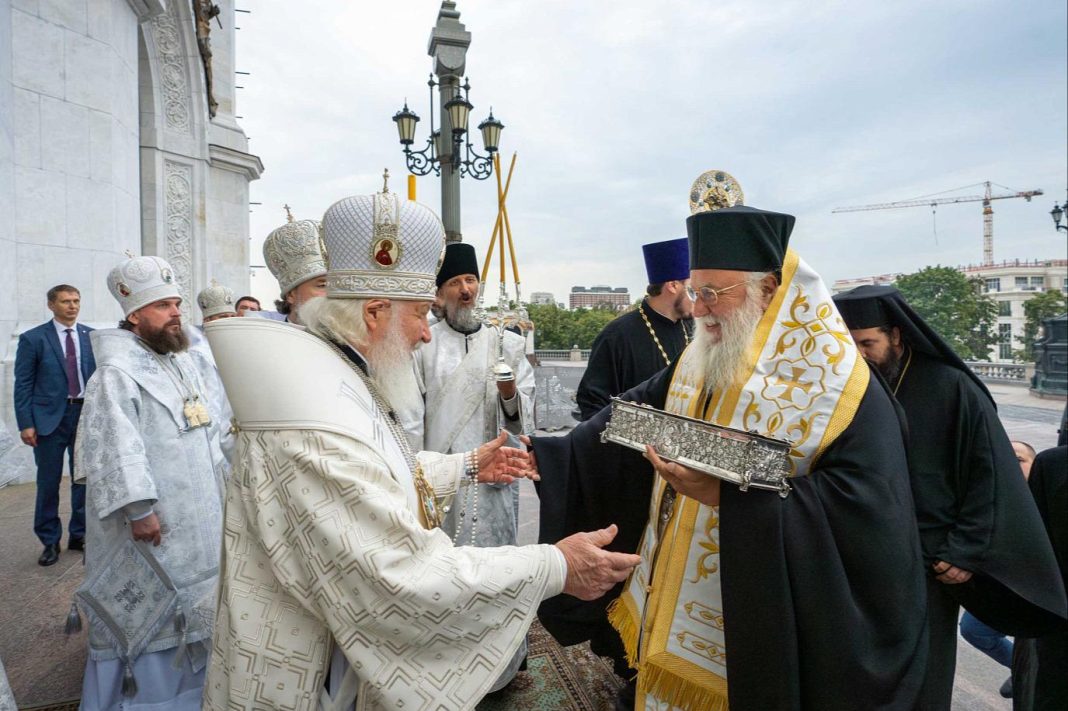
PHOTO: Patriarch Kirill with Met.of Corfu Nektarios in Moscow last August
Eight years after Bartholomew’s controversial decision on Ukrainian autocephaly, the warnings of a senior Greek ambassador and Archbishop Anastasios of Albania have taken on renewed significance.
By Helleniscope’s Editorial Team
On July 1, 2026, the Holy Synod of the Church of Greece reportedly granted Metropolitan Nektarios of Corfu permission to accompany the sacred relic of the right hand of Saint Spyridon to Russia, following his June 26 application.
Between August 17 and 24, Metropolitan Nektarios visited Russia, where the sacred relic was received with considerable religious enthusiasm. During his visit, Nektarios met with Patriarch Kirill of Moscow, exchanged ecclesiastical decorations, and emphasized the historical and spiritual bonds uniting the Greek and Russian Orthodox peoples.
On August 26, responding to criticism surrounding his visit, Nektarios issued a statement explaining the pilgrimage’s spiritual character and emphasizing that he had obtained the necessary authorization from the Greek Holy Synod.
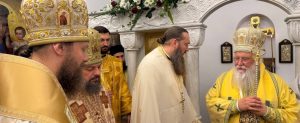
PHOTO: An original photograph from the October 31, 2026 consecration in Corfu, published by the Ukrainian Orthodox Church itself on November 1.
On October 31, Nektarios inaugurated a monastic residence in Corfu dedicated to the venerable fathers of the Kiev Caves, established at the request of Metropolitan Onuphry, the head of the Ukrainian Orthodox Church historically associated with the Moscow Patriarchate.
On November 19, the Holy Synod of the Orthodox Church of Ukraine (OCU), established through Bartholomew’s controversial autocephaly initiative, formally examined Metropolitan Nektarios’s activities.
On November 20, Metropolitan Epiphanius addressed an open letter to Archbishop Ieronymos and the Holy Synod of Greece, accusing Nektarios of lending legitimacy to Moscow’s religious and political positions and objecting to his ecclesiastical relationship with Metropolitan Onuphry.
By November 24, the controversy had reached the Greek political press, with Pronews describing the intervention as an extension of the Zelensky government’s interference into Greek ecclesiastical affairs. Although direct presidential instructions have not been established, Epiphanius’s intervention is indisputable.
How did we arrive at the point where a Ukrainian ecclesiastical hierarchy seeks to hold a Greek metropolitan accountable for his religious activities in Greece and Russia?
To answer that question, we must return to the events of 2018–2019 and the warnings that Patriarch Bartholomew received but apparently failed to heed.
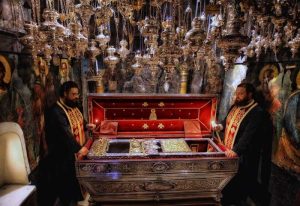
The warnings were there
As Helleniscope has repeatedly revealed, a senior Greek ambassador with extensive knowledge of Ukraine and Eastern Europe warned Bartholomew in writing, before granting autocephaly, of its potentially catastrophic consequences, including religious division and violence. Subsequent developments lend renewed significance to this confidential diplomatic warning.
Then came the two historic letters of Archbishop Anastasios of Albania, dated January 14 and March 21, 2019. One of contemporary Orthodoxy’s most distinguished theologians, Anastasios challenged the legitimacy of ordinations performed by the defrocked and anathematized Filaret and warned against abandoning Orthodox conciliarity. He repeatedly called for pan-Orthodox deliberation, fearing that an initiative intended to heal a Ukrainian schism would produce a far greater division throughout Orthodoxy.
Equally inconvenient was Bartholomew’s own correspondence with Patriarch Alexei II of Moscow. In August 1992, he explicitly acknowledged the Russian Church’s competence in the disciplinary proceedings against Filaret, and in April 1997, Constantinople acknowledged his anathematization. Yet in 2018, Bartholomew adopted a fundamentally different position, invoking Constantinople’s appellate authority and reinterpreting Moscow’s historical jurisdiction over Kiev.
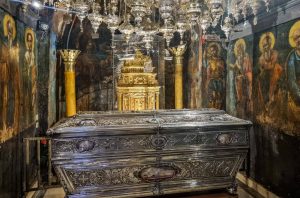
From Ecclesiastical Division to Political Coercion
Under Zelensky, Ukraine’s ecclesiastical conflict has increasingly involved state coercion. Restrictions against the Ukrainian Orthodox Church and the revocation of Metropolitan Onuphry’s citizenship have drawn criticism from Human Rights Watch and United Nations human rights experts. Wartime security concerns cannot provide unlimited justification for restricting religious freedom.
And now this confrontation has reached Corfu.
Meanwhile, the Mitsotakis government continues supplying military assistance and diplomatic support to Kiev. Where is the corresponding commitment to defending the religious liberties of Ukrainian Orthodox Christians and safeguarding the independence of the Greek Church?
The controversy surrounding Metropolitan Nektarios is not simply about a pilgrimage or a monastic residence. It illustrates how the politicization of Ukrainian autocephaly has drawn Greece into a widening ecclesiastical confrontation.
Eight years later, the ambassador’s reported warning and Archbishop Anastasios’s theological objections appear remarkably pertinent. Bartholomew owes Orthodoxy an explanation of how a project ostensibly intended to heal a schism contributed to such profound division.
And Greece must confront an uncomfortable question: How much of its ecclesiastical independence and centuries-old Orthodox relationships is it prepared to sacrifice to the geopolitical priorities of Kiev?
References
DISCLAIMER: The views and statements expressed in this article constitute constitutionally protected opinions of this author.