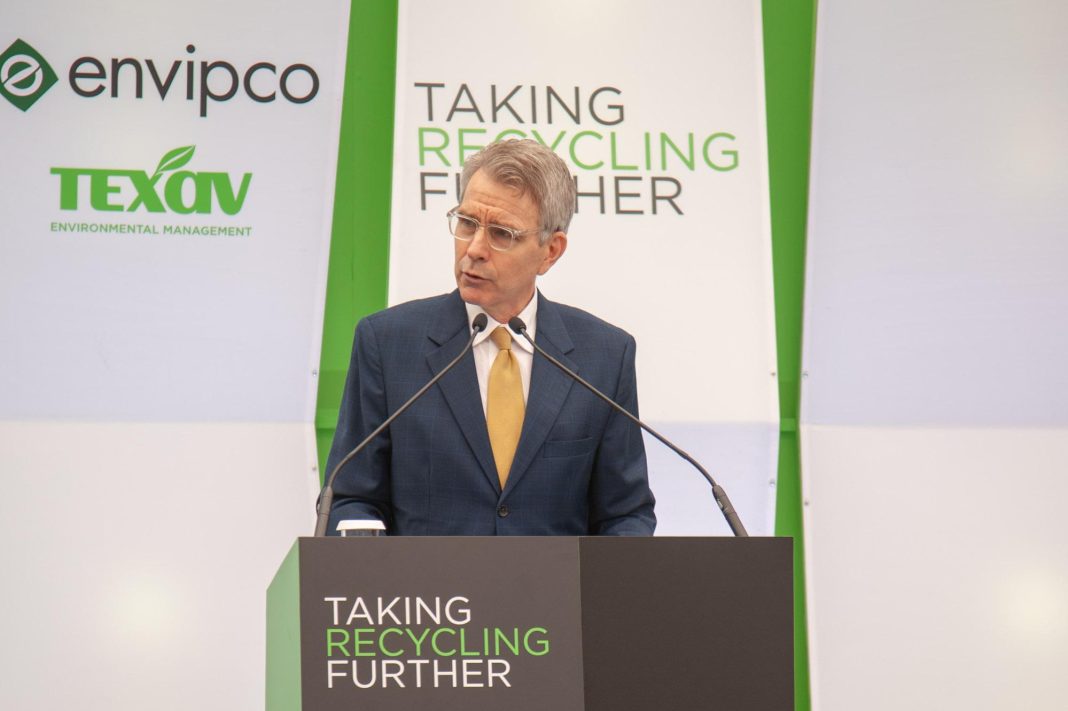
Geoffrey Pyatt, the former American ambassador to Greece, has emerged as a politically sensitive figure in the unfolding scandal surrounding Greece’s recycling kiosks, now at the center of an investigation by the European Public Prosecutor’s Office (EPPO).
Pyatt was already a controversial diplomatic figure before arriving in Athens in 2016. As US ambassador to Ukraine during the 2014 Maidan crisis, he worked closely with Assistant Secretary of State Victoria Nuland. Their infamous leaked telephone conversation revealed discussions about the preferred composition of a future Ukrainian government, with Nuland explicitly favoring Arseniy Yatsenyuk. Critics regard the episode as evidence of American interference in Ukrainian domestic affairs and a contributing factor to the subsequent geopolitical confrontation with Russia. That interpretation remains contested, however, and attributing the entire Ukrainian crisis to Pyatt and Nuland would overlook other major causes, including Russia’s actions and Ukraine’s domestic political dynamics.
In Greece, Pyatt cultivated close relationships with successive governments, initially under Alexis Tsipras and subsequently under Kyriakos Mitsotakis. Among the American commercial interests he championed was the partnership between Greek recycling company TEXAN and American equipment manufacturer ENVIPCO.
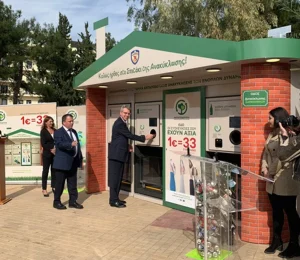
In December 2019, Pyatt appeared alongside Mitsotakis at the inauguration of their manufacturing facility in Pallini. The investment was celebrated as a flagship example of Greek-American economic cooperation. Seven years later, that very ceremony features in European prosecutorial documents as evidence that the commercial relationship between the two companies was widely known, despite their subsequent appearance as competing bidders in public tenders.
More intriguing is Pyatt’s reported involvement in a domestic regulatory matter. On May 22, 2020, Antapodotiki Anakyklosi circulated its fifth business plan, amid difficulties securing regulatory approval, to senior government officials and the American ambassador. European prosecutors reportedly highlight that Pyatt had no institutional authority over the matter. His inclusion raises questions about whether the organization sought to exploit American diplomatic influence to overcome regulatory resistance.
By 2022–2023, the European Commission was questioning the project’s financing and extraordinary costs. Recycling kiosks were reportedly purchased for €372,000 each, against comparable European market prices of €30,000–€70,000. On November 26, 2026, the investigation culminated in four arrests, including business executives and influential Greek media publisher Giannis Kourtakis.
For Pyatt, the affair may represent another controversy over the boundaries of American diplomatic intervention. From Kyiv to Athens, his diplomatic career raises questions about the extent to which Washington’s representatives seek to influence the internal affairs of allied countries.
The crucial question now is whether Pyatt merely provided diplomatic prestige to an American commercial venture or actively intervened with Greek government officials to advance its interests.
No criminal charges against Pyatt or evidence of personal financial enrichment have been publicly established. Nevertheless, his reported appearance in the European prosecution’s case file gives an otherwise domestic corruption scandal a potentially uncomfortable international and diplomatic dimension.
November 29, 2026, www.helleniscope.com, n.stamatakis@aol.com