


EDITOR’S NOTE (Nick Stamatakis). I am not surprised at all… Helleniscope has repeatedly noted that the woke policies of Elpidophoros and some other Orthodox hierarchs are the EXACT OPPOSITE of the stated intentions of the newcomers and converts to Orthodoxy. The numbers below prove it…
==================
ROCOR parishes post biggest membership gain among US Orthodox jurisdictions, survey finds
October 7, 2026
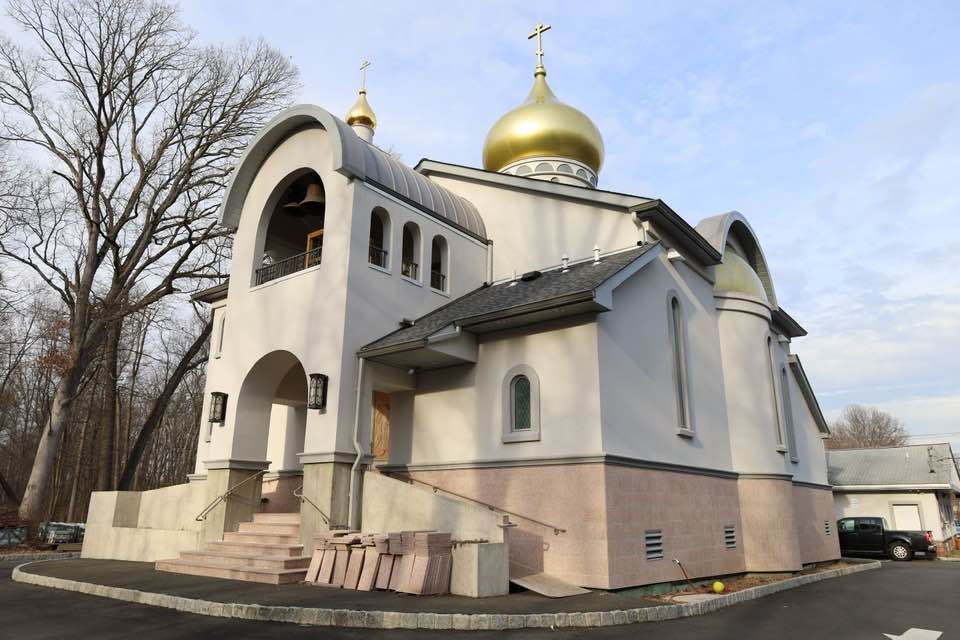
 Photo: gosaintgeorge.com
Parishes of the Russian Orthodox Church Outside of Russia (ROCOR) posted the biggest membership gain among US Orthodox jurisdictions since 2020, according to a report from Alexei Krindatch, National Coordinator of the US Census of Orthodox Christian Churches, who analyzed data from the latest Faith Communities Today survey.
The typical ROCOR parish saw the number of its regular participants grow by 166% between 2020 and 2025. The figure was 65% for the Antiochian Archdiocese, 37% for the Orthodox Church in America (OCA) and 33% for the Greek Orthodox Archdiocese. Orthodox parishes overall grew by 35%, compared with 17% for US congregations nationally.
The survey, coordinated by the Hartford Institute for Religion Research, was conducted in December 2025 and included 7,500 congregations, 270 of them Orthodox. Krindatch broke out data for the four jurisdictions that had enough participating parishes: the Antiochian Archdiocese, the Greek Archdiocese, the OCA, and ROCOR.
Median Sunday attendance in Orthodox parishes rose 36% from 2019 to 2025, while the national figure was flat. The Antiochian Archdiocese led on this measure at 87%, followed by the OCA at 67%, and ROCOR at 60%. The Greek Archdiocese posted 12%. Overall, 78% of Orthodox parishes said they’re stronger than before the pandemic, versus 56% of congregations nationally. The Greek Archdiocese was the lowest of the four at 68%.
The jurisdictions handled the pandemic differently. Only 11% of ROCOR parishes closed for in-person services, and 21% now stream worship online. In the Greek Archdiocese, 75% closed and 75% now stream. Across Orthodox parishes, 44% never closed, compared with 21% of congregations nationally. Krindatch found that parishes that stayed open and offer no online worship saw attendance grow by 48%, versus 11% for those that closed and now stream.
ROCOR parishes also had the youngest membership, with 27% young adults and 12% seniors, while Greek parishes had 17% and 26%. Orthodox parishes overall had 22% seniors, compared with 33% nationally. Nearly half of ROCOR members (49%) had joined within the past five years. Women made up 43% of ROCOR members, compared with 49% in Orthodox parishes overall and 58% nationally.
Clergy of the jurisdictions differed as well. ROCOR’s priests had the highest median age of the four jurisdictions at 61, and 28% held a Master of Divinity degree, compared with 95% in the Greek Archdiocese and 78% across Orthodox parishes. Some 73% of ROCOR priests served full-time. Still, 93% said they had never considered leaving ministry, the highest share of any jurisdiction.
When clergy were asked whether their parish is spiritually vital and alive, 70% of ROCOR priests strongly agreed, compared with 33% in the Greek Archdiocese, 56% in the OCA and 63% in the Antiochian Archdiocese. On having a clear mission and purpose, ROCOR stood at 83% and the Greek Archdiocese at 35%. Across Orthodox parishes, 49% strongly agreed on vitality, compared with 39% of congregations nationally.
ROCOR parishes had the lowest median giving, at $742 per participant a year. That compared with $1,241 in the Greek Archdiocese, $1,248 in the OCA, $1,200 for all Orthodox parishes and $1,657 nationally. Their annual spending of $553 per participant also trailed the Greek Archdiocese’s $2,108. Even so, 71% of ROCOR parishes described their finances as good or excellent, the highest share among the four jurisdictions.
Across jurisdictions, Orthodox parishes put more emphasis on fasting than other congregations (39% versus 10%) and were more likely to avoid political discussion (65% versus 45%). Only 12% of Orthodox clergy said their parish was actively involved in its local community, compared with 33% nationally.
The full report, “Orthodox Tradition in Transition: What New Data Reveal About US Orthodox Christian Parishes,” is available here.



Good day all.
Nicholas, this fantastic and revealing report should be sent asap to black Bart. The evil one. Together with our strong desire that he remove Elpidoktonos, the source of all evil in NY and the U. S. A. FROM OUR CHURCH. Prior to his unfortunate arrival in 2019 the GOAA was thriving. Since, it’s gone to hell. The numbers speak for themselves. Please, RUB THEM IN HUS FACE.
This is fascinating. I’m curious though: what is the regional breakdown? Where is the most growth happening? Northeast, Midwest, South, Mountain West or the West Coast?
From what we have seen in the past 2-3 years south, MW and West are the “hottest” areas.
Krindatch’s statistics need some context that is quite lacking here. If you only have 20 parishioners to start with, and then you gain 33 more, then your parish has grown by about 166 percent. A total of 53 parishioners would not be considered huge, despite the percentage growth.
ROCOR is still one of the smallest Orthodox jurisdictions in America. It is therefore not surprising that their percentage growth is larger than some other jurisdictions. The next largest is the Antiochian Archdiocese, then the OCA, and then the Greek Archdiocese. Following Krindatch’s statistics, larger jurisdictions appear to be growing slower by percentage.
Joseph – why do you hate math and statistics so much? For the same reason GOA cannot account for their expenses maybe? ROCOR is smaller but still counts about 200 parishes in the US. To answer it in your way: if ROCOR grows by 160% and GOA with 35% as the research shows how many years will it take for ROCOR to surpass GOA membership? Three or four?
I am waiting for your answer… Ha…ha..leave the calculator alone.. your brain cannot handle real math..
Helleniscope, most of those converts to ROCOR will likely be running for the door soon, except for maybe Jay Dyer’s acolytes. When people realize they have joined a cult, and if they don’t want to be in a cult, then they will leave. I’ve met many ex-ROCOR who have become very disillusioned. They eventually left for other jurisdictions.
Sure it’s phenomenal growth, and I’m glad it is happening, but is 166% growth in ROCOR actually sustainable? There needs to be an autocephalous American church, and I believe that’s what most converts actually want.
What do you mean, Joseph? ROCOR is a cult, but GOA is what? A “Gang of Thieves” led by Phanar? I have been writing for the community since 1990, and I don’t remember how many times I wrote, prompted by the faithful, our demands for accountability… Only to be ignored by the “Gang of Thieves”… Not to mention the “gay brotherhood” of Phanar, whose leader, Bartholomew, had the gall to ask for more money to support his “conference” in France a few days ago… Shameful… Allow me to stop here before I revert to why the then #2 Bartholomew allegedly did NOT allow, in 1990, an autopsy of the dead corpse of Patriarch Demetrios, despite the insistence of his family? WHY do you think? Mauybe he was poisoned? Who do you think could have poisoned him? Any ideas?
Joseph, you might look inward: If the census figures are correct, there are over one million people of Greek descent in the US. If they remained in the faith, the GOA would have over 1,000 parishes.
Joseph. Joseph. Joseph. More of your ROCDS?!
Most Americans converts are looking for traditional Christianity. That’s why they are leaving American consumerism Christianity. Of all of the other jurisdictions, ROCOR has usually been the most traditional.
Joseph,
Perhaps we can look at this in a different way, yes…
First off, in ROCOR, they are generally much stricter about who they proceed to convert, and they are far more attentive to Catechism than what we have seen in GOARCH, which unfortunately and routinely increases its numbers with people who still “carry Protestant / Western” ideology in their hearts and minds, leading to “non-Orthodox” behaviors in parishes, such as ones I have personally witnessed (and which continue to exist in GOARCH parishes):
– Requests for “Candlemass” service
– “Friday fish-fries” during Great Lent as a “revenue-generating opportunity”
– Surprise at the “revelation” that they should not have been feeding their dog antidoron at home
– Continuation of “crossing themselves” in a Roman Catholic manner in Church
– Bowing in front of icons instead of kissing them
– etc, etc, etc…
And in one very insane situation on the Antiochian side, I saw a [convert] priest perform a baptism service where he “witheld” Holy Myrrh (the seal of the Holy Spirit), because the young lady hadn’t completed Catechism class, and the couple had to get married in a different jurisdiction by producing a baptismal certificate for her…
When quality control (Catechism and ordination qualification standards) is lacking, this is exactly what happens….and when the population of these “luke-warm” or “rogue” converts becomes significant enough, the entire parish can fall into heresy or schism.
So where do we go from here?…. I also fully agree that there are other statistics that need to be looked at before we conclude anything…and those are statistics that we won’t have for another several years:
1) How many of these “luke-warm” converts will stand the test of time in GOARCH before they leave for another “spiritual adventure”?
2) At what point in the future will there be a risk of Schism stemming from GOARCH (and probably the Antiochians) as a result of an increase of parish membership with people who really didn’t “agree 100%” on all Orthodox dogmas and Traditions?
One thing is for sure…there is an old saying that always remains true…”never sacrifice quality for quantity”…the Early Church Fathers were very careful about this point, and when we compare the early Catechism writings (Kyrillos of Alexandria and others) to what we see today in GOARCH and a couple other “relaxed” jurisdictions, the difference is quite clear.
Marcos, I am surprised that you would attend a parish where such things occurred.
I assumed you would be more discerning. The things you listed do not occur in my parish. Perhaps you need to be more discerning.
jk,
You do know what they say about that word “assume”, right?
If you have paid any attention in this forum, you would remember that I’ve disclosed traveling all over the country on various business trips…which of course allows me to visit countless parishes across the 50 states…(you do recall that discussion about hearing the Lord’s prayer in 8 languages in at least 2 parishes with different Metropolitans, correct)….conclusion…if you assumed less, and paid attention more, you’d be “on topic” more often with your comments…
The isolated instances you refer to are exceptional, not the norm in the GOA. And, Tradition with a capital T has always been understood as the dogmas of the Church. Tradition with a lower case t, such as both bowing before and kissing icons is a tradition. So you may have seen someone bow before one icon — it does not mean that person does not kiss icons too. And all the things you mentioned in your list, are these necessarily items of catechism. What about the weightier matters–belief in the Trinity, Resurrection, ever-Virginity of the Theotokos, the love and mercy of God in Jesus Christ, …. Someone can learn to do the sign of the Cross in an Orthodox manner, but if that person does not have a core belief in the Cross and Resurrection, what does it matter that he or she does the sign of the Cross as we Orthodox do? Also, I’m going to be curious about how many converts are retained in ALL the jurisdictions over the course of the next 5-10 years. You can judge all you want the different jurisdictions, but beware, “Judge not that you not be judged.” Lord have mercy.
And today, a brand new mathematical “Identity Theorem” has been unveiled on Helleniscope….
kkp = blah, blah, blah…
(St John of Damascus frequently refers to this sort of “off-the-mark” discourse “φλυαριες” [blabberings] in his work “Exact Exposition of the Orthodox Faith”)
So…According to your “logic”:
1) Iconoclasm is a ‘lower case t”, because it didn’t result in an Ecumenical Synod that forever solidified the foundation of Tradition on how we today properly venerate icons, right? So now, Ecumenical Synods have nothing to do with Dogmas, either, based on your “Theorem”?
2) The explicit words in the troparion itself “αλαλα τα χειλη των ασεβων, των μη προσκυνουντων, την εικονα Σου την σεπτη…” have nothing to do with the “capital T”, right? The hymnographer had no idea what he was writing, right?
And yet, by everyone else’s logic:
If lower case t’s were to be dismissed as easily as you suggest, why did Christ give us the quote “not even a comma, or an iota?”
Give us a break with this “crypto-Protestant” thinking…
Markos, may I point out that ROCOR (and the Antiochian Archdiocese) has Western Rite parishes that retain Western liturgical piety and customs, such as crossing themselves just like the Roman Catholics do.
Though I am not personally a fan of the Western Rite, I do consider ROCOR’s allowance for this as a positive thing in their favor. Are there Western Rite parishes under the Ecumenical Patriarchate? None that I am aware of.
Joseph,
I made it perfectly clear above that we were talking about “converts” retaining their “Western mindset”. Whether or not “Western Rite” has been allowed by some jurisdictions (in very recent years) and in limited experimental situations, that is not the reason why the aforementioned individuals are observed in “mainstream parishes” crossing themselves in a Latin manner…you know that very well, so there is no hypocritical reason to distort the facts here.
Marcos, your pharisaical approach to the faith is obvious. Your business trips allow you to travel from parish to parish and judge what parishioners are doing wrong. I assume you stand in the narthex and judge how people approach icons and then look around to see how parishioners make the sign of the cross. Do you carry a pad and pencil to record the infractions?You strain at the eye of a nat and forget the weighter matters of the law. Jesus’ most severe rebukes were for the most religious people of his time – the Pharisees.
RESPONSE BY MARKOS:
JK,
You might as well forget about the “diversionary camels”, and focus on reality here…
For several years on this forum, we’ve repeatedly written about several “elephants in the room” that you (and others) have routinely ignored, side-stepped, or attempted to divert from in the commentary exchange…and apparently this time is no different.
Let’s remind you that the topic of the original comment on this thread (before your glib efforts to divert from it) focuses on an observation surrounding the stark variance in standards for accepting new converts into Orthodoxy, leading to a worrisome increase in the population of “luke warm” (weakly prepared) entrants into the Faith, which presents real risk of Schisms in the future if not addressed.
Whether or not I have drawn my own statistical conclusions about where GOARCH is heading (vs other jurisdictions) during the course of my travels, with a notepad, without a notepad, during coffee hour, or however else is totally immaterial to the fundamental question at hand (which you avoid)… Is there a “quality control problem” across parish Catechism programs resulting in converts (and even convert clergy) not FULLY embracing the Dogmas and Traditions of Orthodoxy or not?
And if yes (based on what we are observing in the field)…why is that? The answer is what you and several others in this forum are avoiding to spell out…that’s because the observed symptom has a root cause that is too embarrassing to admit, and conflicts with the λατινοφρονος mindset that reigns at the top…a.k.a. it is due to a modern era non-alignment with Patristic tradition on these matters (again, for many “luke-warm” and embarrassing reasons). These facts have little to do with how and where (geographically) the evidence of those facts is observed…
When I’ve recently visited my late Russian elder’s synod in Manhattan, there’s countless converts to Russian Orthodoxy!
The Greek Archimandrite there, Abbot Zosimas left GOA, joining ROCOR long ago. Now he has big following of converts — some from Anglican backgrounds, some Catholic, even Singapore, India, China, Mexico Ukraine, Germany, etc., and many came from Columbia University’s Orthodox Christian Fellowship (OCF) which Fr. Zosimas is spiritual advisor.
Lots of converts are coming into my Greek Orthodox parish, even with OCA and Antiochian alternatives in the area.
True. That’s why I asked for a regional breakdown of Krindatch’s numbers.
ROCOR was absorbed into the Moscow Patriarchate since 2007
The MP is the Church of the Red Beast (communism)
Jim, you’re a funny guy! You need to take your act on the road!
Jim,
Have you seen the color of the Turkish flag these days?
Or perhaps the color of Vatican Cardinal vestments?
“Absorption” of Orthodox Bishops by those “beasts” is a bigger threat than Moscow these days….
As a member of GOARCH in Florida, I can almost bet those GOA growth numbers are from here in Florida, Texas, and some areas out West and Midwest.
So…essentially everywhere except the Northeast. My GOA parish here in Florida is beyond bursting at the seams the point we are extending the parish. These converts are on fire for Orthodoxy.
As for the above “convert baggage” situations a previous commenter mentioned occurring in GOARCH, I have to say that as a member of the GOA for 10 years in multiple states I have never seen anything like this.
My parish is the same. Parishes in the NE are far less welcoming to non- Greeks and or more focused on being Greek .