


ΕΑΝ ΠΡΟΤΙΜΑΤΕ ΕΛΛΗΝΙΚΑ ΠΑΤΗΣΤΕ ΤΗ ΣΗΜΑΙΑ ΣΤΟ ΚΑΤΩ ΜΕΡΟΣ ΤΗΣ ΟΘΟΝΗΣ
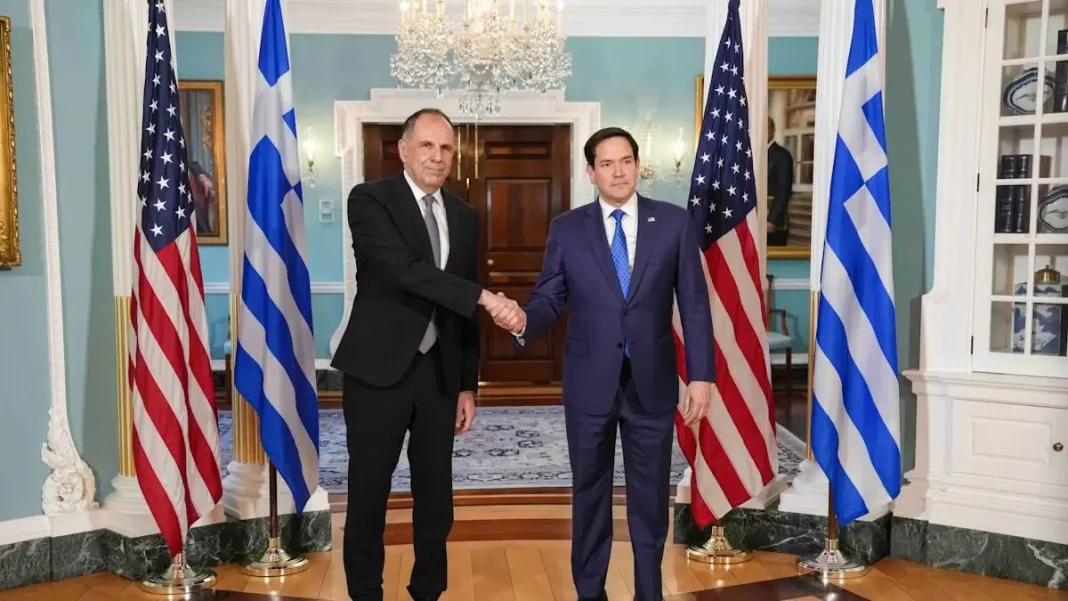
In a strategic meeting held at the White House on Thursday, February 26, 2026, Greek Foreign Minister Giorgos Gerapetritis met for about 50 minutes with U.S. Secretary of State Marco Rubio in what U.S. and Greek officials described as a very positive and symbolically elevated discussion.
The venue itself — the White House instead of the usual State Department — was emphasized by Greek media as a gesture of high political significance, underlining the depth of current U.S.–Greece strategic ties amid a tumultuous global landscape.
Gerapetritis afterwards reaffirmed that Greek-American relations stand at their “highest possible level.”
What Was Officially on the Agenda
According to Greek diplomatic sources and reporting:
Strategic Partnership: Confirmation of Greece’s role as a regional strategic hub for the Eastern Mediterranean.
Strategic Dialogue: Agreement to finalize plans for the 6th Greece–U.S. Strategic Dialogue in Athens later in 2026.
Economic & Technological Cooperation: Focus on deepening cooperation in energy, shipping, high tech, AI, and investment.
Regional Crises: Exchanges about developments in the Middle East, notably Iran, and discussions on Gaza and broader Euro-Atlantic relations.
Cyprus: Updates on the situation in Cyprus were also provided, reflecting Greece’s longstanding diplomatic interests — though not described as the central driver for the meeting.
The Urgency Behind the Meeting: Iran in the Crosshairs
Today’s timing was not random.
Western diplomatic reporting frames the current period as a critical juncture in U.S.–Iran relations, with significant military movements into the Middle East and rising tensions over Tehran’s regional actions and nuclear program.
From public records and open sources:
The U.S. has deployed significant military assets to the Middle East amid heightened tensions with Iran, even while official channels stress that diplomacy remains ongoing.
Reports note that U.S. carrier strike groups and naval forces have been repositioned — a typical precursor to expanded pressure or potential strikes.
These developments have elevated Iran to a central undercurrent in U.S. foreign policy discussions, giving extra gravity to allied consultations with partners like Greece — especially those with geographic access and logistical relevance.
Why Washington May Need Greece if an Iran Crisis Escalates
1. Strategic Access & Logistics
Greece’s geographic position and military infrastructure — particularly near the Eastern Mediterranean — make it a valuable node for:
U.S. naval and air force operations
Logistics, overflight corridors, and force mobility
Support for allied naval tasking or evacuation operations
This is not an admission of war but reflects the perennial need for a forward posture and quiet operational options that require host-nation cooperation.
Regional Stability & Coalitions
Beyond pure logistics, Greece plays an outsized diplomatic role given its:
Strong ties with Eastern Mediterranean partners
Experience in triangular cooperation frameworks
Influence in regional security dialogues that intersect with Iran-related concerns
Working with Athens helps Washington build regional consensus and message discipline — critical in a crisis where miscommunication could have disproportionate impact.
3. Political and Public Messaging
In the event of any escalation involving Iran, U.S. foreign policy faces two simultaneous needs:
To maintain domestic American public support for action
To sustain allied unity in Europe and the Mediterranean
Greece’s public reaffirmation of a strong U.S. partnership gives political cover in Western capitals that frame coordinated action as broadly supported — a nontrivial factor in contentious times.
Cyprus, Gaza, and Euro-Atlantic Relations: Secondary but Real Considerations
While Iran tensions are the most credible source of urgency, the meeting also touched upon:
Gaza stabilization efforts, where Greece may align with the U.S. repositioning its regional strategy.
Euro-Atlantic ties, as NATO cohesion and EU-U.S. coordination are increasingly foregrounded in U.S. diplomacy.
Cyprus, a perennial issue in Greek diplomatic priorities, but one that did not appear as the principal driver for this specific high-level rendezvous in Washington.
Reading Between the Lines
Today’s Gerapetritis–Rubio dialogue illustrates three overlapping U.S. strategic imperatives:
Manage imminent Iran instability while keeping diplomatic options open
Reinforce alliance networks amid a shifting security environment
Balance military readiness with economic, technological, and energy cooperation
For Greece, the engagement underscores Athens’s desire to be viewed as more than a passive ally — instead positioning itself as a strategic node and diplomatic interlocutor at a moment of heightened international risk.
February 26, 2026, n.stamatakis@aol.com www.helleniscope.com
DISCLAIMER: The views and statements expressed in this article constitute constitutionally protected opinions of this author.














Mr Stamatakis,
We can clearly see the strategic partnership in the Mediterranean unveiling: the biggest carrier USS “Gerald Ford” emptied their clogged toilets and sewers in the waters of the bay of Souda!
According to reports the airport of Chania is packed with US military airplanes. By hosting all these US air and naval forces, the Mitsotakis government makes Greece a prime target for the Iranian missiles, that are unstoppable, as it was witnessed at the recent 12-days war between Israel and Iran…
Why the Mitsotakis government is implicating Greece in a war that has nothing to do with the Greek interests, but rather the Israeli interests? The answer is simple: Mitsotakis himself and Dendias have Jewish origin and the rest of the cabinet consists of Freemasons that are de facto servants of Zionism…
Greek is now a “node” of US and its compadre, Israel. Whoop de doo.
Good luck. May no harm come to Greek citizens.