


ΕΑΝ ΠΡΟΤΙΜΑΤΕ ΕΛΛΗΝΙΚΑ ΠΑΤΗΣΤΕ ΤΗ ΣΗΜΑΙΑ ΣΤΟ ΚΑΤΩ ΜΕΡΟΣ ΤΗΣ ΟΘΟΝΗΣ
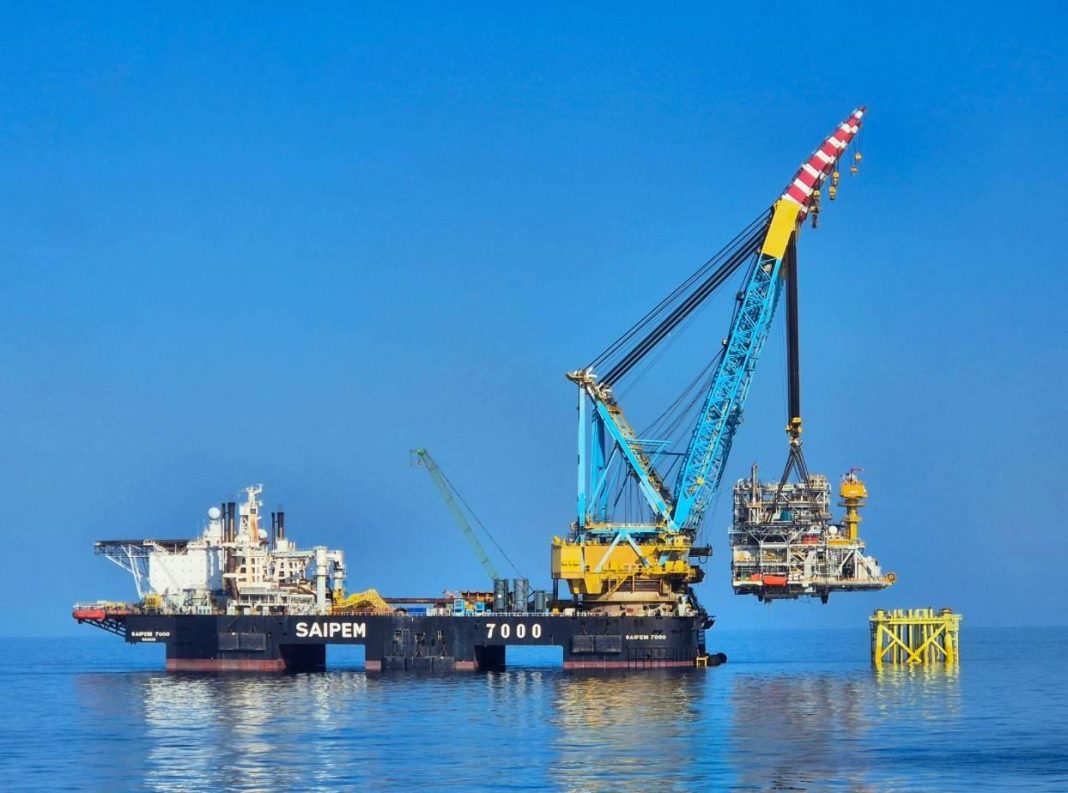
OUR MAIN PHOTO: Neptun Alpha offshore gas platform — Black Sea, July 2026. Official OMV Petrom photograph showing the installation of the Neptun Deep production platform with the Saipem 7000 crane vessel. This is my preferred photograph for the Romanian side of your article.
The Vertical Corridor exposes the contradictions – and the likely corruption – of Mitsotakis’ energy policy: abandoning domestic resources (lignite), embracing expensive imports, and neglecting Greece’s offshore potential.
By Helleniscope’s Editorial Team
The Mitsotakis government celebrates the Vertical Gas Corridor as a geopolitical triumph: American LNG shipped from Texas to Greece, then transported through Bulgaria and Romania to Ukraine.
Washington gains a market for American gas. Athens gains the prestige of being an energy hub.
But who pays—and who is willing to buy?
A corridor without customers
American LNG must be liquefied, shipped across the Atlantic, regasified in Greece, and transported through several pipeline networks.
Transportation costs alone on some routes from Greece to Ukraine have been three times or more those of competing European routes.
Predictably, efforts to secure binding commitments from Ukraine, Romania, and Bulgaria have struggled. Ukraine’s Naftogaz suspended negotiations, while Romania’s Transgaz allowed a relevant agreement to expire.
Some capacity has been booked, but this hardly guarantees a sustainable market.
The Vertical Corridor may survive as emergency infrastructure. As a commercial strategy, its economics are increasingly untenable.
Romania produces. Greece imports.
While Greece promotes American LNG, Romania is developing its own natural gas.
Neptun Deep, in the Black Sea, is expected to begin production in 2027, with estimated recoverable reserves of 100 billion cubic meters and annual production reaching 8 billion cubic meters.
The project could contribute €20 billion to Romania’s state budget over its lifetime.
Romania will earn revenues, royalties, and dividends from domestic production. Greece hopes to collect transit fees from imported American gas.
Why would Romania buy expensive LNG once its own production becomes available? Why would neighboring countries pay higher transportation costs when cheaper alternatives exist?
No diplomatic declaration can overcome those economic realities.
Greece’s self-inflicted dependence
Mitsotakis accelerated the closure of Greece’s lignite-fired power plants, weakening domestic electricity generation while increasing reliance on imported natural gas.
Reducing lignite consumption was eliminated based on questionable environmental justifications – especially because the largest lignite plant in Northern Greece was expensively refurbished just 3- 4 years ago in order to minimize emissions. Closing these electricity-producing factories before securing sufficient affordable alternatives was a political choice, not an unavoidable necessity.
Greece could have pursued a more gradual transition while developing renewables, storage, and domestic gas resources.
Instead, it increased its exposure to international energy prices.
The government helped create the import dependence that it now presents American LNG as a solution to. Now that data centers and other demands force a recalculation of political choices, the puppet Mitsotakis is starting reversing course…
Decades wasted in the Ionian Sea
For decades, successive Greek governments neglected offshore hydrocarbon exploration in the Ionian Sea and south of Crete.
Only now are international energy companies taking significant steps toward exploration.
ExxonMobil entered the Ionian Sea’s Block 2 in 2025, with drilling planned for 2027. Chevron subsequently signed agreements to explore additional Greek offshore areas.
Commercial reserves remain unproven. But why did Greece wait decades even to investigate its potential?
Romania will be producing gas in 2027 because it began investing years earlier. Greece may only be drilling its first offshore exploration well in four decades.
Romania invested in production. Greece invested in public relations announcements.
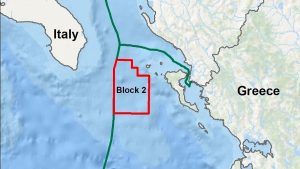
MAP: Map showing the actual exploration concession west of Corfu, where ExxonMobil, Energean and HELLENiQ ENERGY are preparing exploratory drilling.
Whose interests come first? How Much Money Is To be Made?
American LNG exports serve Washington’s commercial interests—but do they serve Greece’s?
Romania offers a striking contrast. Its Neptun Deep project, beginning production in 2027, could generate €20 billion in state revenues over its lifetime, while strengthening energy independence and regional influence.
Meanwhile, Greece has neglected its offshore gas potential for decades, preferring to become a transit hub for expensive American LNG.
Romania stands to earn billions from its own gas. Greece hopes to collect transit fees from gas extracted in Texas.
Athens should follow Romania’s example: accelerate exploration in the Ionian Sea and south of Crete and develop any commercially viable discoveries.
Even a fraction of Romania’s projected revenues could transform Greece’s economy, create jobs, and strengthen energy security.
Romania is demonstrating what Greece has forgotten: energy sovereignty means creating national wealth from your own resources—not serving as a transit station for someone else’s.
DISCLAIMER: The views and statements expressed in this article constitute constitutionally protected opinions of this author.




Do you hear this folks? Follow the money.
“ American LNG exports serve Washington’s commercial interests—but do they serve Greece’s?
Romania offers a striking contrast. Its Neptun Deep project, beginning production in 2027, could generate €20 billion in state revenues over its lifetime, while strengthening energy independence and regional influence.
Meanwhile, Greece has neglected its offshore gas potential for decades, preferring to become a transit hub for expensive American LNG.”