

ΕΑΝ ΠΡΟΤΙΜΑΤΕ ΕΛΛΗΝΙΚΑ ΠΑΤΗΣΤΕ ΤΗ ΣΗΜΑΙΑ ΣΤΟ ΚΑΤΩ ΜΕΡΟΣ ΤΗΣ ΟΘΟΝΗΣ
By Nick Stamatakis
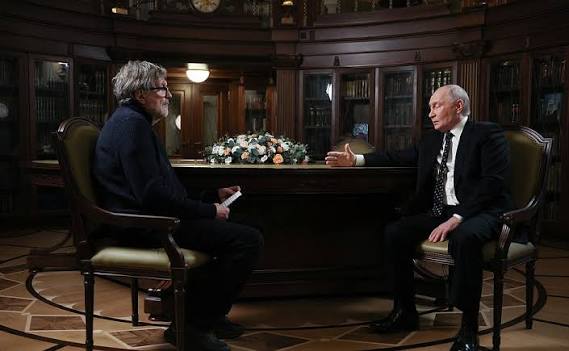
In a remarkable interview with filmmaker Emir Kusturica, Vladimir Putin reflects on Russia’s thousand-year spiritual heritage and its unique role as the guardian of Orthodox Christianity. Invoking the ancient prophecy “Moscow is the Third Rome, and there shall never be a Fourth,” Putin presents Russia as a spiritual refuge for those seeking to preserve traditional Christian values in an increasingly secular world. In an extraordinary personal revelation, Putin recounts how he discovered that the priest who baptized him as an infant was none other than the father of today’s Patriarch Kirill! He describes the astonishing convergence of their destinies—one child becoming Patriarch of Moscow and All Rus’, the other President of Russia—as something approaching a miracle. Throughout the conversation, Putin explores the profound relationship between faith, Russian civilization, and his nation’s spiritual destiny. I have described before the extraordinary role of Putin’s mother in baptizing him – and soon we will return to this aspect…
The extraordinary baptism story (36:52–43:15)
This is the section worth highlighting. It begins with Kusturica’s question at 36:52, but Putin tells the actual story beginning at 39:01.
– 36:52–37:22 — Kusturica raises the connection. He tells Putin that he was apparently baptized by Father Mikhail, the father of Patriarch Kirill, and suggests that such an intertwining of destinies is difficult to dismiss as coincidence.
– 37:22–39:01 — Putin praises Patriarch Kirill. He describes Kirill as an unusually intelligent, educated man, noting that he became rector of the Leningrad Theological Academy at just 28 years old.
– 39:01–39:35 — A baptism kept secret from his father. Putin recalls his mother telling him that she arranged his baptism secretly because his father was a member of the Communist Party, an officially atheistic organization. Religious involvement was frowned upon in that environment.
– 39:35–39:56 — His mother and their neighbor. His mother took him to the Transfiguration Cathedral in Leningrad, accompanied by a neighbor from their communal apartment whom Putin affectionately called Baba Anya.
– 39:56–40:28 — The priest named Mikhail. The priest suggested naming the baby Mikhail because it was St. Michael’s feast day, November 21, and because his own name was Mikhail. Putin’s mother explained that they had already named the child Vladimir after his father. The priest warmly accepted the name, pointing out its connection to St. Vladimir, who baptized Rus’. Putin says he later found the image of that saint on the cathedral wall.
– 40:37–41:26 — The startling discovery years later. During a conversation with Patriarch Kirill, Putin asked where Kirill’s father had served as a priest. Kirill answered: Leningrad, at the Transfiguration Cathedral. Putin then asked his father’s name. It was Mikhail. When Putin asked whether any other priests named Mikhail served there at the time, Kirill said no.
– 41:26–41:39 — The realization. Putin concluded that Patriarch Kirill’s father was apparently the priest who had baptized him. He then told the astonished patriarch the entire story his mother had shared.
– 41:39–42:41 — Two extraordinary destinies. Putin reflects on the astonishing circumstances: a priest baptizes an ordinary infant from a working-class family; the priest’s son eventually becomes Patriarch of Moscow and All Rus’; and the infant grows up to become president of Russia.
– 42:41–43:15 — Life as a miracle. Putin asks rhetorically whether this isn’t something like a miracle, adding that life itself is a miracle. He emphasizes that this was a real story, not something invented, and says it explains his particularly close personal connection with Kirill.
The larger significance of the baptism story
What makes the account especially striking is how directly it connects to the interview’s opening question about Russia as a mystery, a miracle, and a sacred responsibility.
The narrative comes full circle: Putin begins by discussing Russia’s spiritual mystery and ends by recounting a personal event that he himself interprets in almost providential terms.
Three generations and two families intersect in one cathedral: a priest named Mikhail, the son who would become Patriarch Kirill, and a working-class child who would become Russia’s president.
The essential clip is 39:01–43:15 (4 minutes, 14 seconds). For a slightly tighter excerpt, 39:35–42:48 (3 minutes, 13 seconds) captures the baptism, the identification of Father Mikhail, and Putin’s reflection on the story as a miracle.
THE VIDEO HAS ENGLISH SUBTITLES – PLEASE ADJUST YOUR YOUTUBE SETTINGS
Summary of the full interview
– 00:28–03:04 — Russia as a spiritual mystery. Putin describes Russia as a civilization of more than a thousand years. He argues that the human soul is eternal and limitless and that Russia, like human life itself, contains a spiritual mystery.
– 03:51–05:34 — Moscow as the Third Rome. Putin invokes the Orthodox idea that Moscow inherited the spiritual traditions of Rome and Byzantium, becoming a guardian of Christian civilization.
– 05:48–09:07 — Russia as an ark for believers. He argues that Russia can serve as a refuge for people seeking to preserve traditional religious and family values, including Orthodox Christians and followers of Russia’s other traditional religions.
– 09:16–10:49 — Why Western Christianity is weakening, in Putin’s view. He argues that Christian denominations that move away from established teachings to accommodate modern society risk losing their spiritual authority. He contrasts this with Orthodoxy’s commitment to preserving traditional teachings.
– 10:57–14:13 — What makes Russian civilization distinctive? Putin characterizes Russian civilization as one that has historically accommodated different peoples, languages, religions and traditions. He references Dostoevsky’s depiction of the Russian capacity to identify with other cultures.
– 14:19–17:58 — Church and State. Putin describes his relationship with Patriarch Kirill as friendly and emphasizes what he sees as the benefits of formal separation between Church and State. He also recalls how Soviet efforts to control religion sometimes produced unexpected religious conversions among KGB personnel.
– 18:06–20:45 — Orthodoxy and the creation of Russia. Putin argues that the Christianization of Rus’ under Prince Vladimir in 988 was decisive in forging a unified Russian people and state. He praises the Church’s role during World War II and recalls Stalin’s restoration of the patriarchate in 1943.
– 20:45–21:54 — Permanent moral foundations. Putin and Kusturica discuss the appeal of Orthodoxy’s enduring teachings. Putin maintains that technological development must not displace the moral values that sustain humanity.
– 22:04–29:26 — Ukraine and the war. Putin presents the conflict through his historical and geopolitical interpretation of “divide and rule.” He argues that outside powers seek to weaken Russia, calls for greater Russian-Ukrainian unity, and urges Ukrainian soldiers to join Russia’s side. These are Putin’s political claims and framing, not independently established conclusions.
– 29:33–30:48 — The speed of thought versus the speed of missiles. Asked about military technology and spiritual strength, Putin argues that intellectual agility, mathematics and rapid adaptation have become essential to modern warfare, alongside spiritual resilience.
– 30:57–32:52 — Putin on personal prayer. He says that while he cannot know how many Russians pray for him, he himself prays every day for Russia and its people. He describes feeling personally connected to the accomplishments of ordinary Russians.
– 32:59–35:40 — The idea of spiritual and social harmony. Putin discusses what Kusturica calls a “symphony” between society and its beliefs. He suggests that even the early Soviet socialist project reflected a powerful shared ideal, although it later descended into repression.
– 36:52–43:15 — The baptism revelation. Putin recounts the remarkable connection between his own baptism and the father of Patriarch Kirill.
– 43:22–44:44 — Closing tribute to Patriarch Kirill. Putin praises Kirill’s tireless travels and public service, wishes him strength and good health, and describes him as a defender of the Russian people and their civilization.
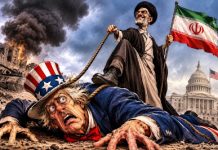

The Third Rome and the City on a Hill should be friends.
Let their be peace on earth and let it begin with me.
Russia is naturally the third Rome. Glad to see Putin mentioning Byzantium. The Byzantine tradition lives on in Russia through symphonia, which defines Church state relations in Orthodoxy. It is natural the Russians display the double headed Eagle.
If the Patriarch of Constantinople were aware of his own spiritual tradition, he would have recognized Russia as the living embodiment of his own city’s legacy. Like Byzantium, modern Russia is despised by the west. NATO aggression against Russia in our time is the equivalent of the fourth crusade which destroyed Constantinople eight centuries ago.
Russia is the only great power that has never interfered in Greek affairs or harmed Greece. The Italians, French, and British supported the Turks in Asia Minor. It is a tragedy that Greek political and ecclesiastical leaders have forgotten their own history and interests.
Affirmed!
There’s a song called
“Mother Russia” by British band Renaissance.
Was the EP Patriarch using his “Mother Church” phrase from the Russians out of spite?