


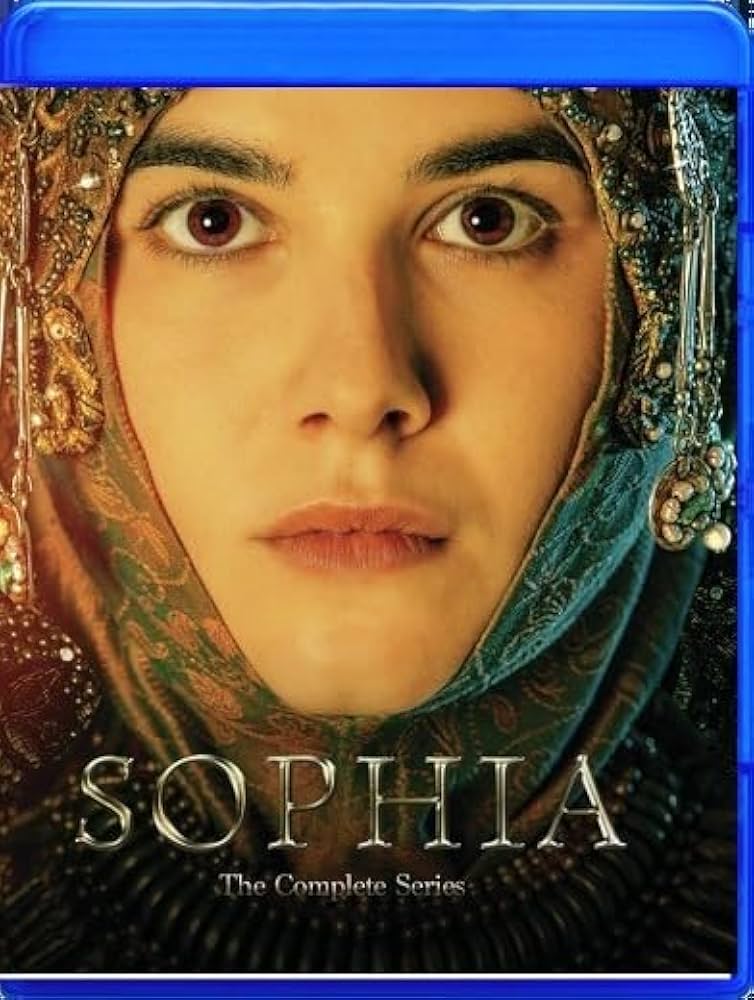
It was an amazing stroke of luck yesterday when surfing through my TV apps, I came across the free side of “Prime Video” and started watching the Russian TV series “Sophia” (2016-17)- based on the life of Sophia (Zoe) Paleologina. This is a glorious part of both Greek and Russian history!! Even more unexpected was to see the opening credits explaining in big fat letters that it was sponsored by the Russian Ministry of Culture and the Russian Ministry of Defense!! I was pinching myself to see if I was dreaming!! Just a few weeks ago, if Amazon had in its program any Russian show (forget about one sponsored by the Russian Defense Ministry), they would have the FBI and the CIA knocking on their door!!! The TV series was an amazing production that captivated me so much as to watch five episodes back to back… Here is the trailer…
YOU CAN WATCH THE WHOLE SERIES ON THE FREE SIDE OF PRIME VIDEO.
By Nick Stamatakis
Helleniscope’s readers are familiar with our love for history, particularly Greek history of all ages… A most glorious part of Greek history occurred in about ten years at the end of the tenth century AD (978-988). At that time, two Byzantine princesses, Theophano and Anna
Porfyrogennita got married respectively to the German King Otto II and the Russian King Vladimir, in essence, initiating the entrance to the civilization of the two greatest nations of Europe, the Germans and the Russians. I remind all of you of the episode of Theophano’s wedding in Rome, where the Germans learned for the first time the existence of the …fork, when Theophano, disgusted with the barbarians eating the roasted pigs by hand, asked the ladies of the Court to bring out the forks… Please do not tell me this was an exaggeration because, at the time, the Germans had no semblance of civilization, not even a written language: Byzantine philologists created written German based on ancient Greek syntax and grammar – this is why today it is so difficult to learn German… Byzantine scholars also created the now-famous German legal system – and let’s stop here…
We all know the story of Anna Porfirogennita and her trip to Crimea and then Kiev to marry Vladimir… The gossip goes that, while the idea initially turned off the princess, she fell in love with the tall, blond, and blue-eyed Vladimir… The feelings were mutual, and Vladimir kept his promise to convert to Christianity fully: He opened his palace to the poor and practiced all kinds of philanthropy to become “Saint Vladimir eventually.”…
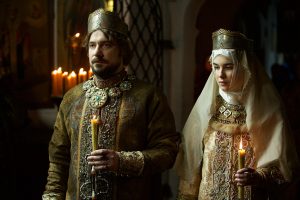
About five hundred years later, in 1472 AD, just 19 years after the fall of Constantinople, it was the turn of one more Byzantine princess, Sophia (Zoe) Paleologou, to take a similar path. Born in the last Byzantine dynasty, her father, Thomas, was the brother of the last Byzantine Emperor, Constantine Paleologos… You can read her biography below, and also you can watch the TV series… But some things stand out, and first among them is the passionate love Ivan and Sophia had. They had eleven children together, in essence setting in motion the Czarist part of Russian history – Ivan the Third was the first to take the title of the Czar. Ivan the Terrible was Sophia’s grandson!! One of the first things Sophia asked Ivan was to “Free Constantinople”, part of what is known as the theory of the “Third Rome.”… Here is a summary of her impact on Russian history…
1. Strengthening the Idea of Moscow as the “Third Rome”
- Sophia’s Byzantine lineage reinforced the notion that Moscow was the successor to the fallen Byzantine Empire.
- This helped establish the idea of Russia as the protector of Orthodox Christianity.
2. Enhancing the Authority of the Tsar
- She introduced Byzantine court rituals, strengthening the grandeur of the Russian monarchy.
- Her influence helped shape the ideology of absolute rule in Russia.
3. Encouraging Diplomatic and Cultural Exchanges
- She brought knowledge of European customs, architecture, and diplomacy to Russia.
- Italian architects, such as Aristotle Fioravanti, were invited to rebuild the Kremlin.
4. Centralizing Power and Opposing Boyars
- Sophia supported Ivan III in his efforts to curb the power of the boyars (nobility).
- Her influence helped consolidate the autocratic rule of the Grand Prince.
5. Dynastic Influence and the Rise of the Tsardom
- Her son, Vasili III, continued her legacy, leading to the eventual establishment of the Tsardom of Russia under Ivan IV (the Terrible).
- Her marriage legitimized the claim of the Russian rulers as successors to the Byzantine emperors.
6. Impact on Religious Affairs
- She played a role in the Moscow Church Council of 1503, which debated monastic land ownership.
- Her influence contributed to the strengthening of the Russian Orthodox Church under the state’s control.
BELOW AN EXCELLENT BIOGRAPHY BY JAMES BLAKE WIENER
===================
SOURCE – THEMEDIEVALMAGAZINE.COM
Sophia Palaiologina: Russia’s Byzantine Dynasty by James Blake Wiener
Sophia Palaiologina (c. 1449-1503) played a decisive role in Russian history as the second wife of Ivan III of Russia (r. 1462-1505). A member of the Palaiologos dynasty, Sophia’s life is emblematic of the vicissitudes that faced Byzantine émigrés as they fled abroad to avoid Ottoman aggression. Although she is widely remembered today as Russia’s “Byzantine empress,” Sophia’s was a life characterized by artistic patronage and intense political intrigue.

Sophia Palaiologina. Forensic facial reconstruction by S.A.Nikitin. ©Shakko, via Wikimedia Commons.
Sophia — whose Greek name was “Zoe” — was the daughter of Thomas Palaiologos (1409-1465), the Despot of Byzantine Morea and Caterina Zaccaria (†1462). Her mother was the daughter Centurione II Zaccaria (†1432), the last independent prince of Prince of Achaea, while Sophia’s paternal uncle was the last Byzantine emperor Constantine XI Palaiologos (r. 1449–1453). Born into a region under the domination of the expanding Ottoman Empire, warfare and diplomacy marked Sophia’s childhood. When Mehmet II (r. 1444–1446; 1451–1481) began the Ottoman siege of Constantinople in April 1453, he dispatched a smaller army to harass Morea and prevent Thomas from sending military aid to his elder brother. Thomas was able to withstand the Ottoman siege, but Constantinople fell in 1453, and Constantine XI perished in battle.
Mehmet ultimately let Thomas keep Morea following the conquest of Constantinople as his attention turned to conquest of Serbia where Sophia’s sister, Helena Palaiologina (1431–1473), ruled as Despotess of Serbia. Thomas, much to Mehmet’s chagrin, made a series of diplomatic overtures to Western rulers for capital and arms. Although Thomas succeeded in negotiating a series of alliances between Byzantine Morea and the Republic of Genoa, as well as the Papacy, he ultimately failed in securing Morea’s independence from the Ottomans. Annoyed with Thomas’ continued perfidy, Mehmet invaded and conquered Byzantine Morea in 1460, forcing Sophia’s family into permanent exile.
Flight into exile
Thomas fled Greece first to Venetian-controlled Corfu with Sophia, his wife, and two sons, Andreas Palaiologos (1453–1502), and Manuel Palaiologos (1455–1512). He later continued to Rome while the rest of his children remained in Corfu until 1465. Sophia’s father died the year of her arrival in Rome, and the famous cardinal and Neoplatonist Basilios Bessarion (1403–1472) oversaw her upbringing and that of her brothers. Raised in the splendor of Renaissance Rome, Sophia received a true humanist education education that included foreign languages, philosophy, history, and mathematics. She spoke Latin, Greek, and Italian with equal fluency, and it is believed that she took a particular interest in art and architecture — interests that she would ultimately take with her to Russia. Sophia was a member of the Papal courts during the reigns of Popes Paul II (r. 1464–1471) and Sixtus IV (r. 1471–1484), and surviving letters in the Vatican archives reveals that she was the focus of much attention and scheming.
The Chronicle of Nikon (c. 1550) and The Russian History Dating Back to the Most Ancient Times by Vasily Tatishchev (1686–1750) both report that the King of France and the Duke of Milan sought marriage with Sophia, but they were rejected as the princess remained an Orthodox Christian. These narratives are likely false, and it is more probable that Sophia conformed to the Catholic faith during her youth in Italy as her financial security was entirely dependent upon the goodwill of the Papacy. Sophia was undoubtedly a political asset that the Papacy tried to use to its own benefit. Historical records show that James II of Cyprus (r. 1463–1473) desired marriage, and Lodovico III Gonzaga, the Marquis of Mantua (r. 1444–1478) sought Sophia as a wife for his son Frederico I (r. 1478–1484). These matches came to nothing, as did a proposed match between Sophia and a member of the noble Caracciolo family based in Naples. Paul II sought a grander match for Sophia in Russia, and his opportunity to advance Sophia’s hand came in 1467.

Fragment of Nikon Chronicle about founding a fortress on the bank of the river Orel (Oryol). XVI century
Marriage, court and conversion
Maria of Tver (1442–1467), the wife of Ivan III (1440-1505) died unexpectedly, and Ivan needed to remarry as he had only a single, surviving heir: Ivan Ivanoich (1458–1490). Paul first proposed marriage between Sophia and Ivan III in 1469 with the chief aim of spreading the influence of the Catholic Church in Russia. Mindful of the failure of the Council of Florence in 1431, Paul believed a Russian match would reinvigorate the efforts to reunite the Catholic and Eastern Orthodox Churches so as to counter the Ottoman threat to Europe. Paul believed that Russian aid would be essential in any future crusade or military campaign against the Ottomans. He was also mindful that members of successive Byzantine dynasties had married Russian princes over the previous five centuries. For their part, Ivan and his mother, Maria of Borovsk (1418–1484), believed that a Byzantine marriage would elevate Moscow’s spiritual and temporal prestige in both the West and among their Eastern Orthodox neighbors in the Balkans and Caucasus. The marriage would, furthermore, provide Russia with a legal claim, by marriage, to rule a reconstituted Byzantine Empire. After three years of negotiation, the marriage agreement was settled in early 1472 by Sixtus IV(1414–1484)and Ivan.
Sophia’s proxy marriage occurred with much fanfare at St. Peter’s Basilica in Rome on June 1, 1472, and she received 6,000 ducats as a dowery. Sophia departed from Rome traveled first to Lübeck by way of Siena, Bologna, Vicenza, and Nüremberg, and thereafter boarded a ship bound for Reval (present-day Tallinn, Estonia). From there, she traveled to Dorpat (present-day Tartu, Estonia) and entered Russia through the city of Pskov where a magnificent ceremony officially welcomed her. She also stopped in Novgorod before finally arriving in Moscow on November 17, 1472. Sophia then celebrated a second wedding in the Dormition Cathedral in Moscow’s Kremlin. Sophia dashed Catholic hopes and expectations by reconverting to the Orthodox faith of her Byzantine ancestors and took “Sophia” as her new name.
Patron of the arts
Historians widely believe that Sophia was behind Ivan’s order for the reconstruction of the Kremlin and its churches by Italian artists and craftsmen. Aristotel Fioravanti (c. 1415–1486) blended the latest Renaissance innovations with Russian aesthetics to create one of the world’s most beautiful churches in Christendom: the Kremlin’s Dormition Cathedral. Pietro Antonio Solari (144–1493) and Marco Ruffo (fl. 1450–1500) from Milan redesigned and rebuilt the Kremlin’s walls and towers, and Ivan even had gardens created in Italian-style for Sophia as well, but these have not withstood the tests of time. Successive Russian rulers, including Sophia’s grandson, Ivan IV “the Terrible” (r.1547–1584), viewed Sophia’s role as a patron of the arts as a model through which they could project their own power through the prism of art and architecture.
Historians have previously postulated that it was Sophia who introduced Byzantine and Italian court ceremonies and customs to the Russia. There is some evidence for this, but more importantly, Sophia did not follow the traditional Russian custom of female isolation, which prevailed amongst the Russian nobility. Sophia met publicly with officials, and even foreign ambassadors, on equal footing with that of her husband. Russian courtiers and commoners saw this as particularly scandalous, and such actions did not endear her to her subjects. Many Russians simply distrusted Sophia due to her Italian upbringing and her connections to the Papacy even if her reconversion to the Orthodox faith was sincere.
Political influence
The amount of political influence Sophia exercised over her husband remains a matter of debate and conjecture. Sophia does appear to have encouraged Ivan to break his treaties with the Golden Hoard in the 1470s. Ivan won the Great Stand on the Ugra River in 1480, defeating Ahmed Khan bin Küchük, Khan of the Golden Horde (r. 1465–1481), which ended Russia’s centuries-long vassalage to Mongol overlords. Nonetheless, while Sophia’s architects were lauded and patronized in Russia, the Greek and Italian officials who accompanied Sophia never gained positions of great power or prominence at the Russian court. Even Sophia’s brother Andreas failed to find an office or role in Russia. He came to Moscow twice and left both times empty-handed. The only exception was the famous goldsmith Gian Battista della Volpe (c. 1435–1515) from Vicenza, who became Master of Coin.
Sophia and Ivan had eleven children between 1474–1490 of which eight survived into adulthood. Vasili Ivanovich, Sophia’s eldest son, was third in line to the succession of the Muscovite throne. Sophia’s step-son, Ivan Ivanoich, was the Tsarevich, and he had a son of his own, Dmitry Ivanovich (1483–1509), through his marriage to Elena of Moldavia (1465–1505). Sophia met her personal and political match in Elena — the daughter of the warrior king Stephen III of Moldavia (r. 1457–1504) and a cousin of Vlad III Dracula (c. 1428–1477) — and the two conspired against one another for two decades. When Sophia and Elena took opposite sides on matters pertaining to the reform of the Russian Orthodox Church, their rivalry proved fatal for the Russian imperial family. Ivan Ivanevich died in 1490, and Sophia was widely believed to have poisoned him so as to advance her son’s claim to the throne.
After accusations arose of Sophia and Vasili attempting to poison Dmitry Ivanovich in 1497, Ivan banished his wife and son from court. Ivan crowned Dmitry Ivanovich as grand prince of Moscow in 1498, and he only allowed Sophia and Vasili to return to court in 1499. With no explanation, Ivan gave Vasili control over the cities of Novgorod and Pskov in 1499 and then named Vasili as his new heir in 1502. Elena and Dmitry were sent to prison where they both died a few years later in 1505 and 1509, respectively. Sophia died in 1503 at the age of about 54. Her success in securing her son’s right to the succession was to be her final victory. Sophia was buried in the Ascension Convent within the Kremlin; when the Soviets tore down the Ascension Convent in 1929, her remains were moved to the Kremlin’s Cathedral of the Archangel.
In recent years, Sophia has recaptured the popular imagination of Russians. A historical drama about Sophia — Sophia — aired on Russian television in 2016, and a sleuth of new publications on her life and legacy have been published in Russian. A controversial and politically astute woman, Sophia’s life remains worthy of further research and consideration.
THIS ARTICLE WAS ORIGINALLY FEATURED IN ISSUE 126, BYZANTIUM.
IF YOU LIKE THIS AND WANT MORE, SUBSCRIBE BELOW!
About the author
James Blake Wiener was trained as a world historian and is a co-founder of Ancient History Encyclopedia (AHE). He resides in Zürich, Switzerland and provides public relations services and strategies to professionals in nonprofits, museums, and NGOs. Learn more about his work at jameswiener.com or follow him on Twitter @herrlichmann.













It’s a beautiful story and a wonderful production. However, it should not be lost on anyone that Tsar Ivan III became a schismatic who ultimately died outside of the Orthodox faith. The Moscow-Constantinople schism that Tsar Ivan III instigated was even against a venerable Orthodox saint, St. Patriarch Dionysios I of Constantinople.
It was St. Patriarch Dionysios I’s request that the Bishop of Moscow submit to the newly Orthodox Metropolitan of Kiev, Gregory the Bulgarian, who had just returned to the Orthodox faith from Uniatism. Tsar Ivan III refused to submit to the Orthodox saint’s request, and thereby he self-claimed autocephaly for Moscow. The resulting schism of the Moscow Church from Constantinople then lasted from 1467 until about 1560, almost a hundred years.
The Russian narrative likes to say that Moscow self-claimed autocephaly because Constantinople was Uniate at the time and therefore Moscow had no other choice. However, the facts show this to be blatantly false. Moscow remained in communion with Constantinople and still commemorated the Patriarch even after the false council of Florence. The later schism from the Orthodox faith that Tsar Ivan III would instigate in 1467 was about a refusal to submit to a foreign Orthodox bishop in Kiev, and it had nothing at all to do with Uniatism.
Captivating! I hope to find the other episodes somewhere at some point. I would love to watch all the episodes. Thanks for posting the link, Nick.
The whole series is on prime video on the free side.
Thank you!
More here:
https://www.youtube.com/watch?v=5msAxCCZhPQ
I hope the translation subtitles will be good because I don’t understand Russian. I didn’t watch it yet.
A great historical series. Thanks Nick for letting us know. I love history myself, and Byzantine history has been overlooked, because the Romantic period of the 18th and 19th century focused on ancient Greece and considered the Byzantine empire a failure. We all heard of the word “Byzantine” used when referring to corruption and machinations.
I watched several episodes. The movie exposes the cunning plans of the RCC and Uniates against the ROC. Those of us that know history are against the union with the Catholics because they are getting further and further away from the truth and are hurting the UOC, not to mention the criminal acts against the orthodox Christians throughout history. Even now, the “head” of the Uniates in Ukraine publicly announced that he expects part of Lavra. What a bunch of thieves! Instead of building their own temples, they want to steal from the UOC. Metropolitan of Piraeus has been a true defender of the OC and exposed the crimes of the RCC. I hope more hierarchs will come and speak against the atrocities committed against children and those that want to hang out and celebrate with the RC should think long and hard about the consequences. We do not want the crimes to spill over into our Church in the event of such ungodly union.
https://spzh.eu/en/news/85014-piraeus-metropolis-of-the-church-of-greece-the-rcc-is-not-a-church
https://spzh.eu/en/news/85009-hierarch-of-the-church-of-greece-the-vatican-is-a-den-of-thieves
Dear Mr Stamatakis,
After seeing your long article on Sophia Paleologina, I would be interested in seeing your analysis of this piece about Mara Brankovic:
https://www.theamericanconservative.com/maras-message-from-history/
The author of the essay is an avowed secularist in his approach to history, so I would like to see what an Orthodox historian like yourself would have to say about all that he brought up, Lord willing. If you can post an essay at Helleniscope, it would be much appreciated.
In Christ,
Walt Garlington