


By Helleniscope’s Editorial Team
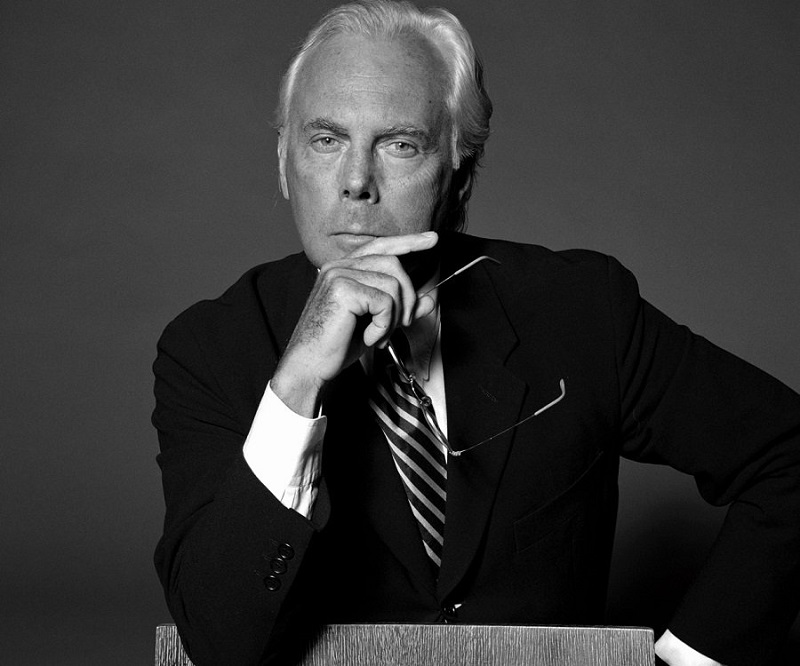
The world of fashion bowed its head in mourning this week as Giorgio Armani, the great Italian designer and visionary, passed away at the age of 91. Armani was not merely a name stitched into garments — he was a cultural force who transformed how the world perceives elegance, redefining menswear and womenswear alike for half a century.
From Piacenza to Milan — The Rise of a Legend
Born in Piacenza in 1934, Armani entered the world of fashion in the 1960s after first considering a career in medicine. By 1975, he had founded his own label in Milan, one that would go on to dominate the global fashion scene. His hallmark was restraint with power: softly structured jackets, sleek lines, muted palettes, and an aesthetic that exuded confidence without excess. Armani himself described it best — “I design for real people. There is no virtue whatsoever in creating clothes that are not practical.”
Hollywood, Royalty, and Global Icons
It was not long before Hollywood came calling. Armani’s designs for Richard Gere in “American Gigolo” (1980) became a cinematic milestone, catapulting his name into the international spotlight. From then on, Armani dressed the world’s icons: Princess Diana, Julia Roberts, Leonardo DiCaprio, Beyoncé, Lady Gaga. His clothes became synonymous with the red carpet — understated yet unforgettable.
An Independent Empire
Unlike many other fashion houses that were swallowed by conglomerates, Armani insisted on independence. He built a business empire spanning clothing, perfume, hotels, and even sports — while maintaining full creative control. In 2016, he secured his legacy by creating the Giorgio Armani Foundation, ensuring his company would continue without succumbing to external pressures. By the time of his passing, Armani was one of the richest and most influential figures in fashion, yet he remained firmly anchored in Milan, the city that shaped him.
Inspirations Beyond Borders
Armani’s creativity was not confined to Europe. A visit to India in 1994 left an indelible mark on him, inspiring later collections that blended Milanese minimalism with Indian craftsmanship. His Achkan-inspired capsule line of 2019 reflected his lifelong curiosity and openness to cultural fusion — proof that his vision was global even as his identity remained proudly Italian.

A Nation and a World in Mourning
Tributes poured in from leaders, celebrities, and fellow designers alike. Italian Prime Minister Giorgia Meloni praised him for bringing international prestige to Italian fashion, while Donatella Versace hailed him as a “giant.” In Hollywood, Julia Roberts, Leonardo DiCaprio, and countless others remembered Armani as more than a designer — he was a mentor, a friend, and a source of confidence for those who wore his creations.
The Final Curtain
Though he continued to work tirelessly until his final days, illness prevented Armani from attending Milan’s Men’s Fashion Week this past June — the first absence of his long career. A public memorial is planned at Milan’s Armani/Teatro, followed by a private funeral in accordance with his wishes.
A Legacy of Lasting Elegance
Armani’s passing is not just the loss of a designer, but of a man who embodied an era. His designs told us that power could be quiet, that beauty could be simple, and that true style was eternal. For Italians, for the world of fashion, and for anyone who ever wore one of his creations, Giorgio Armani will remain a symbol of refinement and integrity. His empire continues — but the man who built it, with discipline and vision, leaves behind a silence as elegant as the suits he created.
















Armani was great talent in fashion but another tragic homosexual who died of AIDS.
So in the end, he died a loser …
Did you forget Armani had Armenian roots as his father fled from Armenia in 1915 to Italy and from then all is history? At least, get some of the facts in order! His family was also Orthodox according to reports.