


ΕΑΝ ΠΡΟΤΙΜΑΤΕ ΕΛΛΗΝΙΚΑ ΠΑΤΗΣΤΕ ΤΗ ΣΗΜΑΙΑ ΣΤΟ ΚΑΤΩ ΜΕΡΟΣ ΤΗΣ ΟΘΟΝΗΣ
By Helleniscope’s Editorial Team
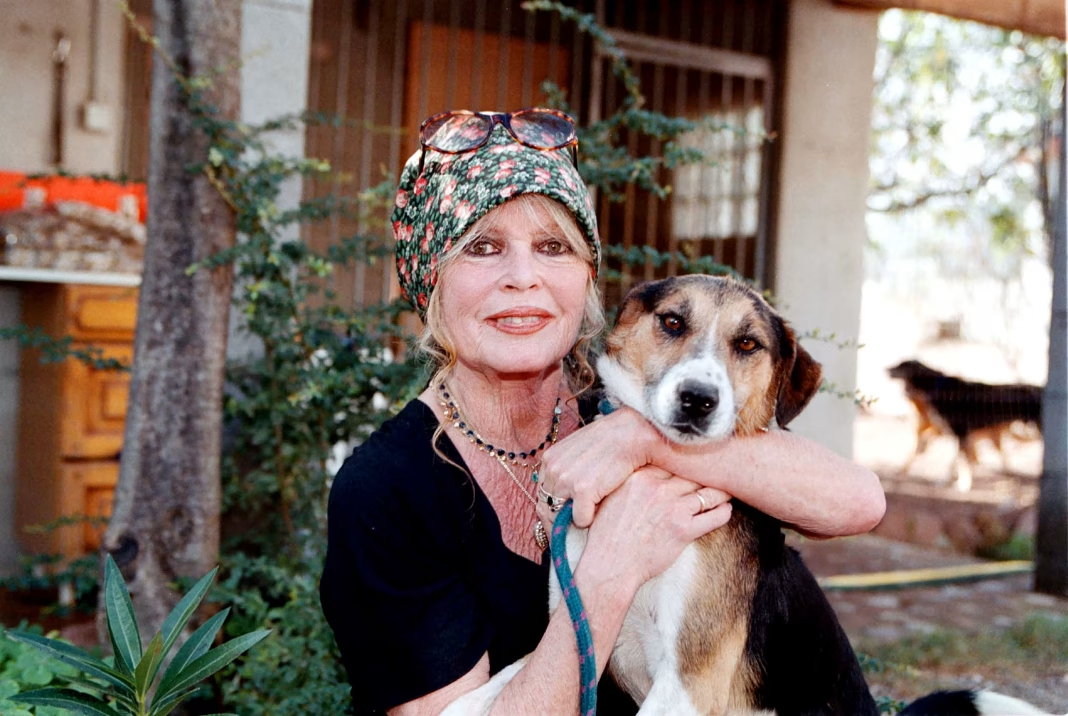
The death of Brigitte Bardot — one of France’s most enduring cultural icons — has become more than a moment of national mourning. It has swiftly turned into a political symbol of deep cultural division in contemporary France.
Bardot, who rose to global fame in the 1950s and 60s as a film legend and later reinvented herself as a fierce animal rights activist, passed away on December 28, 2025, at age 91. Reuters While she was celebrated internationally for her cinematic impact, her later years were marked by controversial statements and convictions for inciting racial hatred, which French and international media tie to her embrace of far-right politics.
A private funeral is set for January 7 in Saint-Tropez, the Riviera town she long called home, with burial by the sea at the historic Notre-Dame-de-l’Assomption Church.
What has ignited debate in the French press — and across social media — is not just mourning the actress, but her legacy and how it should be officially honoured. According to widely circulated reports, President Emmanuel Macron offered to organize a national tribute, a gesture that would typically signal state recognition of a major cultural figure.
But Bardot’s family reportedly declined that offer — and communicated that Macron is not welcome at the funeral. These social posts (originating from various accounts referencing French commentary) reflect a widespread narrative that the family wants a ceremony free of official political presence and not associated with the Élysée Palace.
From the perspective of the French press, this refusal is deeply political. Bardot’s later activism and controversial views aligned increasingly with far-right currents in France, and some commentators see her legacy as contested terrain. In this context, Macron’s office framed his tribute as recognition of her cultural impact — but many in French media highlight that public sentiment toward Bardot today is polarized.

Analysis in French outlets suggests several forces at play:
A generational and ideological divide: Bardot remains beloved by some older French conservatives for her unapologetic nationalism and defense of traditional French identity — themes championed by figures like Marine Le Pen’s National Rally — and scorned by others for the same reason.
Macron’s own political standing: With persistently low approval ratings in parts of French society, Macron’s presence at a funeral that is being framed by segments of the right as a cultural cause célèbre could have been seen as politically fraught. Some analysts in France argue that the refusal by Bardot’s circle was driven as much by symbolic politics as by personal preference.
Cultural tensions over national icons: French commentators note that Bardot’s career — from sex symbol and Marianne figure to controversial right-leaning activist — embodies the complex contradictions of modern France itself. For many in the press, how she is mourned reflects ongoing debates over national identity, secularism, immigration, and the role of celebrity in politics.
In short, what might once have been seen as a simple act of state mourning has instead become a mirror of deeper political divides, with Macron’s absence at Bardot’s funeral now interpreted in Paris not only as a personal rebuff but as a symbolic episode in France’s ongoing cultural and political debates.
January 2, 2026, n.stamatakis@aol.com www.helleniscope.com
DISCLAIMER: The views and statements expressed in this article constitute constitutionally protected opinions of this author.
















🕊️🇫🇷 VIVA BB!
Too bad her family won’t allow French President at funeral bc La Bardot was a long time symbol of France; she even received France’s Legion of Honor award – so Macron’s respectful gesture is valiant — if you ask me. And despite her rebellion toward her Catholic faith + its stand against abortion, she still loved the saints like Saint Francis for his love of animals + monk Padre Pio; she even met + held esteem for Pope John Paul ll but utterly disdained Pope Francis + what most don’t know is, in her home she kept a room devoted to statues + Orthodox Icons of blessed Virgin Mary. Though not a regular church goer, Brigitte prayed alone to the Blessed Mother. Frankly, in the end BB was more spiritual than most clergy.