


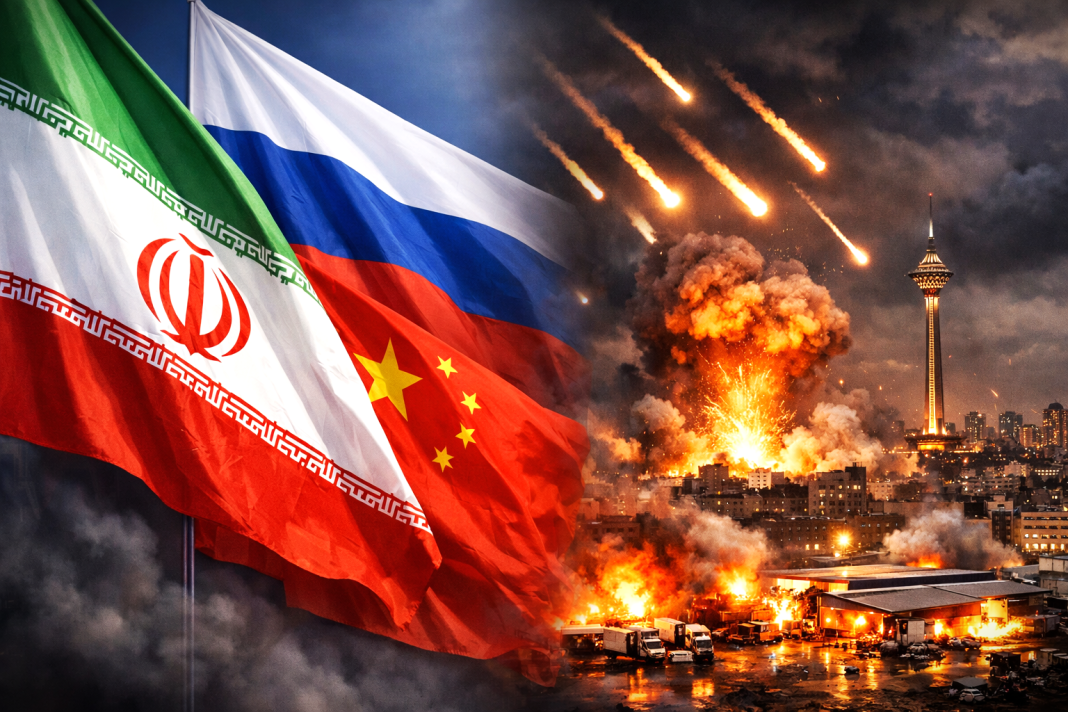
EDITOR’S NOTE (Nick Stamatakis). The article is a (condensed) interview with the anthropologist Leila Ghanem and Dimitris Konstantakopoulos, discussing Iran’s long-term strategy against the United States and Israel, and arguing that Iran has spent decades preparing for a prolonged conflict rather than seeking a quick victory.
YOU CAN READ THE FULL INTERVIEW IN GREEK HERE
==================
Core Idea
Iran’s strength lies in patience, strategic depth, and long-term planning. Unlike the U.S. and Israel, which rely on rapid, preemptive military strikes, Iran focuses on deterrence and endurance, aiming to outlast its opponents rather than defeat them outright.
1. A Culture of Strategy and Patience
Iran’s political and cultural mindset emphasizes layered thinking and contingency planning—always having multiple strategies in reserve. This mentality, rooted in its long history and civilization, allows Iran to adapt and survive under pressure.
Despite decades of sanctions, Iran has not collapsed; instead, it has prepared for a long war scenario, expecting eventual confrontation.
2. Asymmetric Warfare Strategy
Iran does not aim to win through conventional military superiority. Instead, it relies on asymmetric warfare, making conflict costly and unsustainable for its enemies.
Its approach includes:
- Avoiding full-scale direct war
- Using calibrated responses
- Gradually escalating pressure over time
The goal is not immediate victory, but to wear down opponents economically and politically.
3. “War of Stages” Tactics
Iran conducts war in phases, deliberately not using its most advanced capabilities at once.
Examples include:
- Initially deploying older weapons
- Gradually introducing more advanced missiles and tactics
- Testing enemy defenses and adapting accordingly
This prolongs the conflict and prevents quick resolution.
4. Leveraging Geography and Energy
Iran’s strategic position and vast energy resources are central to its power.
- It holds major global oil and gas reserves
- It can disrupt energy markets, increasing global pressure on adversaries
- Much of its oil exports go to China outside the dollar system
Energy is treated not just as an asset to protect, but as a strategic weapon.
5. Geopolitical Stakes
The conflict is framed as part of a broader global struggle:
- The U.S. seeks to maintain control over energy routes and counter China
- Iran represents resistance to Western dominance
The article suggests that this confrontation reflects a shift in global power, with the “rise of the East and decline of the West.”
6. Broader Significance
Iran’s resistance is portrayed as symbolic for the Global South:
- Showing that a country can withstand major powers
- Inspiring others to challenge geopolitical dominance
It is also noted that Iran is unique among major regional powers in not hosting U.S. military bases.
Final Takeaway
Iran’s strategy is not about quick battlefield success but about time, resilience, and strategic pressure. By prolonging the conflict and increasing its cost, Iran aims to force its adversaries into exhaustion and eventual withdrawal.













To survive potential decapitation strikes, the IRGC adopted a decentralized “mosaic defense”, 31 separate provincial commands with broad decision-making authority. IRGC feudal warlords control massive segments of the Iranian economy, including energy, construction, and telecommunications, where local commanders act as subcontractors, managing illicit smuggling networks and local markets to fund their specific units. Since the death of Ali Khamenei, power has shifted from “divine power” to “hard power”