
ΕΑΝ ΠΡΟΤΙΜΑΤΕ ΕΛΛΗΝΙΚΑ ΠΑΤΗΣΤΕ ΤΗ ΣΗΜΑΙΑ ΣΤΟ ΚΑΤΩ ΜΕΡΟΣ ΤΗΣ ΟΘΟΝΗΣ
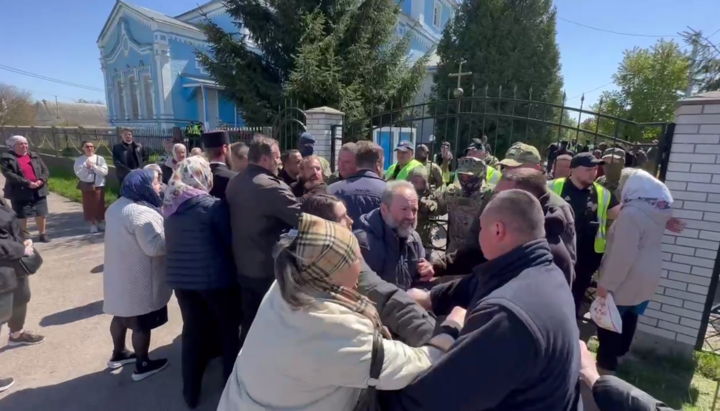
PHOTO: UN reported increased violence against UOC Churches
Moscow has increasingly made protection of the Ukrainian Orthodox Church – and, equally, Russian-language rights – an explicit element of its terms for any durable settlement. Unfortunately, it is increasingly certain that the issue will be solved militarily and the Zelensky regime will lose and end up in jail…
By Nick Stamatakis
One exceedingly important element of Russia’s stated conditions for a durable peace in Ukraine is religious freedom — specifically, the future of the Ukrainian Orthodox Church led by a true Holy man, Metropolitan Onufryi — followed closely by the rights of Russian-speaking Ukrainians to speak their language (which happens to be the mother tongue of President Zelensky). These are not Russia’s only peace demands: territory, neutrality, NATO and security arrangements remain central. Yet Moscow has repeatedly insisted that a settlement cannot be durable if the religious and linguistic disputes that it calls “root causes” remain unresolved.
That position is no longer merely rhetorical. In the Russian memorandum presented to Ukraine at the Istanbul negotiations on June 2, 2025, Moscow formally demanded the removal of restrictions on the Ukrainian Orthodox Church and, separately, guarantees for Russian-speaking citizens and official status for the Russian language. Two months later, President Vladimir Putin stated that the Russian-language question and “independence and worthy conditions” for the Orthodox Church should be discussed together as part of the groundwork for a durable and lasting peace. (At the bottom of the post, we offer the timeline of the explicit Russian statements over the last few years.)
Sergey Lavrov has been even more persistent. When CNN asked in February 2025 what territorial compromises Russia might accept for peace, he redirected the question toward the Russian language and the Ukrainian Orthodox Church. In May, he called the alleged effort to eliminate the UOC one of the conflict’s “root causes” and separately pledged that Russia would seek to ensure that Orthodox believers’ legal rights were respected as part of what Moscow regarded as a just settlement. In December, he again said that the rights of the UOC, together with Russian language and culture, had to be restored for a lasting resolution. And on September 8, 2026, speaking with Judge Andrew Napolitano, Lavrov again described a settlement that left what Russia considers violations of language rights and religious freedom intact as unacceptable.
The religious-freedom question, however, cannot responsibly be presented merely as a Russian allegation. Human Rights Watch called Ukraine’s 2024 religious-organizations law overly broad and warned that it could have severe consequences for UOC congregations and millions of parishioners. The UN Human Rights Office subsequently concluded that the legislation imposed disproportionate restrictions on freedom of religion. In October 2025, UN independent experts expressed serious concern at reports of ongoing persecution of the UOC. And that same month, the European Court of Human Rights found an Article 9 violation in a case involving the inability of a UOC parish community to use its church during an inter-church dispute.
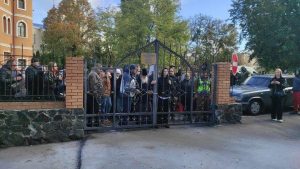
PHOTO: From the infamous events at Chercasy.
Ukraine has answered with some vaguely defined national-security concerns. Russian authorities and the Russian Orthodox Church have supported the war but this is the rule in most “national” church cases in Orthodox history. Prime example: Byzantium, where the Patriarchs were supposed to support the Emperor’s military efforts. Today’s DISGRACEFUL example in Turkey: Pat. Bartholomew, who in 2018 blessed the Turkish Armed Forces (link here) in their invasion of Syria, where they attacked and killed civilians!! Ukraine maintains that action against individual clergy and religious organizations concerns collaboration or ongoing institutional links with Russia, but the UOC has no direct link to the Moscow Patriarchate; everyone who understands Orthodoxy knows this link is mostly symbolic, and the UOC took steps to strip the relationship with Moscow of any substance or control. International human-rights law requires restrictions on religion to be individualized, necessary, and proportionate. Human Rights Watch has emphasized precisely that distinction: credible unlawful conduct may be prosecuted, but religious affiliation by itself cannot constitute evidence of a security threat.
The legal struggle has now moved directly to the existence and property of the Church
The struggle over the UOC now extends far beyond investigations of individual clergy. Ukraine’s State Service for Ethnopolitics and Freedom of Conscience (DESS) has brought Case No. 855/11/25 seeking the liquidation of the Kyiv Metropolis of the Ukrainian Orthodox Church. If successful, DESS has asked that the Metropolis’s money, property and other assets — except property legally classified as religious or cult property — be transferred to the state. DESS has identified 154 other religious organizations connected with the Metropolis, although the Supreme Court has stressed that these are separate legal entities and would not automatically be liquidated by a judgment against the Kyiv Metropolis.
The property consequences nevertheless reach far beyond this single lawsuit. Under Ukraine’s new legal regime, religious organizations found to have prohibited affiliations can also lose the right to use state- or municipally owned churches, monasteries and other religious property. The Kiev-Pechersk Lavra illustrates the distinction: the state already owns the historic monastery complex, while the legal struggle concerns the UOC monks’ right to remain and worship there. Thus, the controversy is not accurately described simply as an attempt to “confiscate every UOC church.” It is a broader legal process through which liquidation proceedings, loss of legal status, termination of leases and use agreements, and separate actions against affiliated religious bodies can ultimately remove UOC communities from churches and monasteries in which their faithful have worshipped for generations.
Against that background, an extraordinary juxtaposition emerges in New York. On September 26, Saint Nicholas Greek Orthodox Church and National Shrine at the World Trade Center is scheduled to give President Volodymyr Zelenskyy its 2026 Beacon of Hope Award. The Archons of the Ecumenical Patriarchate have gone further, “emphatically” endorsing the decision and publicly describing Zelensky as a “champion of religious freedom.” Yes, they named the war criminal Zelensky “Champion of religious freedom”!!! All this as the Zelensky Ukro-Nazi regime attempts to legally take ownership of all UOC Churches!!
The juxtaposition raises a question with consequences extending far beyond ecclesiastical politics. Russia has formally placed the future of the UOC within its negotiating demands; Putin has described adequate conditions for the Orthodox Church as part of the foundation of lasting peace; Lavrov continues to repeat the point; and independent international human-rights institutions have themselves raised serious concerns about Ukrainian measures affecting the UOC.
Whatever view one takes of Russia’s war, its territorial claims, or the ecclesiastical dispute between Constantinople and Moscow, the rights of ordinary believers are a separate question. A durable peace will ultimately have to determine whether Ukrainians can worship, organize their religious communities, and preserve their ecclesiastical identity without collective penalty for alleged political loyalties. That question deserves examination on the standards of religious freedom themselves, rather than according to which geopolitical camp invokes them.
Unfortunately, as of now, due to the hegemonic and arrogant attitude of the West, the whole issue will very likely be solved by military means – and the Ukro-Nazis of Kiev will lose and end up in jail… Some of them will likely go to London and form a “Government in Exile”, to keep fighting the Russian ghosts that have overwhelmed the sick imagination of the Globalist Elites – especially those of the City of London who for many centuries have been drooling to steal the riches of the Russian mineral wealth…
TIMELINE OF RUSSIAN STATEMENTS
- December 5, 2024 — Lavrov/Tucker Carlson. Lavrov said Russia could not accept a peace agreement that left in place Ukrainian legislation which, in Russia’s characterization, restricted the Russian language, Russian culture and the Ukrainian Orthodox Church. He explicitly connected religious rights and language rights to the terms of a negotiated settlement.
- February 2025 — UN Human Rights Office. OHCHR concluded that Ukraine’s new provisions governing religious organizations affiliated with Russia imposed “disproportionate restrictions” on freedom to manifest religion or belief and called for the legislation to be amended to conform fully with international human-rights law. This is independent of the Russian government’s position.
- February 17, 2025 — Lavrov answering CNN about peace concessions. Asked specifically what territorial compromises Russia might make for peace, Lavrov instead said serious diplomacy first had to address what he described as restrictions on the Russian language and the “canonical Ukrainian Orthodox Church.” This is one of the clearest examples of Lavrov making the UOC question part of the peace discussion itself.
- May 20, 2025 — Lavrov makes the UOC commitment explicit. Lavrov said Russia would not abandon Orthodox believers in Ukraine and would seek to ensure that their legal rights are respected. Crucially, he then said Russia’s position regarding a “just settlement” guaranteed that objective.
- May 23, 2025 — Lavrov calls the UOC question a “root cause.” Discussing a possible Vatican venue for peace talks, Lavrov stated that what he called the course toward the “elimination of the Ukrainian Orthodox Church” was “one of the root causes” of the conflict. Whether one accepts that characterization or not, it demonstrates how Moscow formally conceptualizes the issue.
- June 2, 2025 — Russia puts it in writing. Moscow’s memorandum presented during the Istanbul negotiations included, among its proposed parameters for a final settlement, removing restrictions on the UOC. Separately, it demanded full rights for Russian and Russian-speaking citizens and official status for the Russian language. This is perhaps the single most important documentary point: these were written Russian negotiating demands, not merely interview rhetoric.
- August 1, 2025 — Putin explicitly uses the language of “lasting peace.” Putin identified the Russian language and “independence and worthy conditions for the development of the Orthodox Church” as humanitarian questions requiring discussion. He said these issues should form the groundwork for a durable and lasting peace. This is probably the strongest presidential statement for your article’s central theme.
- October 1, 2025 — UN independent experts warn about the UOC. UN special rapporteurs expressed “serious concern at reports of ongoing persecution of the Ukrainian Orthodox Church.” They specifically raised the attempted dissolution of the Kyiv Metropolis and the revocation of Metropolitan Onufriy’s citizenship, while stressing that freedom of worship and religious practice form part of internationally protected freedom of conscience and religion.
- October 9, 2025 — European Court of Human Rights. The ECHR found an Article 9 freedom-of-religion violation in Religious Community of Svyato-Uspenskyy Parish… v. Ukraine, holding that Ukrainian authorities had failed to take sufficient measures to secure a UOC community’s use of its church during an inter-church dispute. Important qualification: the case concerned earlier events and does not by itself establish that Ukraine’s entire current UOC policy violates the Convention.
- December 14, 2025 — Lavrov again defines the conditions for lasting resolution. Discussing peace proposals, Lavrov said Moscow believed the Russian language, Russian culture, and rights of the canonical UOC “must be restored,” connecting those demands to what Russia considers a reliable and lasting resolution of the conflict.
- September 3, 2026 — the Archons take the opposite public position. The Archons of the Ecumenical Patriarchate announced that they “emphatically applaud and stand firmly behind” Saint Nicholas National Shrine’s decision to honor President Zelenskyy, describing him as a “champion of religious freedom.” Their statement rejects the UOC-persecution argument, saying Ukrainian action has been directed against alleged collaborators and saboteurs rather than against religion as such.
- September 8, 2026 — Lavrov with Judge Napolitano. Lavrov again rejected a postwar arrangement that, in Moscow’s view, would preserve violations of human rights, language rights and religious freedom in the Ukrainian state. This gives you a very current endpoint to the timeline and shows continuity with the 2025 negotiating memorandum and Putin’s August 2025 statement.
- September 26, 2026 — scheduled Zelenskyy honor in New York. Saint Nicholas Greek Orthodox Church and National Shrine at the World Trade Center, an institution of the Greek Orthodox Archdiocese of America, is scheduled to present President Zelenskyy with its 2026 Beacon of Hope Award. The Archons have formally endorsed the honor. It is more precise to say Saint Nicholas National Shrine is honoring Zelenskyy, with the Archons strongly endorsing it, than to say the Archons themselves are giving him their Human Rights Award.
September 16, 2026, www.helleniscope.com, n.stamatakis@aol.com
DISCLAIMER: The views and statements expressed in this article constitute constitutionally protected opinions of this author.