

By Helleniscope’s Editorial Staff
Global investment giant Goldman Sachs has scrapped its ambitious plan to build a high-end hotel brand in Greece, citing severe bureaucratic entanglements, regulatory bottlenecks, and what insiders describe as a “nightmare” of corruption and inefficiency across local and national government agencies.
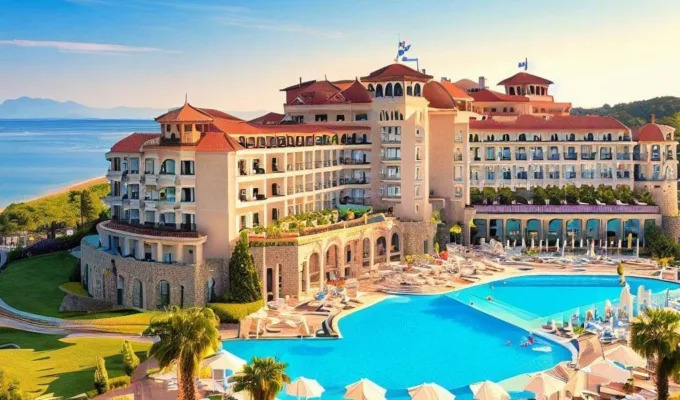
Originally hailed as a vote of confidence in Greece’s recovering economy, the project saw Goldman Sachs acquire three seaside resorts in Halkidiki in 2022 with plans to transform them into a flagship luxury destination. But three years later, the firm has offloaded the properties after losing tens of millions of euros, and a good deal of patience.
According to sources familiar with the matter, Goldman encountered a maze of opaque permitting processes, irregular fees, shifting regulations, and repeated demands for “unofficial facilitation” by local authorities. One executive involved in the deal described it as “a textbook case of why foreign investment avoids Greece.”
“We expected Mediterranean red tape. What we got was full-blown paralysis, with hints of extortion,” said a senior executive familiar with the internal reviews of the project.

Permits and Kickbacks
Goldman’s construction plans were repeatedly delayed by discrepancies between regional and municipal regulations, overlapping jurisdictions, and unexplained hold-ups at various public offices. Renovation blueprints were returned with contradictory requirements. Some delays, insiders allege, were resolved only after third-party intermediaries hinted at unofficial payments.
“At one point, we had five different agencies requiring five different versions of an environmental impact study—and not a single one would coordinate with the others,” the executive added.
While Goldman never publicly accused Greek officials of wrongdoing, the Wall Street Journal reported that cost overruns and bureaucratic logjams played a decisive role in the project’s demise. Internal documents reportedly referenced “non-transparent demands and obstructive behavior” as a key risk to execution.

A Broader Problem
This is far from an isolated case. Despite Greece’s efforts to market itself as an investor-friendly destination, especially after its debt crisis in the 2010s, many international firms still cite systemic corruption and slow-moving bureaucracy as major deterrents.
A 2024 report by Transparency International ranked Greece 59th globally in terms of public sector corruption, with construction, real estate, and licensing sectors identified as the most vulnerable. Foreign direct investment in Greek tourism declined by nearly 11% in 2024, marking a reversal of years of steady growth.
“The Goldman Sachs failure is emblematic of deeper issues: a state apparatus still riddled with inefficiency, patronage networks, and an inability—or unwillingness—to modernize,” said Dr. Maria Kefalogianni, an Athens-based political economist.
Aftermath and Fallout
Goldman Sachs sold the resorts in early 2025 to the Sani/Ikos Group, a Greek hotel operator with local ties and, according to observers, “better tools to navigate the system.” The new owners plan a €400 million redevelopment without the fanfare or global ambitions Goldman once envisioned.
Meanwhile, Goldman is expected to scale back its direct real estate initiatives in Southern Europe. The firm will retain a minority stake in Greek real estate company Prodea but has reportedly shelved plans for any future ground-up hospitality developments in the region.
“For global investors watching Greece, this case sends a very clear message,” said Dr. Kefalogianni. “Unless structural reforms are taken seriously, the country risks pushing away the very capital it claims to attract.”
June 30, 2025, n.stamatakis@aol.com www.helleniscope.com
DISCLAIMER: The views and statements expressed in this article constitute constitutionally protected opinions of this author.














Early this year the president of ΣΕΒGreek manufacturers Association stated that the Corrupt Bureaucracy and Corrupt Justice in Greece subvert foreign investment in Greece and apparently the Corrupt Government is unable to govern efficiently and justly! This must change by removing the corrupt officials as soon as possible!