


By Helleniscope’s Editorial Staff
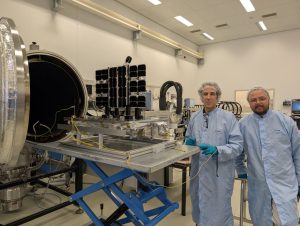
A small Greek-built satellite soared into space aboard a SpaceX Falcon 9 rocket, marking a quiet but historic milestone for the Hellenic Republic. DUTHsat‑2, a 6U nanosatellite developed by Democritus University of Thrace (DUTH), is the first satellite fully designed, constructed, and launched under the Greek flag.
This modest-looking CubeSat embodies the ambition of a country entering the strategic space domain with its own tools, talent, and technology.
A Satellite Born in Thrace, Built for the World
DUTHsat‑2 is the flagship product of Greece’s National Microsatellite Program, part of a €60M space development initiative funded by the EU Recovery and Resilience Facility. The program aims to launch at least ten Greek-built satellites by 2027.
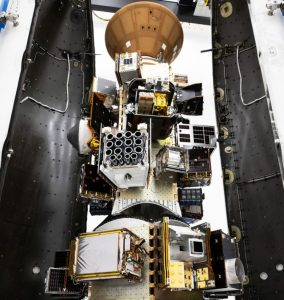
Working alongside leading research centers and technology firms, engineers at DUTH created a multifunctional satellite equipped with:
Multispectral imagers for environmental monitoring
An ETM telemetry “black box” for improved mission resilience
Experimental communications hardware for future in-orbit applications
From design to final integration, every component was developed in Greece, a feat that previously relied heavily on foreign technology and oversight.
Science in Orbit, Service on Earth
While the satellite’s primary mission is scientific, its capabilities extend deep into practical, real-world benefits:
Environmental Protection
DUTHsat‑2 delivers crucial data on soil moisture, water pollution, vegetation stress, and illegal maritime discharge. With Greece’s coastlines under pressure from tourism and shipping, such imaging provides the tools needed to safeguard fragile ecosystems and comply with international marine regulations.
Civil Protection & Disaster Response
From orbit, the satellite helps authorities detect wildfires, assess flood risk, and coordinate emergency response in rural and island areas. Greece’s experience with summer wildfires and winter floods underscores the value of rapid, localized satellite intelligence.
Scientific Research
The satellite’s telemetry package and remote-sensing payload provide datasets for universities, labs, and public agencies. Researchers will now access Greek-generated space data—opening up fields from climate science to machine learning and remote sensing.
Strategic Autonomy
Perhaps most significantly, DUTHsat‑2 demonstrates that Greece can build sovereign space assets, providing the foundation for future secure communications, maritime domain awareness, and even defense-adjacent applications—without dependence on foreign providers.
Voices from the Ground
Minister of Digital Governance Dimitris Papastergiou called the launch “a cornerstone of a new era for Greece in space,” emphasizing its role in “civil protection, research, and the development of domestic space technology.”
The Athena Research Center, which contributed to the mission, described DUTHsat‑2 as “a working laboratory in orbit,” signaling the start of space-based infrastructure for national resilience.
Not the End—The Beginning
Greece plans to launch several more satellites by 2027, including thermal imagers, maritime radars, and advanced CubeSats designed for both civilian and dual-use missions.
While DUTHsat‑2 is small, its message is big: Greece is no longer watching space from the sidelines. It is building it, launching it, and using it to shape its future.