

EDITOR’S NOTE (Nick Stamatakis). This report vividly illustrates the complex web of influence and corruption surrounding Archimandrite Melchizedek, highlighting the interconnectedness of the Ecumenical Patriarchate of Constantinople, the powerful Mitsotakis family, and the Cretan mafia. The account details how these forces, working behind the scenes, intervened to prevent the election of Amfilochios as Metropolitan of Chania, despite his strong candidacy. Through strategic maneuvering and influence, these groups ensured that Melchizedek’s path to the position was facilitated, reflecting the deep political and ecclesiastical entanglements that shape the leadership of the Church of Crete.
=================
Archimandrite Melchisedek: “Relic Trade,” Lobbying, and Indulgences
From a candidate for Metropolitan of Chania, in an election process with significant behind-the-scenes maneuvering, Archimandrite Melchizedek found himself entangled in the case of the Cretan mafia.
Shortly after 10 a.m. on May 2, 2025, the session of the Holy Provincial Synod of the Semi-Autonomous Church of Crete began in Heraklion, focusing on the election of a new bishop for Kydonias and Apokoronas. This is the Diocese of Chania, the second most powerful diocese in Crete.
On April 8, the bishop of Kythera and Apokoronas, Damaskinos Papagiannakis, passed away, but the clergy did not even wait forty days to replace him. On that drizzly morning, they hastily gathered at Saint Minas, determined to disregard the wishes of the Ecumenical Patriarch, His Holiness Bartholomew, to whom they are subject.
Suddenly, about thirty supporters of Archimandrite Melchizedek appeared in the courtyard. Some wore black t-shirts with printed slogans, while others held placards with phrases like: “The People Speak, Melchizedek Calls” and “The Voice of the People, The Will of God: Melchizedek.”
Melchizedek is the priest of Sternes, Chania, and an Archimandrite of the Ecumenical Throne. The bishops had no intention of electing Melchizedek (who, in fact, was not included in the official list for episcopal election, despite having submitted his application in October 2024), nor any of the other official candidates. They had a different plan, but it did not go as expected.
Bishop Eugenios II of Crete and the participants in the Cretan conclave realized that morning—after some angry phone calls from the Patriarchate—that they could not go ahead with their plan to transfer the chosen bishop, Amfilochios, the Metropolitan of Kissamos and Selino, to Chania.
Amfilochios, a native of Chania, with his slightly ironic smile and sharp gaze, is disliked by those who should like him. In 2021, he lost the Archdiocese of Crete to Eugenios. The animosity between them is evident. However, in order to restore balance, Eugenios decided to grant him Chania.
However, Amfilochios found himself facing a double veto, both from the City and from Maximos Mansion.
Athens and the Patriarchate conveyed to Heraklion that the interpretation of the Statute of the Church of Crete does not allow transfers. As a result, the vote was canceled, and the Diocese of Chania remained vacant until today.
Exactly four months after the fiasco of May 2, the nation learned that Melchizedek is allegedly involved in the “Mafia of Crete.” Not only Melchizedek, but also another ambitious priest from Chania, Bishop Damaskinos of Dorylaeum, who had served as abbot of the famous Patriarchal and Stavropegial Monastery of Agia Triada in Chania, before being dismissed by the Ecumenical Patriarch in 2023. Melchizedek denies any involvement with a written statement worthy of the rhetorical skill attributed to him by both his enemies and supporters.
The Biblical Hero
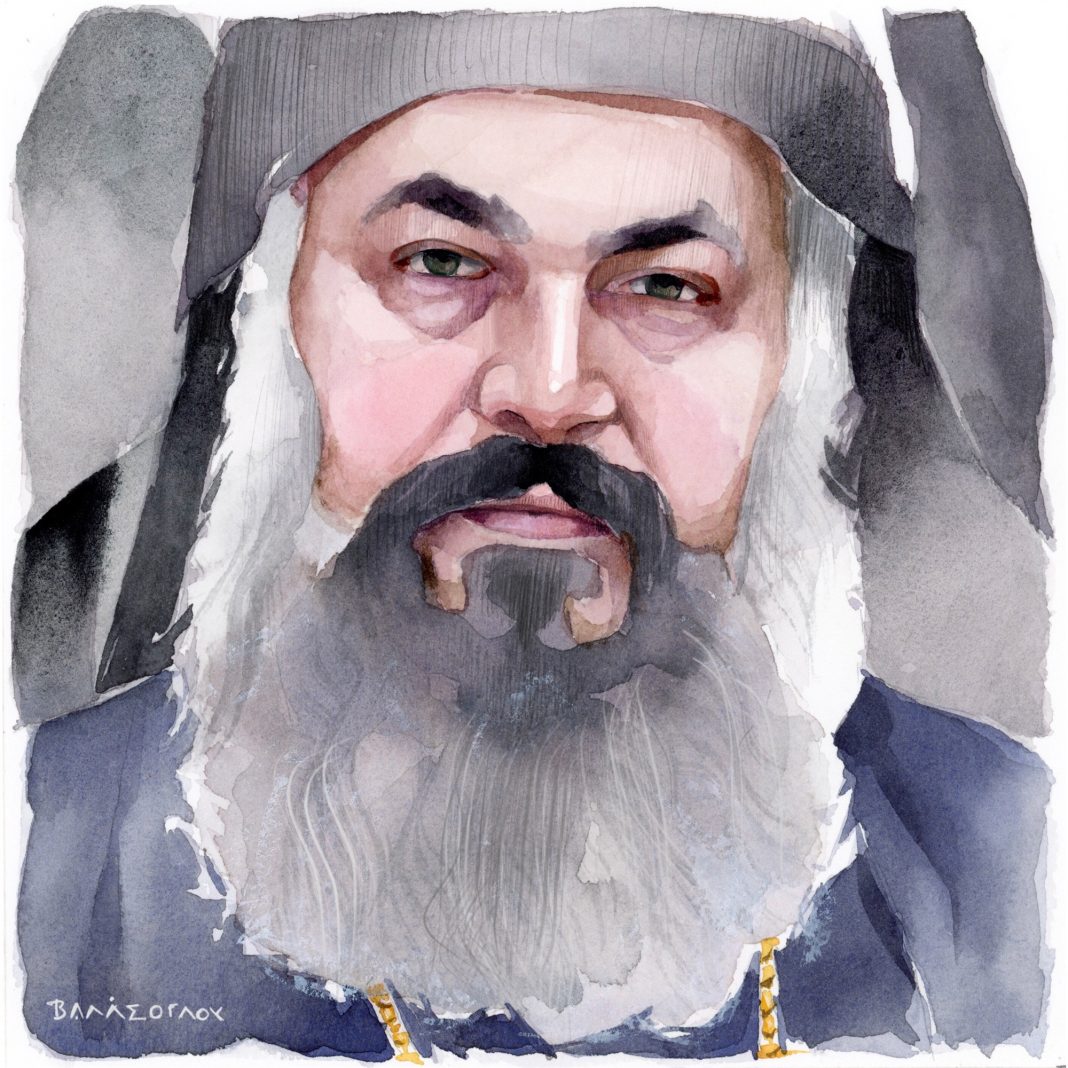
Panagiotis Melchizedek Ambelikakis was born on October 20, 1980. He was extremely ambitious from a young age. After all, the Biblical Melchizedek was a priest and ruler, the first king of Salem, later Jerusalem. It might not be a coincidence that Panagiotis chose this unusual name for his career in the Church.
Panagiotis, who became Melchizedek, studied at the Patriarchal Ecclesiastical School of Crete in Chania (Saint Matthew), the Athens Theological School, and Rizarion, as well as in Paphos, Cyprus, where he was likely initiated into ecclesiastical activism, i.e., mobilizing supporters with placards, as is common among Cypriots. Recently, on July 18, 2025, he received his master’s degree from the Department of Theology at the University of Athens. His thesis focused on the history of the Church of Crete from the 11th century to the Frankish period (1000-1204). His supervisor was the current president of the Department, Professor of Ecclesiastical History Ioannis Panayiotopoulos, who wrote warm words about his student on Facebook.
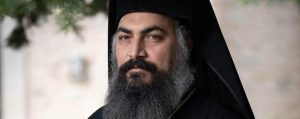
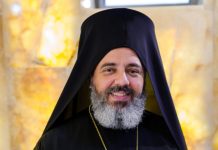
Melchizedek was ordained a deacon in 2011, a priest in 2013, and an Archimandrite of the Ecumenical Throne in 2019. Those who know him describe a charming 45-year-old with penetrating eyes, a Cretan accent, and considerable persuasion. He is somewhat reminiscent of the late Archbishop Christodoulos in appearance, ambitions, and ease with which he navigates among the prominent people of his city, although he lacks the national reach, vision, and education of the unforgettable hierarch. He knows everyone in Chania, has a sense of humor, and makes good company. He is considered a “master” of lobbying and raising donations for his parish. He enjoys creating and catechizing. He became known for reviving catechism classes, his online newspaper “O Faro,” and performances about the Birth of Jesus at the Cave of Saint Anthony.
Those who know him say he is a charming 45-year-old with penetrating eyes, a Cretan accent, and considerable persuasion. He knows everyone in Chania, has a sense of humor, and makes good company.
Politically Tolerant
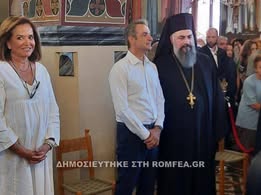
He easily convinces the God-fearing that donations and sponsorships to the Church can secure forgiveness of sins and a ticket to Paradise. At the same time, he maneuvers skillfully in the hell of political and business life in the land of the Cretans. Some now try to tie him to the Mitsotakis family, but the truth is that Melchizedek has excellent relationships with almost all the politicians in Chania. He is right-wing but politically tolerant in the influence game. Those who know him say that, for example, during elections, he does not try to persuade families from the PASOK party, with whom he maintains a spiritual connection, to vote for the New Democracy party. On the contrary, he may visit a household of PASOK supporters who are part of his flock to deliver a good word for a PASOK candidate. This tactic makes him a valuable interlocutor for all political party leaders.
All is well, until it emerged that, according to some phone conversations, he offered a piece of the Holy Lazarus’ bone or part of the Holy Cross to a hotelier “mafia boss” (one of the two accused brothers). As is well known, the “relic trade” flourished in the Middle Ages, a historical period that Melchizedek has studied in his postgraduate work. For many of our fellow citizens, the Middle Ages have not ended, so relics still count.
The supposed trade of the sacred relic in exchange for the businessman’s support for Melchizedek’s election as Metropolitan of Chania was denied by Melchizedek, who emphasized, however, that the said hotelier was a member of his flock: “My contact with this individual is limited to the framework of the ecclesiastical life of our Church.” Melchizedek also reassured us of his complete respect for the holy relics and for the Ecumenical Patriarch, claiming that “dark circles” have targeted him because he holds the title of Archimandrite of the Ecumenical Throne and want to “cause problems with the unity of the Church.”
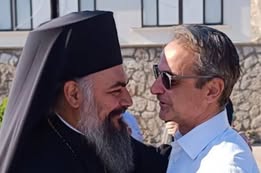
The file also revealed two conversations between the businessman, allegedly a leader of the Cretan mafia, and Panos Kammenos, where the former Defense Minister allegedly says to his interlocutor: “I am here with Kimberly.” He was referring to the much-anticipated U.S. ambassador to Athens, Kimberly Guilfoyle, former daughter-in-law of President Trump. The favor requested by Kammenos was to convey to Trump’s team that Melchizedek should be elected Metropolitan of Chania. Clever Greeks suspected that the U.S. was interested in the diocese in an area that includes the Souda military base.
After the revelations, former ANEL leader Kammenos denied any mediation on behalf of Melchizedek. Indeed, even if he said “I’m here with Kimberly,” it’s possible he was joking with his interlocutor. Even if he was “here with Kimberly,” it’s not certain that he started praising Melchizedek.
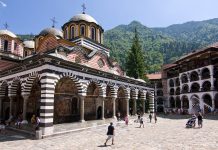
It is unclear whether the alleged involvement of Archimandrite Melchizedek or Bishop Damaskinos of Dorylaeum, the former abbot of the Holy Monastery of Agia Triada, in the Cretan mafia stems from blackmail they suffered. The two hierarchs are not friends. There is likely considerable animosity between them, as they are described as highly competitive characters. It’s unclear whether they attempted to secure benefits from the mafia. What’s more certain is that mafia members had already shown interest before 2017 in seizing a 175-acre plot of land belonging to the Holy Monastery of Agia Triada.
Despite the fact that ecclesiastical authorities confirmed the violation, Abbot Damaskinos, whether blackmailed or in cooperation with his talkative interlocutors, or both, certified that the land did not belong to the monastery. So, in 2021, the land was sold to a real estate company for 1.5 million euros.
2021 was a year of success and glory for Abbot Damaskinos. In collaboration with the well-known criminal lawyer and Patriarchal Justice Defender Sakis Kehayioglou, and with the blessing of Metropolitan Emmanouil of Chalcedon, he established the “Patriarch Bartholomew” Foundation based at the Monastery of Agia Triada. The foundation’s mission was to display personal items of the Ecumenical Patriarch. At a related event in 2021, marking the 30th anniversary of the Patriarch’s election to the Ecumenical Throne, Culture Minister Lina Mendoni attended and spoke, representing the Prime Minister.
After the hubris, comes nemesis. This was followed by the dismissal of Damaskinos in 2023, and in 2025, the monastery filed a lawsuit against the accused, which is obviously linked to the recent avalanche of revelations. Why did the mafia want Melchizedek to succeed the deceased Metropolitan Damaskinos so badly, even going as far as to contact Kimberly? The assumption is that Melchizedek would have satisfied the mafia’s wishes by certifying that the contested plot never belonged to the Holy Monastery.










Κυδωνίας και Αποκορώνου, όχι Κυθήρων και Αποκορώνου
I corrected it — lost in the auto translation