


source – pnemorem1.blogspot.com (PLEASE FOLLOW THE LINK FOR THE ORIGINAL GREEK TEXT)
By Alexandros Remoundos
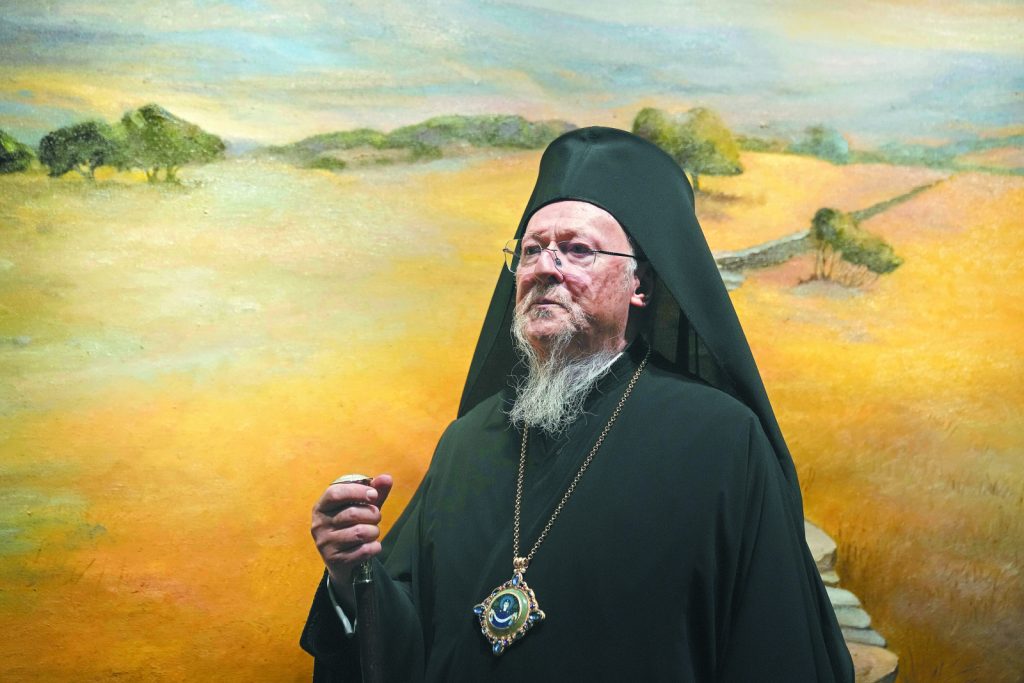
Clouds are thickening over Bartholomew’s Patriarchal tenure, which appears to be approaching its natural conclusion despite the Greek state’s efforts to prolong it through “artificial” support. This conclusion is drawn from diaspora publications and others that have been increasing in number recently.
These publications—sometimes indirectly, but often explicitly—stress that if the Ecumenical Patriarchate is to survive beyond the current patriarch, it requires a “change of course.” To that end, they emphasize the need for a well-intentioned yet unbiased evaluation of the past 35 years of the patriarchate, in order to identify both its positive aspects and its negative consequences for the life of the Orthodox Church. Only by drawing objective conclusions, the press notes, will it be possible to chart a new course that allows the Patriarchate to rise to the occasion and respond to the diverse religious and international challenges of the new era.
Overview of Criticism
Among the various assessments expressed in the media regarding the current leadership of the Ecumenical Patriarchate, some are already familiar, while others—more severe—are being voiced for the first time, raising new questions.
Until now, criticism has mainly focused on journalistic descriptions of the “satrap-like” style that allegedly characterizes the decisions and actions of the leadership in the Phanar.
Topics covered by print and online journalism include:
- The diminished role of the patriarchal synod
- The election and frequent dismissal of bishops
- Conflicts with other Orthodox patriarchates and autocephalous Churches
- The frequency of patriarchal travels
- Ongoing issues in the Archdiocese of America
- Relations with Turkish authorities
- The failure of the recent visit to the White House
Key Areas of Criticism
a) Downgrading of the Synod
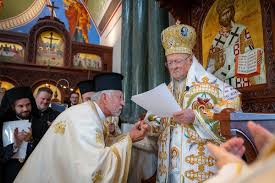
The press repeatedly highlights the sharp decline in the role of the synod over the past 30 years. Collective deliberation and internal dialogue have largely disappeared. While decisions formally bear the synod’s seal, they are effectively dictated by the patriarch and adopted without discussion. The synod now functions mainly as a formality.
This is linked to how the synod is composed: members are selected directly by the patriarch rather than through an established system, making the process highly personalized. Bishops who disagree are often dismissed immediately.
b) Authoritarianism in Appointments and Dismissals
The patriarch is frequently criticized for imposing personal preferences in episcopal appointments and for dismissing or forcing the resignation of numerous hierarchs without proper procedures.
The press also recalls the major conflict with former Archbishop Iakovos of America, which escalated into a public dispute on Greek television and generated negative commentary.
c) Conflicts with Other Orthodox Churches
The media points to confrontational handling of pan-Orthodox issues, including tensions with the Church of Greece and the Church of Russia.
The handling of Ukrainian autocephaly is described as rushed and lacking foresight, contributing to a major schism and unprecedented division within global Orthodoxy. The Orthodox Church is described as fragmented, with unity appearing increasingly illusory.
Some Churches—Slavic, Arabic, and even Greek-speaking (e.g., Jerusalem)—are said to be distancing themselves from the Ecumenical Patriarchate and aligning more with Moscow, leading to its visible isolation.
d) Excessive Public Relations Activity
Frequent travel by the patriarch is said to diminish the prestige of the office. Constant appearances make his presence routine rather than significant, reducing the institution’s symbolic weight. Public attendance at events has reportedly declined.
e) Ongoing Turmoil in the Archdiocese of America
The press largely agrees that persistent problems in the Archdiocese of America stem from the patriarch’s ongoing direct interventions.
Criticisms include:
- The fragmentation of the archdiocese into smaller dioceses
- Frequent leadership changes
- The creation of a parallel authority structure (“second archbishop”)
- Allegations of financial motives and strategic control
Membership has reportedly dropped significantly over the past 30 years.
f) Relations with Turkey and International Issues
Criticism includes:
- The patriarch’s blessing of Turkish military operations in Syria (2018)
- Silence on the conversion of Hagia Sophia and the Chora Monastery into mosques
- Lack of progress on reopening the Halki Theological School
- Silence on international conflicts such as U.S.–Iran tensions
g) Failed White House Visit
The visit is described as a major failure due to poor organization. Responsibility was allegedly given to an inappropriate figure with strained relations in Washington. Diplomatic missteps during the meeting with President Trump are also mentioned.
h) Financial Management Concerns
A newer and more sensitive issue is the lack of transparency in financial management. Reports point to empty coffers and the absence of financial accountability despite decades of significant funding. The issue is described as becoming “explosive.”
Media Environment and Political Context
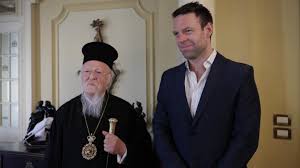
For decades, Greek media largely avoided criticizing the patriarch for national reasons. The state news agency reportedly filters out critical content. Only marginal outlets and diaspora media previously voiced criticism.
Today, independent journalism—especially in the Greek-American community—is increasingly publishing investigative reports, particularly on financial matters.
At the same time, potential successors are becoming more active, forming factions within the Church. Several metropolitan bishops are mentioned as possible candidates, along with Archbishop Elpidophoros of America.
Conclusion
Observers note that pressures are mounting on the declining patriarchate of Mr. Bartholomew. He now faces:
- Serious new criticism on sensitive financial issues
- Subtle but clear challenges from ambitious successors
The question raised is whether his image as tireless and resilient will be enough to counter the effects of age and mounting criticism.
Some commentators cautiously suggest that only his unconventional methods may once again help dispel the dark clouds gathering over his patriarchate.












May he disappear into the clouds.
Archons, Leadership 100..Hello, where are you? Getting ready for your yearly 3 day Gala’s / Meetings / photo shoots?
What exactly was the “failure” of President Trump’s meeting with Patriarch Bartholomew last September? Both Patriarch Bartholomew and Archbishop Elpidophoros were seen smiling when they exited the Whitehouse. It appeared the meeting was successful.
Joseph – it’s as if you started reading Helleniscope yesterday… After all we only did about ten articles regarding this failed White House visit!!
Here is one to help your failing memory:
https://www.helleniscope.com/2025/09/18/nemesis-in-the-oval-office-j-d-vance-confronts-bartholomew/
No you are not allowed to plug your propaganda here…
Just a month ago, President Trump welcomed Archbishop Elpidophoros to the Whitehouse and recognized the influence of Greeks in the United States, saying “We celebrate our cherished friendship with the Greeks and we salute our Greek American patriots who are helping to make America great again.”
Being this was after Patriarch Bartholomew’s visit, it doesn’t sound like it was a “failure”.
A year ago, Archbishop Elpidophoros was appointed to the advisory board for Trump’s “Religious Liberty Commission”, and he still remains in this position.
Those are just facts, so who has “failed”?
Joseph – come to your senses… Please be reasonable and respect everyone’s intelligence… You really think Elpi has any clout in DC? He was put in the basement during Trump’s inauguration!!!
Joseph, I pray that you keep ‘entertaining’ and amusing us!
When Meliton opposed the appointment of Iakovos to America,
Athenagoras convened the twelve member synod
and established a new seven member one.
Interesting couple of articles from Orthodox Times:
1) Weird they would be clarifying the ACTUAL role of the EP at this point rather than pushing the “first without equals” BS they had been: https://orthodoxtimes.com/what-does-it-mean-that-the-ecumenical-patriarch-is-first-among-equals/
2) Another interesting article on the relation between the MP-EP. To be honest I had no clue they still even had relations:
https://orthodoxtimes.com/phanar-moscow-relations-on-a-tightrope/
Surely the invitation of Patriarch Bartholomew to address Greek parliament today is another “thickening cloud” over his tenure. The Greek Parliament is even awarding him a gold medal of honor:
The various parties in the Greek Parliament want to show support for the Patriarchate as it is being prosecuted by Turkey. Don’t forget the Greek Foreign ministry sends to the Phanar an alleged $10 million IN CASH annually via the diplomatic mail… For which there is NO accountability.
As for the award, what’s the meaning of an award from CORRUPT 300 thieves (mostly) of the Greek Parliament to the CORRUPT Bartholomew?
Pffff! What awards did Christ or the apostles or the saints receive? A humble man does not concern himself and search for empty earthly awards, but for the ultimate award: heaven. Saints would run away from such awards, but not Barto, of course!
Clergy awards are nonetheless commonplace in the Orthodox Church though. A mitered archimandrite once told me that it would be better if all the awards were given at once to the newly ordained, and then gradually taken away from them as they matured.