


ΕΑΝ ΠΡΟΤΙΜΑΤΕ ΕΛΛΗΝΙΚΑ ΠΑΤΗΣΤΕ ΤΗ ΣΗΜΑΙΑ ΣΤΟ ΚΑΤΩ ΜΕΡΟΣ ΤΗΣ ΟΘΟΝΗΣ
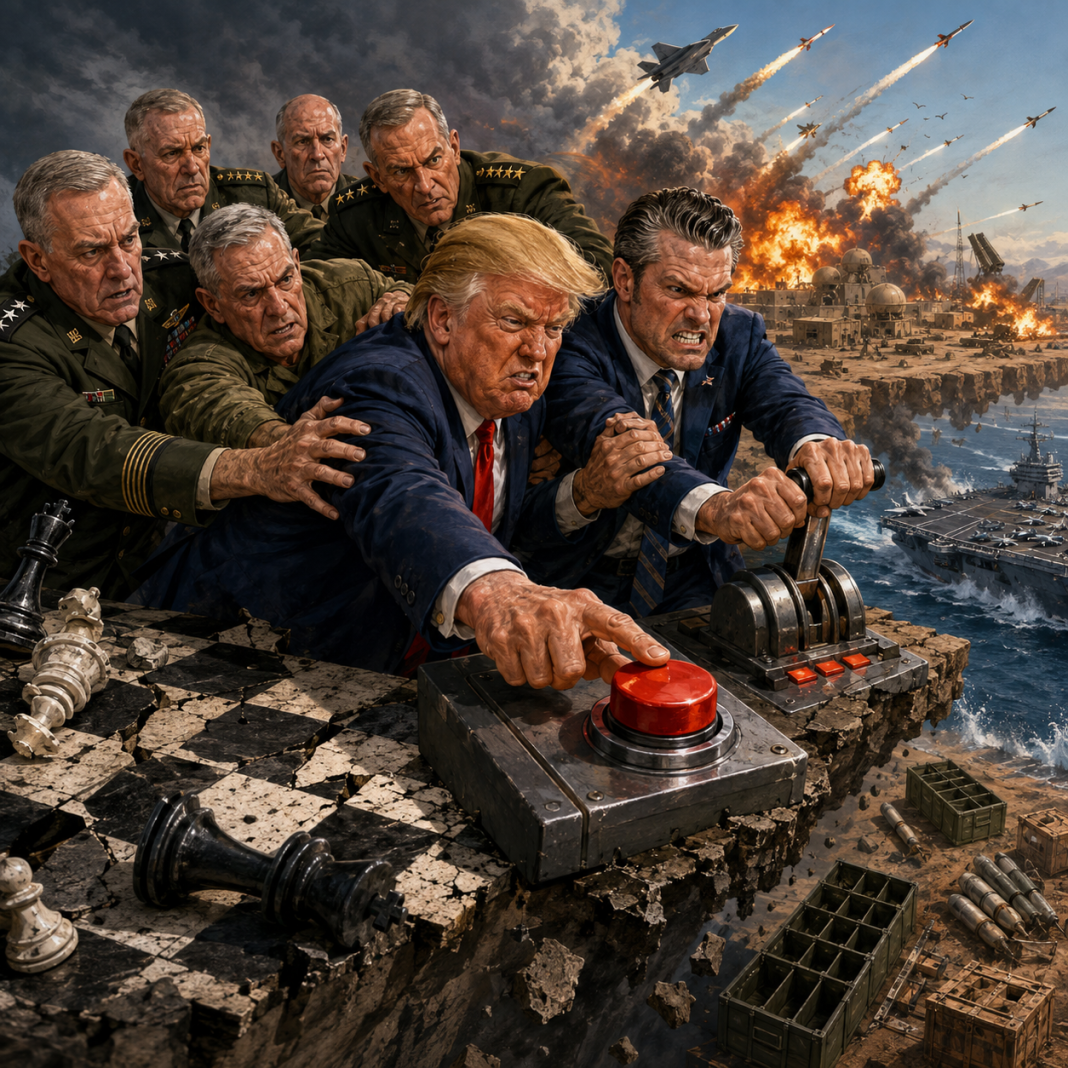
Senior U.S. commanders warn that an open-ended Iran war is draining America’s military readiness as Tehran retaliates with missile strikes on U.S. bases in Jordan.
By Helleniscope’s Editorial Team
The latest “limited” U.S. military action against Iran may prove how easily a supposedly contained conflict can reignite. American forces struck Iranian rocket launchers and mine-related positions near the Strait of Hormuz, saying the operation was defensive and narrowly targeted. Tehran answered quickly with ballistic missiles aimed at U.S. military sites in Jordan, forcing American and allied defenses back into action.
That exchange should be read alongside a disturbing Washington Post report published Sunday: senior U.S. military leaders have warned Defense Secretary Pete Hegseth that extending major American deployments for the Iran war is creating unacceptable risks elsewhere.
According to the Post, commanders responsible for Europe, the Indo-Pacific and Latin America, along with the Chief of Naval Operations, formally registered “non-concurs” with plans to continue or extend forces committed to the Middle East. In Pentagon language, that does not mean mutiny. It means senior officers are putting their objections—and the risks they see—on the record.
Translated from bureaucratic language, their message is increasingly difficult to ignore: America cannot fight an open-ended war in the Middle East without weakening its readiness for crises involving Russia, China or other threats.
The United States still has overwhelming military power. The issue is not whether it can strike Iran again. It can. The issue is how long it can sustain this tempo while preserving the ships, air-defense missiles, aircraft, crews and maintenance capacity needed across the world.
Other reporting supports that concern. Reuters has described severe depletion in several categories of long-range precision weapons and air-defense interceptors. Carrier deployments have been stretched. Assets normally assigned to Europe and the Indo-Pacific have been pulled toward the Middle East. Tens of thousands of U.S. troops remain tied to the theater, while Washington is simultaneously trying to rebuild stocks of Patriot, THAAD and other high-end weapons.
Iran understands this arithmetic.
Tehran does not have to defeat the United States militarily. It only has to keep enough missiles, drones, mines and launchers alive to force Washington to maintain an expensive wartime posture. Every Iranian missile volley may compel the U.S. to fire interceptors that are far more expensive and far slower to replace. Every new crisis around the Strait of Hormuz keeps American ships and aircraft locked into the region.
That is the strategic trap.
President Trump and Secretary Hegseth can point to battlefield successes—and there have been some. But battlefield superiority is not the same as strategic victory. Six months into the conflict, the central question is no longer whether America can punish Iran. It is whether Washington has a realistic political endgame.
The generals’ warnings suggest that the military price of avoiding that question is rising.
No responsible commander wants to tell a president that the United States is too weak to fight. These warnings don’t mean that. They mean something more serious: continuing the Iran war indefinitely may force America to accept greater danger in other theaters where the stakes could be even higher.
Trump has often argued against “endless wars.” He should listen now to the officers whose job is to calculate the real cost of extending one.
The time has come to turn tactical superiority into diplomacy and an exit strategy—before another “limited” strike becomes the opening round of a much larger war.
August 31, 2026, www.helleniscope.com, n.stamatakis@aol.com
DISCLAIMER: The views and statements expressed in this article constitute constitutionally protected opinions of this author.














My hope is that the US will now leave the Middle East. It may have taken the attrition of materiel to make this obvious.
We’re no longer in Afghanistan, are we?
As Afghanistan was Biden’s mega “mistake”so will be the withdrawal from “Trump’s Iran / Middle East War”. Let’s add Bibi in the mix too.
Let’s see what spin Trump will place on this action.
I am afraid that iseral is going to get Greece in a war. Worst thing the Greeks did to befriend the Jews. Jews hate Greeks or jealous of our culture.