

ΕΑΝ ΠΡΟΤΙΜΑΤΕ ΕΛΛΗΝΙΚΑ ΠΑΤΗΣΤΕ ΤΗ ΣΗΜΑΙΑ ΣΤΟ ΚΑΤΩ ΜΕΡΟΣ ΤΗΣ ΟΘΟΝΗΣ
By Helleniscope’s Editorial Team
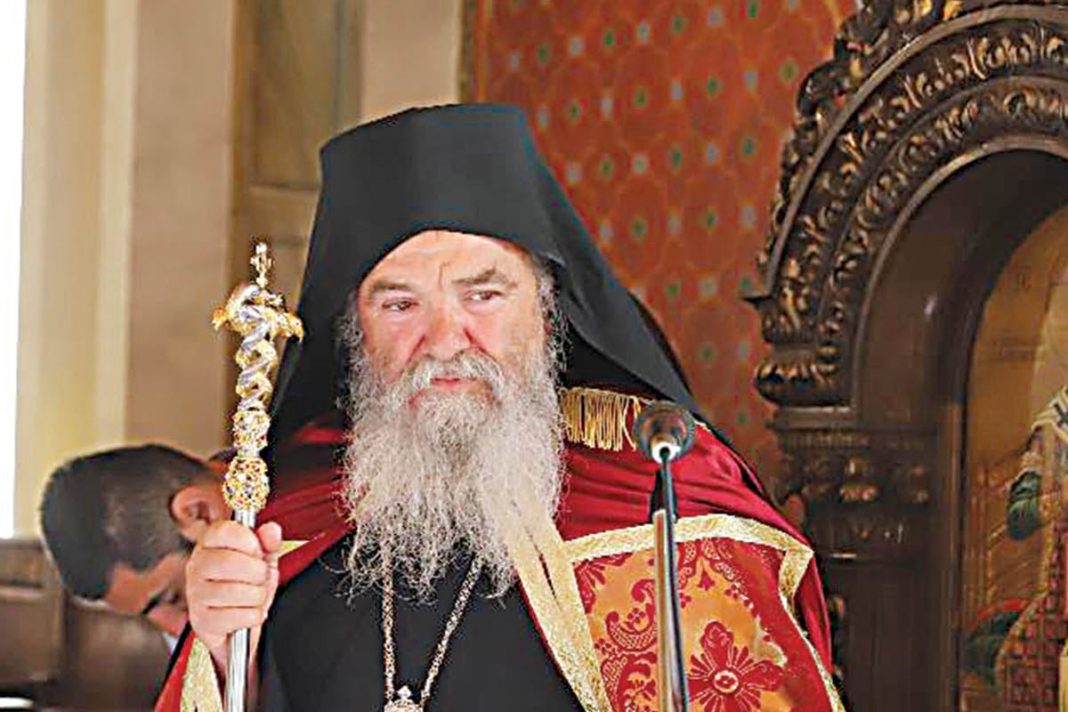
In a disturbing turn of events, the Abbot of the historic Mega Spilaio Monastery in Kalavryta, Kallinikos, was arrested for illegally selling Byzantine religious artifacts. The discovery came after a covert operation by the Greek police, leading to the arrest of Kallinikos, his assistant Seraphim, and four accomplices, including an intermediary, a pawnshop owner, his wife, and a private citizen involved in the sale of ancient coins.
The Discovery of the Illicit Dealings
According to police reports, Kallinikos and his associates were caught in the act of selling 17 Byzantine icons and two priceless 18th-century Gospels, valued at 200,000 euros. The police had gathered intelligence about the illegal activities of the abbot and set up a sting operation, wherein an undercover female officer posed as a buyer interested in purchasing the religious artifacts. The transaction took place in Corinth, with the suspects caught red-handed with marked banknotes.
Following the arrests, the police confiscated the religious items, which were sent to the Ministry of Culture for further evaluation. The ongoing investigation also uncovered troubling details: some of the artifacts were allegedly stolen from other monasteries, including one from Sparta. This has raised serious concerns about the possible trafficking of religious items across the region, and the police are now investigating whether other monasteries in the Peloponnese have been affected.
Reaction from the Church
The arrest of the abbot has sent shockwaves through the Greek Orthodox Church. Following the incident, the Diocese of Kalavryta and Aigialeia acted swiftly, removing both Kallinikos and Seraphim from their positions. Metropolitan Ieronymos of Kalavryta will now serve as the interim head of the monastery, while other members of the monastery’s governing council were replaced. The Church has also called for spiritual support from the faithful during this challenging time.
Historical Significance of Mega Spilaio Monastery
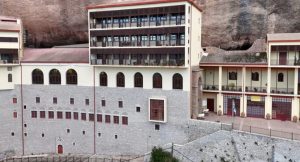
Founded in 362 AD, Mega Spilaio is one of the oldest continuously operating monasteries in Greece and holds significant historical and religious value. Located on the slopes of Mount Chelmos, it has been a site of pilgrimage for centuries and played a key role in the Greek War of Independence. The monastery has faced many challenges over the years, including attacks by the Ottomans and the Nazis, but it has always remained a symbol of resistance and faith.
The scandal surrounding Kallinikos has raised questions about the vulnerability of religious institutions to corruption and theft. As one of the most revered monasteries in Greece, the events have prompted calls for better safeguards and greater transparency in the handling of religious artifacts.
Ongoing Investigation
As the investigation continues, authorities are working to determine how the stolen items ended up in the possession of Kallinikos and Seraphim. Additionally, questions remain about the fate of the 200,000 euros from the deal, which might have been used for further illicit activities. The authorities are also expanding their inquiry to include other possible individuals involved in the trafficking of these priceless relics.
This scandal marks a significant breach of trust within the Church, especially given the historical and religious importance of the items in question. The fallout from this case will likely have far-reaching consequences for both the monastery and the broader Orthodox community.
Conclusion
The arrest of Abbot Kallinikos and his associates has brought to light a dark chapter in the history of Mega Spilaio Monastery. As the investigation unfolds, the Church and law enforcement authorities will need to address the broader issue of religious artifact trafficking and work towards restoring the integrity of one of Greece’s most iconic religious institutions.
September 9, 2025, n.stamatakis@aol.com www.helleniscope.com
DISCLAIMER: The views and statements expressed in this article constitute constitutionally protected opinions of this author.













“What has been will be again, what has been done will be done again; there is nothing new under the sun” (Ecclesiastes 1:9). While things may seem new, fallen human nature is not new. So history repeats itself.
My heart aches – not just for the sins of the abbot and the monks involved, but also for those people who will lose what little faith they have left with church scandal after church scandal. At times like these, we need to remember how we are all fallen human beings under constant moral attack by the Devil, who targets the Church and the people of God the most. We may lose faith in some of these people when they succumb to temptation, but we must never lose faith in God. No matter how unworthy a man of the cloth may be, the Grace of God always works through that unworthy person for the benefit of the faithful.
Remember how Judas Iscariot was one of the twelve. He held the money box from which they used to buy food and other necessities and would regularly steal from it; and in the end he betrayed the Lord for money, becoming the son of perdition. But also remember that the Lord had sent him out together with the other eleven to heal the sick and cast out demons, and Judas did – not by his own grace and power but the Lord’s. Even though he was so unworthy, the grace of God still used him to benefit the faithful.
I hope and pray that this shocking event at Kalavrytas Monastery will bring repentance to the evil doers with hot tears of sorrow, and relief from the evil that must have oppressed the rest of the brotherhood. They, too, must have suffered greatly. May the Lord our God have mercy on us all.
The way things work in Greece, it is very likely that the metropolitan of Kalavryta was aware that this was going on, so by him taking over the monastery in the interim, there is some risk of “evidence tampering” in case there is “inventory” that the police weren’t aware at an off-site location…he should be watched closely, too…
Several of these “abbots” are placed in historic-old monasteries that either don’t have any more monks / nuns, and they “clean them out” over time, and not just for old icons, but for the sale of land (like you saw in the related Crete articles)…it’s been happening for decades all over Greece, mostly since WW2…
The interesting thing to ask is “why” all of a sudden are we seeing all these “high-profile” situations now? Crete (pilfering of monastery land), Mega Spilaio (base of operations for a wider theft racket) , Mt Sinai (whose abbot Damianos apparently was flown in and out of a Sinai airstrip (bypassing Cairo) on a Greek government (diplomatic) jet because “unnamed reliable sources from within the ecclesiastical circles of Greece” have heard the Egyptian authorities recently issued a warrant for his arrest, after the forceful attempts to evict 11 monks – who have reportedly returned to the monastery now, thank God)….
Are we witnessing some kind of long-overdue “cleansing” of the Church start to unfold? That might be a good & healthy thing, actually…there is no doubt that the Greek police (and international intelligence agencies) have a “file” on every corrupt clergyman in Greece…it’s too small of a country not to know “who” has done “what”…however, most of the time, due to government corruption, governments either “leverage” the information to obtain an outcome from the wider Church organization, or corrupt government officials actively participate in “the party”, like we are hearing about the land scandals in Crete… So then, the question returns…”why now”? Time to order more popcorn…the show is getting interesting…
Perhaps there are some good ground forces at play which have realized there is a corrupt government-church connection, and to clean out the one, one must also clean out the other. This does not mean that all Greek government officials are corrupt (which I find hard to believe) or that all church officials are corrupt, which we know is not the case. So, perhaps the timing is right to prevent the cancer from infecting the whole church. God is always in control, so if the unveiling of the corruption is happening now, there is a higher reason for it.
Abbot Kallinikos happens to be the priest who baptized me at the Sacred Monastery of Mega Spilaion. I met him several times in recent years while visiting that unique place where, according to Tradition, Saint Luke the Evangelist spent many years preaching the Holy Gospel to the Greeks of Achaea. The monastery is mostly known for the miraculous relief icon of Panagia and Christ is attributed to St. Luke. During the Greek Revolution, the monastery was used by the rebels and became the scene of a major battle between the monks and Egyptian mercenary Ibrahim Pasha. The Turks burned it down back then. In 1943, the Nazis executed the monks and burned the monastery again.
Today, it’s a sacred ground for Greeks and for all Orthodox Christians. The relics and historic records kept there are irreplaceable. Pilgrims are awe-struck by the intense history and the majesty of nature at this location, situated in a cave high above a beautiful ravine, the Vouraikos Gorge.
To me, Father Kallinikos comes across as a simple, humble village priest. He was, perhaps, an uneducated and unsophisticated clergyman. He did many good deeds which to me showed a good character.
Having said that, it should be noted that six years ago he was forced to resign as abbot of another historic monastery in the region, that of Taxiarhon Aigialeias. That resignation followed a financial audit called by the outgoing metropolitan, Amvrosios.
Here, we should pray for any sins and crimes that now-defrocked Fr. Kallinikos committed. He should be treated as innocent until proven guilty. The courts must do their job and we must let justice be done.
As Christians, we must also pray for a man who guided so many souls toward salvation but, if the charges are correct, one who has ultimately succumbed to temptations of sin.
I am horrified by the alleged crimes that apparently were thwarted, and I thank God the authorities caught the culprits. Nonetheless, knowing the accused Fr. Kallinikos personally, I am deeply shocked and hurt, and I pray that God intervene.
By the way the monastery was founded 362 AC not AD! Please don’t be servile to the Christ haters who wanted to change the historic denomination of ages which was BC (not BCE!!!!) ie Before Christ and AC (not AD) after Christ. KEEP THAT CONVENTION and dont be servile to your enemies!
AD is actually Latin for “Year of our Lord” (Anno Domini)…I think you are confusing it with the recent efforts to introduce CE (Common Era) and BCE (Before Common Era), which is quite ludicrous at its core, because they are still counting the years “Before Christ” and “After Christ” anyway…