


ΕΑΝ ΠΡΟΤΙΜΑΤΕ ΕΛΛΗΝΙΚΑ ΠΑΤΗΣΤΕ ΤΗ ΣΗΜΑΙΑ ΣΤΟ ΚΑΤΩ ΜΕΡΟΣ ΤΗΣ ΟΘΟΝΗΣ
Why Europe’s energy strategy risks repeating old mistakes — and how Greece could hold the key to a brighter future.
By Helleniscope’s Editorial Team
As Athens hosts the Partnership for Transatlantic Energy Cooperation (P-TEC) forum on November 6–7, 2025, diplomats hailed it as proof that Greece had become central to Europe’s new energy map. The forum’s main theme — importing American liquefied natural gas (LNG) through Greek terminals — was framed as a triumph of transatlantic cooperation and energy security.
But beneath the applause lies an uncomfortable truth: U.S. LNG costs four to five times more than Russian pipeline gas ever did. Can Europe really build industrial competitiveness on energy that expensive? And why should Greece, a country with untapped oil and gas of its own, settle for being just a transit hub?
Strategy First, Economics Later
The Athens meeting made one thing clear: energy policy in Europe is being driven not by economics, but by geopolitics. For Washington, Greece is the gateway for American LNG into Europe — a southern anchor in NATO’s energy network and a vital alternative to Russian supplies. For Brussels, it’s a convenient partner in the effort to diversify sources and routes.
For Athens, though, the picture is more complex. The country gains visibility, infrastructure funding, and strategic relevance — but at a price. By building terminals and pipelines for imported LNG, Greece risks trading energy dependence on Russia for dependence on the United States.

The Untapped Wealth Beneath the Waves
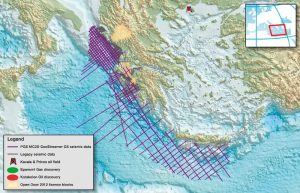
Few countries in Europe possess such promising yet undeveloped hydrocarbon reserves. In western Greece, oil literally seeps from the ground. South of Crete and the Peloponnese, ExxonMobil and Chevron have mapped vast potential gas fields. And yet, exploration remains slow, and production nonexistent.
Instead of developing these domestic assets, Greece is doubling down on infrastructure to import others’ energy. This defies economic logic: a nation sitting atop its own reserves should not have to buy high-priced LNG from across the Atlantic. Developing its sovereign Exclusive Economic Zone (EEZ) could provide cheaper energy, jobs, and revenue — and strengthen both Greek and European independence.
The Weight of the Past
It wasn’t always this way. In the 1970s, Greece developed the Prinos oil field, becoming briefly self-sufficient in parts of its energy mix. Since then, political hesitation, EU environmental constraints, and shifting energy interests have kept domestic exploration in the background. Today, Europe’s carbon-neutral ambitions often collide with the hard realities of cost, supply, and security.
The irony is striking: the same Europe that preaches resilience has made itself vulnerable to market volatility and external pricing. Why doesn’t Europe develop Greece’s oil and gas? What are they afraid of? Are they concerned that Greece may repay its debts quickly and become a strong and independent economy? Why do Greece’s corrupt political elites not insist on such a goal?

A Fork in the Energy Road
The Athens forum symbolized more than a policy milestone; it exposed a more profound dilemma. Should Europe continue to pay a strategic premium for imported LNG, or should it invest in local production — from Greece to Cyprus — to balance security with affordability? Should Greece remain a corridor for foreign energy, or seize the chance to become a producer in its own right?
These are not academic questions. They go to the heart of whether Europe can compete with Asia’s energy-efficient economies and sustain its industrial base.
Greece’s Choice, Europe’s Test
Greece now stands at a unique crossroads. Its geography gives it influence. Its resources give it potential. What it lacks is the political will to reconcile strategic alignment with national interest.
If Athens can find that balance — turning its EEZ from a promise into a policy — it could redefine Europe’s entire energy equation. If not, it may end up as little more than a pipeline stop on someone else’s map.
Energy independence doesn’t begin with terminals. It starts with courage.
Greece has both the location and the resources. The question is whether it will finally use them.
November 5, 2025, n.stamatakis@aol.com www.helleniscope.com
DISCLAIMER: The views and statements expressed in this article constitute constitutionally protected opinions of this author.