


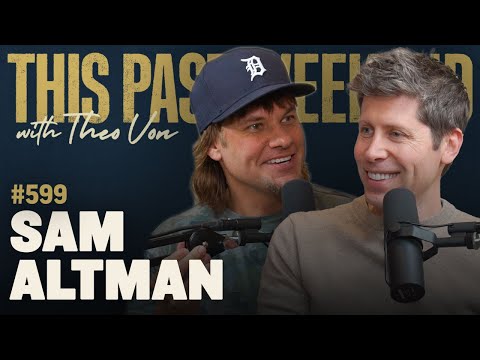
EDITOR’S NOTE (Nick Stamatakis). In a fascinating and wide-ranging interview with comedian Theo Von, OpenAI CEO Sam Altman offers a rare glimpse into the near future of artificial intelligence—and it’s already here.
Altman confirms that GPT‑5 is being tested internally and has already demonstrated astonishing capabilities, including moments that left even him feeling intellectually outmatched. But beyond showcasing its power, Altman lays out a bold vision: giving every human being a free, personal AI assistant based on GPT‑5. He believes this could radically transform access to knowledge and productivity worldwide.
But the most sobering moment came when Altman addressed how people are using ChatGPT for personal and emotional support. He made it crystal clear: conversations with ChatGPT are not protected by any legal privilege—and they can be subpoenaed and used against you in court. In other words, if you admit to something illegal or deeply personal in a chat, it is not confidential, and it can be retrieved by law enforcement or legal entities. That warning alone should give users serious pause.
Altman’s predictions also look far ahead: AI managing corporations, replacing CEOs, dissolving the need for traditional college, and even ushering in artificial womb technology. He envisions a world where AI-generated wealth is publicly distributed—but also urges society to confront the ethical, legal, and psychological challenges now.
This interview is a wake-up call: the future of AI isn’t on the horizon—it’s already among us, and we’d better be ready.
=================
















My former colleagues still in higher ed are telling me it is chaos now. Some are transitioning from computing to paper and pencil to prevent cheating which is rampant. SILLY. Some are using software that purports to detect AI script but does not. WASTED TIME and expensive. But beyond all resistence it the fact that AI can do marvelous things in learning – examples include adaptive learning platforms that provide customized resources and recommendations and personalized study plans generated based on learning goals. That is just one example. But many faculty are resistant to change and union rules support that rigidity. Yes. Chaos.